

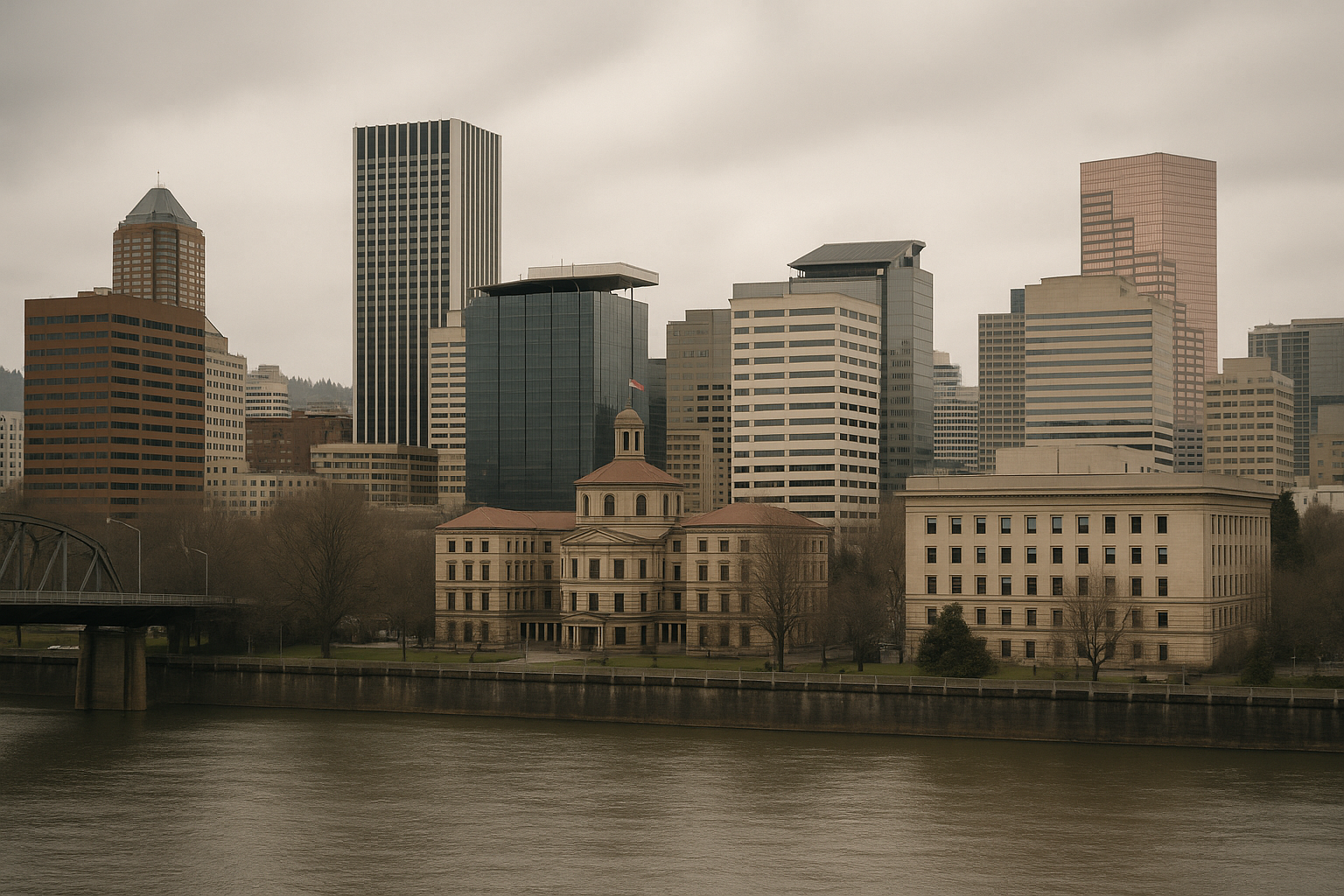

Portland officials confirmed this week that the city is now facing a projected $169 million shortfall for the upcoming fiscal year, a figure driven largely by the escalating cost of shelter operations and public safety programs. The announcement, detailed in a Feb. 18 report issued by the city’s Budget Office and summarized by Oregon Public Broadcasting, signals a budget season likely to be dominated by debates over homelessness response and police spending.
The deficit projection is more than double the roughly $67 million gap identified in December. According to the city’s current service level report, maintaining existing homeless shelters—including both new overnight-only sites and the city’s network of nine alternative shelters—will require an additional $54 million. Another $13 million is needed to continue street cleaning and campsite removal services.
Public safety programs also face significant uncertainty. More than $30 million in one-time funds currently support gun violence and self-defense programs, firefighter staffing, and police overtime. Those dollars expire with the new fiscal year on July 1.
The report attributes the widening gap to multiple forces: short-term use of pandemic-era federal funds without a long-term revenue plan, inflationary pressures, and the region’s broader economic slowdown—issues documented in prior coverage, including analysis of declining tax activity and stagnant population growth published by OPB earlier this month.
With Portland’s City Council scheduled to discuss the deficit during its Feb. 25 meeting, several members have already raised doubts about continuing Mayor Keith Wilson’s expanded shelter system. Council President Jamie Dunphy previously signaled he would not support extending funding for the new overnight shelters into a second year.
City officials have begun internal conversations about non-cutting strategies to close the shortfall, but the Budget Office report stops short of identifying specific options. Wilson’s full proposal is expected in April.
Although Portland’s budget process unfolds across the river, the consequences rarely stay there. Cowlitz County agencies, service providers, and law enforcement regularly interact with Portland’s housing and public safety systems—particularly as cross‑regional migration, transportation corridors, and emergency services overlap. Shifts in Portland’s capacity can influence where people seek shelter, how regional behavioral health networks absorb demand, and how local governments anticipate pressure on their own budgets.
For Longview and Kelso, Portland’s financial outlook often serves as an early indicator of broader regional stressors: rising service costs, constrained revenues, and growing expectations placed on local governments already operating with limited flexibility. As Portland heads into what may be one of its most contentious budget cycles in years, Southwest Washington officials will be watching closely—not out of political alignment, but because local impacts rarely respect state lines.
Sources
- Oregon Public Broadcasting: Portland is facing a $169 million budget deficit due to shelter and public safety costs
- City of Portland Budget Office: FY 2026–2027 Current Service Level Executive Summary
- Oregon Public Broadcasting: High housing costs and slowing construction signal regional economic strain