

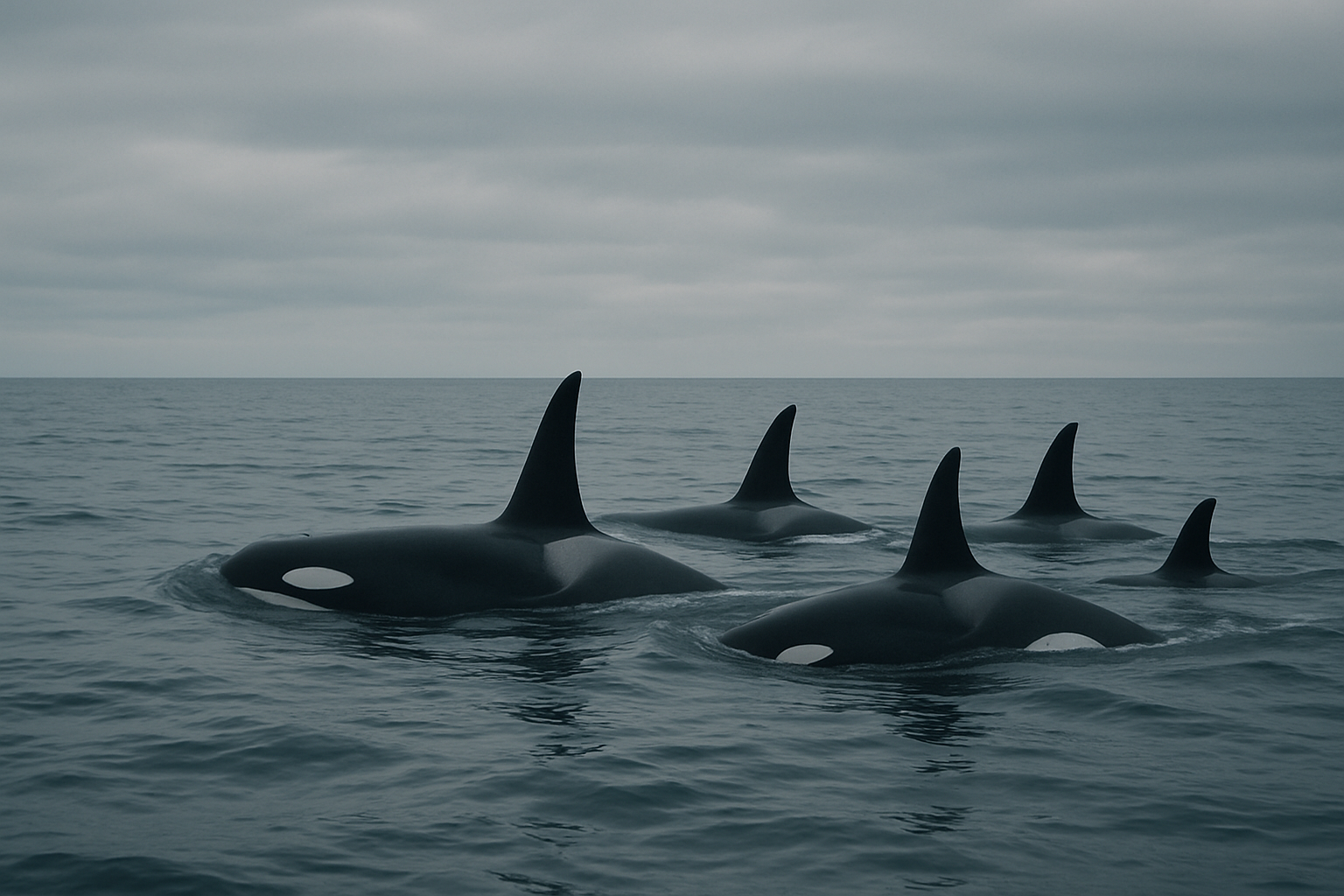

A newly documented Southern Resident orca calf has been spotted traveling with L pod, according to the Center for Whale Research. The sighting occurred on Feb. 16 in the Strait of Juan de Fuca, a region where the endangered whales often transit between coastal and inland waters.
The Center for Whale Research announced the encounter on its website, reporting that the calf—now designated L129—appeared only a few days old. Research director Dr. Michael Weiss told KIRO Newsradio, as summarized by MyNorthwest, that the calf’s age estimate is based on visible physical markers typically associated with newborns.
The calf was observed traveling alongside two experienced females: 49‑year‑old L55 and her daughter L103. Researchers noted that it remains too early to confirm which of the two is L129’s mother, a determination that typically becomes clearer through future encounters and behavioral patterns.
The sighting comes with cautious optimism. Dr. Weiss emphasized that only about half of Southern Resident calves survive their first year, citing long‑term population monitoring by the research team. That survival challenge contributes to the ongoing struggle of the Southern Resident orcas, whose numbers remain low. NOAA Fisheries lists the population as endangered under the Endangered Species Act, with the most recent estimates placing the total count at 74 individuals, consistent with federal data available through NOAA’s profile of the species at Southern Resident Killer Whale (Orcinus orca).
The Center for Whale Research stated that it expects to release additional images and a full encounter report once further documentation is complete. Follow‑up observations will be critical to determining the calf’s health, its maternal lineage, and its integration into L pod’s social structure.
Why this matters for Southwest Washington
Southern Resident orcas travel widely through the Salish Sea and outer coastal waters, including areas west of Cowlitz County that shape regional environmental and fisheries policy. Their population status influences salmon management, vessel‑traffic regulations, and habitat restoration funding across Washington State. A successful addition to L pod would be a rare boost for a population whose recovery trajectory affects ecological planning from the coast to the Columbia River watershed.
Sources
Center for Whale Research: Official encounter announcement
MyNorthwest: New Southern Resident orca calf spotted in L pod
NOAA Fisheries: Southern Resident Killer Whale profile