

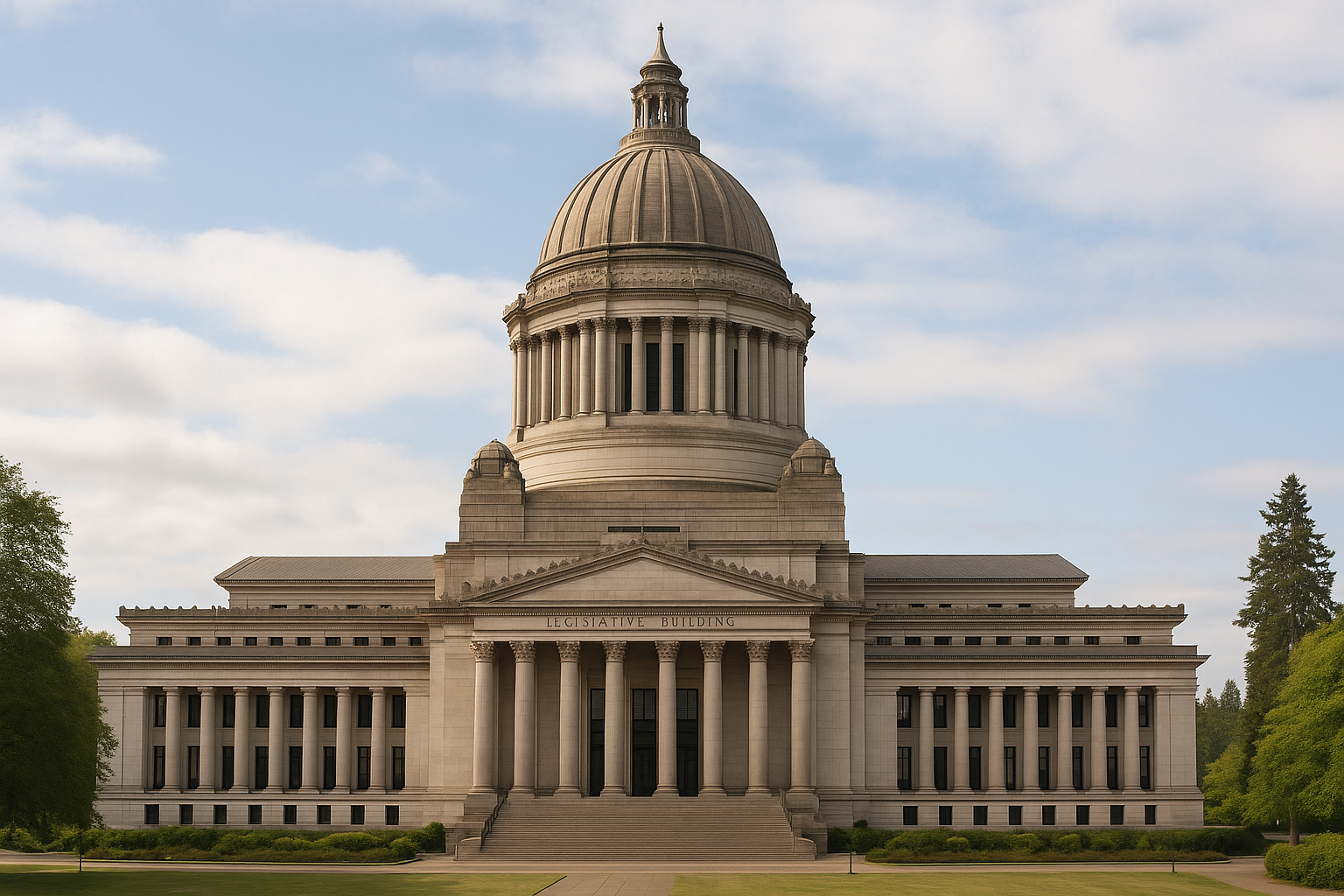

As the Washington Legislature crossed another major cutoff this week, a wide range of policy proposals died without receiving required votes — ending their chances for passage before the scheduled adjournment on March 12. The missed deadline affects several issues with tangible impacts in Cowlitz County, from homelessness response to child welfare oversight and public safety.
The cutoff marked the point by which most bills needed to clear votes in their chamber of origin. Lawmakers will now focus on considering legislation sent over from the opposite chamber, while budget proposals are expected to emerge soon.
The timing matters locally. Policies that fail at this stage typically do not return until the following year, delaying potential changes that cities like Longview and Kelso have watched closely.
Encampment policy bill fails again
A proposal that would have limited local governments’ ability to criminalize camping on public property — House Bill 2489 — was among the bills that failed to advance. The measure would have prevented enforcement of camping bans unless adequate shelter space was available.
The bill divided legislators and drew pushback from cities. A similar measure failed at the same point last year. While the bill did not single out any particular jurisdiction, the question of how much authority local governments should retain over public space remains directly relevant to Southwest Washington communities managing visible encampments.
Child welfare reforms stall
Several child welfare proposals also died, even as lawmakers continue to confront rising child fatalities and critical injuries statewide. Senate Bill 6308 would have expanded court oversight of Child Protective Services cases involving very young children. Another proposal, Senate Bill 6319, focused on cases involving fentanyl and other high-potency synthetic opioids.
Neither bill reached a vote. Senate Majority Leader Jamie Pedersen said lawmakers heard stakeholder concerns and expected the proposals to return next year.
In the House, additional child welfare-related efforts also failed to move forward. For local families and service agencies already responding to complex cases involving substance use, trauma, and strained placement capacity, the delay extends a debate that has intensified in recent years.
Children’s online safety bill fails for second year
House Bill 1834 — a youth online safety measure requested by Attorney General Nick Brown — died in the House for the second straight year. The bill sought to prohibit social media platforms from providing “addictive feeds” to minors and restrict overnight and in-school push notifications without parental consent. Brown said he was disappointed by the outcome and reiterated concerns about youth mental health.
Safe firearm storage proposal stalls again
Another repeat casualty was House Bill 1152, which would have required gun owners to secure firearms in homes and vehicles, with penalties escalating based on outcomes such as injury. Despite being a priority for some advocacy groups, the measure did not receive a floor vote. Other firearms-related bills — including proposals addressing 3D‑printed guns and firearms in parks — remain active.
Initiative regulations falter
A bill seeking to prohibit paying signature gatherers per signature and add verification steps to the initiative process also failed to advance. Senate Bill 5973 drew significant debate, with supporters describing it as a guardrail against excessive financial influence and opponents labeling it a barrier to direct democracy. Its sponsor indicated plans to reintroduce a new version in 2027.
Juvenile rehabilitation bill stalls
Efforts to address ongoing crowding in the state’s juvenile detention system met another setback when House Bill 2389 failed to receive a vote. The bill included proposals to adjust sentencing approaches for youth and create pathways for transfers between juvenile and adult facilities. House Speaker Laurie Jinkins said the measure did not have sufficient support but noted growing momentum compared to last year.
Agricultural labor and wire-theft bills die amid time pressure
Senate Bill 6045 — a proposal to extend collective bargaining rights to farmworkers — did not advance due to insufficient caucus support. Separately, multiple bills died during a procedural delay in the Senate, including a measure targeting copper wire theft. That proposal would have added recordkeeping requirements for scrap metal dealers and created new penalties for damaging critical communications infrastructure, a problem that has disrupted transit service in parts of the Puget Sound region.
AI regulation and grocery notice bill halted
While some artificial intelligence bills remain alive, House Bill 2157 — addressing discrimination risks in algorithmic decision-making — did not progress. Meanwhile, a Senate bill requiring grocers to provide four months’ notice before closure also failed. A separate House measure adjusting zoning restrictions for retail grocery and pharmacy locations advanced last week.
Parole work group proposal misses deadline
A Senate proposal initially designed to reinstate parole in Washington, later narrowed to establishing a study work group, did not receive a vote before the cutoff. Washington’s parole system was eliminated more than 40 years ago, and the topic has seen renewed but cautious interest.
Why this matters for Cowlitz County
Although these bills were statewide in scope, their failure has direct implications for communities along the I‑5 corridor:
- Local governments continue to shoulder responsibility for homelessness policy without new statewide constraints or guidance.
- Child welfare agencies, schools, and courts in Cowlitz County will not see the procedural changes proposed this session, despite documented system strain.
- Public safety concerns — from youth detention to wire theft — remain governed by existing law until future legislative cycles.
- Retail stability and food‑access discussions continue without the mandated notice period some lawmakers sought.
With only weeks left in the 2026 session, attention now shifts to which surviving proposals will move across the finish line — and what unfinished business may return in 2027.
Sources
Oregon Public Broadcasting: More bills falter as time dwindles for Washington Legislature
Washington State Standard: More bills falter as time dwindles for Washington Legislature