

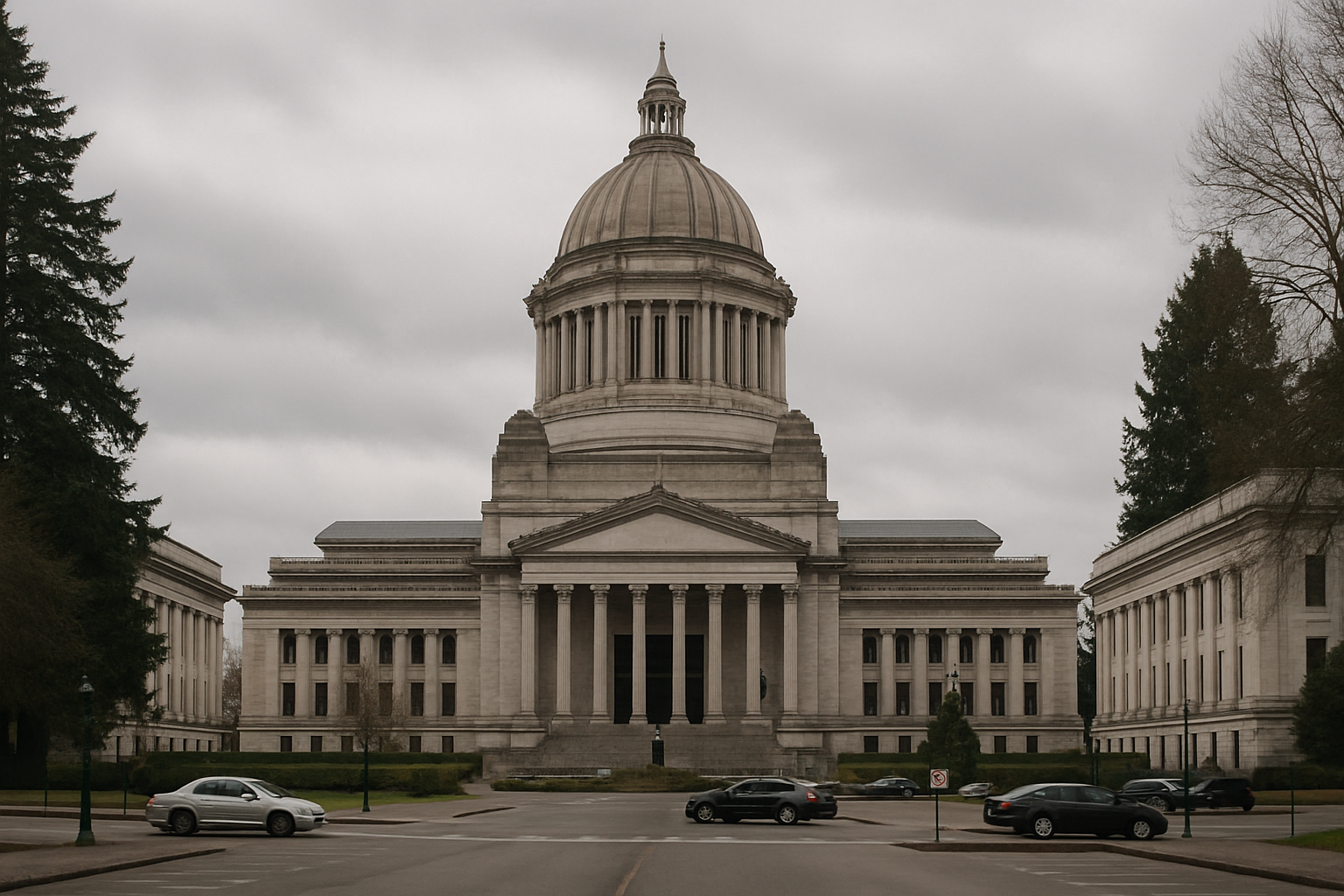

With less than three weeks left in Washington’s 2026 legislative session, lawmakers in Olympia have released competing supplemental transportation budget proposals that would significantly expand maintenance and preservation funding across the state. According to reporting by MyNorthwest, both chambers’ plans fall well short of the roughly $3 billion increase proposed by Governor Ferguson earlier this year, but still represent major new investments directed at aging infrastructure.
The House proposal, detailed in HB 2306, would add approximately $1.25 billion to last year’s baseline transportation budget. The Senate’s companion plan, laid out in SB 6005, comes in higher at roughly $1.5 billion.
According to reporting by MyNorthwest, legislators in both chambers have framed their priorities similarly: stabilize the state’s network of highways, bridges, and ferries after a series of high‑profile failures and long‑term underfunding. The article cites the closure of the Fairfax Bridge in 2025 and the lane reductions on Seattle’s 1st Avenue South Bridge due to steel corrosion as recent examples driving the renewed focus.
Senate Transportation Committee Chair Marko Liias said in public remarks that the chamber’s plan emphasizes maintenance across highways, bridges, and the ferry system, as well as repairs related to last fall’s flooding. MyNorthwest reported that the Senate funds its proposal by issuing $1.1 billion in new bonds backed by gas‑tax revenue. Liias said this allows the state to accelerate preservation spending without raising taxes this year.
The House takes a different approach. In a press release cited by MyNorthwest, House Transportation Chair Representative Jake Fey said the chamber relies on existing bonding authority rather than new debt. According to that statement, the House plan shifts funds across budget cycles to add $335 million for maintenance and preservation in the current biennium and $435 million in 2027–29.
MyNorthwest also reports that the Senate proposal includes full funding for the Washington State Patrol, ongoing support for communities affected by the Fairfax Bridge closure, continued work on three hybrid‑electric ferries, and development of a mobile driver’s license system expected to launch in 2028.
All three budgets—including the Governor’s—now head into negotiations where lawmakers will determine whether to rely on new bonding, existing bonding, or a combination of the two. Those decisions will shape how quickly preservation work begins and how much flexibility remains in future transportation budgets.
Why this matters for Cowlitz County
Major highway corridors through Southwest Washington, including I‑5 and SR‑432, depend on predictable maintenance funding to avoid the kinds of sudden closures that affected other regions last year. The Legislature’s final agreement will determine whether counties like Cowlitz see accelerated preservation work or slower, phased upgrades.
The outcome also carries implications for freight mobility. Cowlitz County’s industrial sector relies heavily on stable transportation routes, and any statewide backlog in preservation funding can ripple down to local congestion, detours, or delays in planned improvements.
As negotiations continue in Olympia, local governments and transportation planners will be watching closely for how the final package allocates regional preservation dollars and how much long‑term bonding the state ultimately assumes.
Sources
MyNorthwest: Maintenance, preservation dollars headline WA’s supplemental transportation budgets
Washington State Legislature: HB 2306 (2025–26)
Washington State Legislature: SB 6005 (2025–26)