

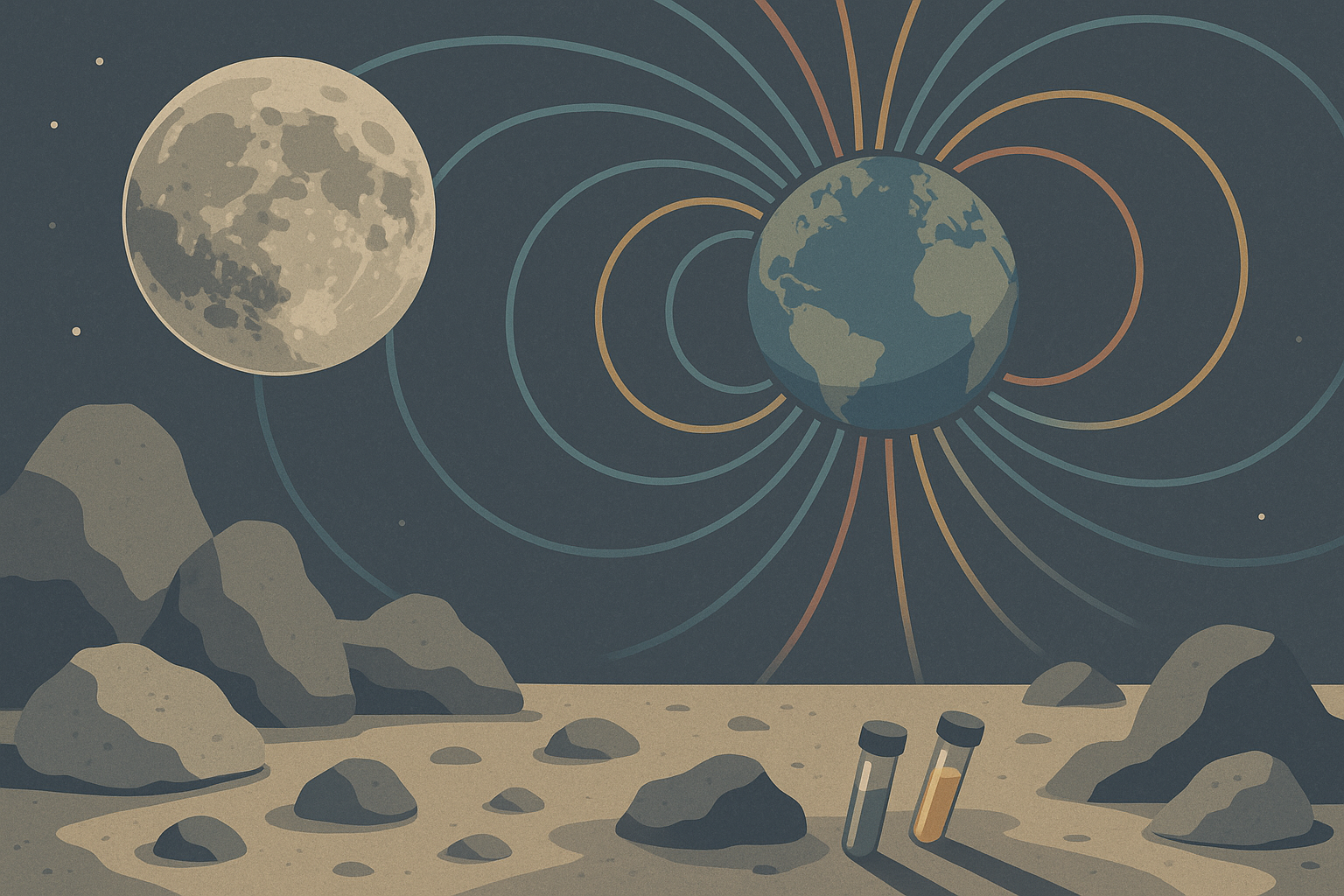

New research published in the journal Nature Geoscience is reshaping scientists’ understanding of the moon’s ancient magnetic field, according to reporting by MyNorthwest. The findings draw on Apollo-era rock samples collected between 1969 and 1972 and could influence the goals and expectations surrounding NASA’s upcoming Artemis missions.
According to the study, led by University of Oxford researcher Claire Nichols, the moon’s magnetic field appears to have been weak for most of its history. However, the analysis indicates that it experienced intense, short-lived spikes in magnetic strength roughly 3 to 4 billion years ago. The research team reported that these spikes may have lasted as little as a few decades and no more than about 5,000 years.
In a statement quoted by MyNorthwest, Nichols explained that these bursts of magnetic activity appear linked to the melting of titanium-rich rocks deep inside the moon. Earlier measurements of Apollo samples show that lunar rocks with higher titanium content retain stronger traces of ancient magnetic fields. Rocks returned during Apollo 11 and Apollo 17 contained some of the highest titanium levels of the missions.
The Associated Press reported that NASA expects future Artemis astronauts to collect samples from the moon’s south polar region, where geological conditions differ significantly from the low-latitude plains visited by Apollo crews. Scientists believe these new samples could provide a more representative record of lunar history. NASA has stated that the first crewed Artemis test flight could launch as early as April from Kennedy Space Center.
The AP story notes that understanding the moon’s magnetic past is essential for assessing how celestial bodies preserve atmospheres, shield against cosmic radiation, and potentially support habitable conditions. For Southwest Washington, where school districts, community colleges, and local STEM programs often integrate space science into their curriculum, the findings may offer timely material for educators preparing spring science units tied to ongoing Artemis mission coverage.
Local astronomy groups and regional science educators may also find renewed relevance in the continued study of Apollo samples, particularly as NASA’s planned lunar missions continue to capture national interest. While the research centers on events billions of years old, its implications are being felt today as communities along the I‑5 corridor follow renewed U.S. investment in human spaceflight and space science.
Why this matters
Scientific insights emerging from the Apollo legacy continue to shape the mission design and scientific goals of Artemis, a program that will likely dominate U.S. space policy discussions for the next decade. For residents of Cowlitz County, ongoing discoveries offer opportunities for local educators, students, hobbyists, and civic organizations to connect global scientific progress with community-level engagement in STEM learning.
Sources
MyNorthwest: Old Apollo rocks shed new light on the moon’s magnetic field long ago
Associated Press coverage as cited in MyNorthwest reporting.