

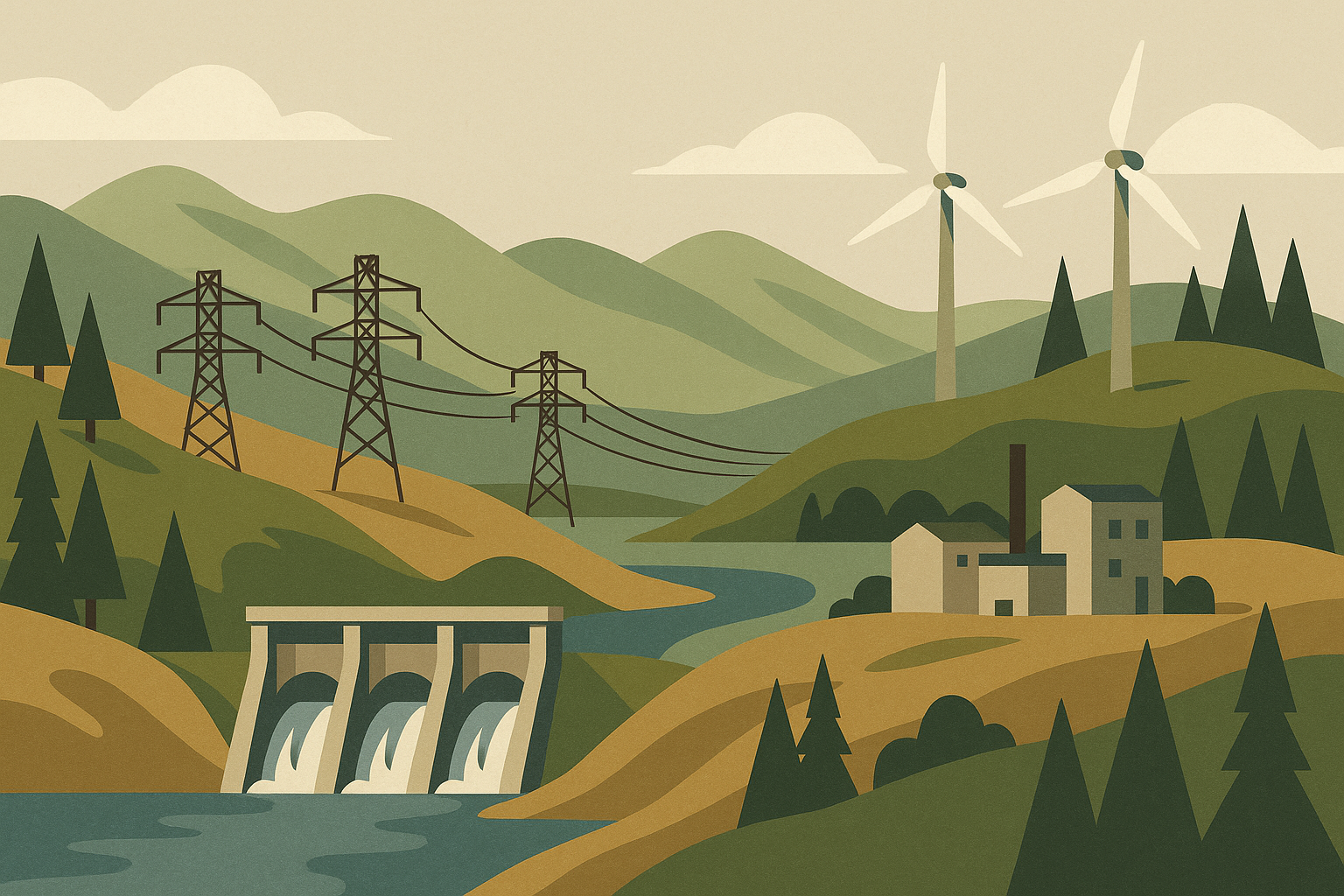

As Washington’s clean‑energy laws push utilities to reduce and ultimately eliminate fossil‑fuel‑generated electricity, communities in Southwest Washington are beginning to feel the practical tension between policy mandates and rapidly increasing power demand. According to reporting by the Camas Post Record, energy use across the Pacific Northwest has surged in recent years just as the state has ordered utilities to begin major reductions in fossil fuel reliance.
Washington’s Clean Energy Transformation Act (CETA), passed in 2019, requires utilities to transition to 100 percent clean electricity by 2045. State guidance has emphasized early reductions, particularly in coal and natural gas generation. At the same time, regional utilities have faced substantial increases in electricity demand tied to population growth, industrial expansion, and the electrification of transportation and heating systems.
This statewide shift has direct implications for Cowlitz County, where industrial electricity consumption historically exceeds that of most Washington counties. Public utility districts serving the Longview–Kelso area rely heavily on Bonneville Power Administration hydropower but still depend on market purchases, which can include fossil‑fuel‑generated electricity during high‑demand periods. According to publicly available BPA records, winter and summer peaks have grown in intensity, narrowing the buffer utilities traditionally counted on to maintain reliability.
Local planners have also noted the challenge of siting new renewable energy infrastructure. Transmission capacity in Southwest Washington remains limited, and utilities across the region have warned that major grid upgrades will be necessary to meet both state mandates and customer demand. Minutes from recent public utility district meetings in multiple counties show that utilities are weighing long‑term contracts, conservation programs, and new local-generation options, all while attempting to keep rates stable.
Statewide analyses have consistently shown that the clean‑energy transition is feasible but will require a combination of new renewable generation, expanded transmission lines, demand‑response programs, and energy‑storage projects. For communities along the I‑5 corridor, the question is not whether the transition will occur, but how unevenly the challenges and costs will land.
Why this matters
Southwest Washington hosts one of the most energy‑intensive industrial corridors in the state. The intersection of rising demand, clean‑energy requirements, and existing infrastructure constraints will shape local rates, reliability, and economic development decisions for decades. Tracking how these statewide policies play out at the county level is essential for understanding future conditions facing residents, businesses, and public institutions.
Sources
Camas Post Record: PNW strives to move away from fossil fuels, but goal proves complicated