

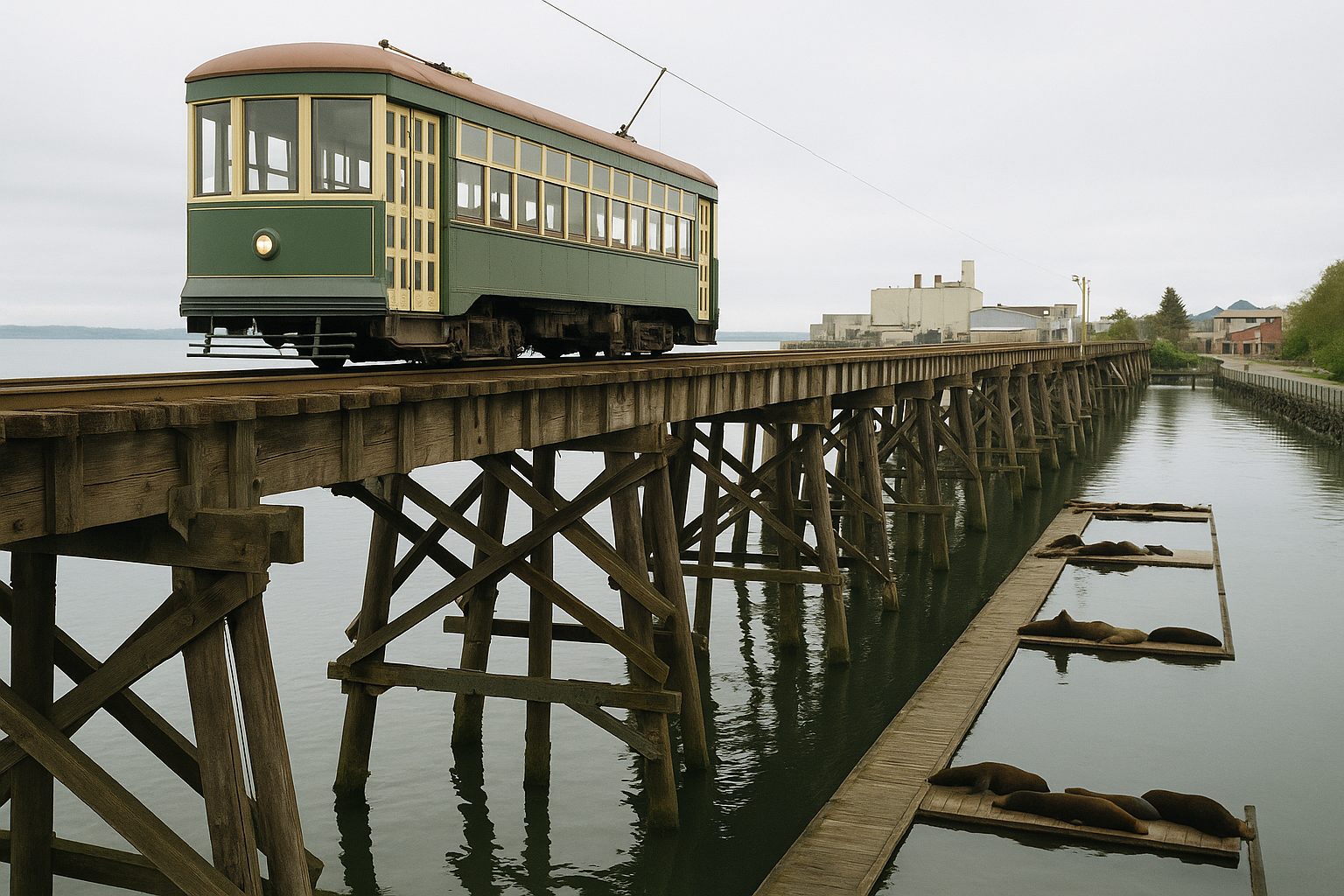

The City of Astoria is moving ahead with long‑planned repairs to its historic riverfront trolley line, a project that has drawn regional attention not only for the aging wooden trestles beneath the tracks but also for the colony of federally protected sea lions that live under parts of the structure. The timing matters across the lower Columbia River corridor, where spring tourism typically brings increased traffic from Washington communities including Longview and Kelso.
According to reporting by Oregon Public Broadcasting, Astoria maintenance crews are now working through the most urgent structural issues on the 1940s‑era rail line that carries the Astoria Riverfront Trolley. The trestles were built of large wooden pilings driven into the shoreline decades ago, and city engineers have identified sections where the above‑water portions have rotted.
Astoria City Engineer Nathan Crater told OPB that workers are removing compromised wood down to the waterline—where lack of oxygen has preserved the submerged portions—and bolting in metal supports to stabilize the structure. The city estimates roughly $1.6 million in total work is needed, though current efforts focus on the highest‑priority repairs.
Although the trestles are structurally sound for trolley operations, crews must navigate an additional constraint: the sea lions that have long gathered beneath the riverfront structures. Because the animals are federally protected, maintenance teams must avoid disturbing them. Crater noted that current work areas are away from the main haul‑out sites, but staff will still proceed slowly and cautiously when sea lions are present.
Frank Kemp, the trolley’s maintenance coordinator, is preparing the historic “Old 300” streetcar for its seasonal reopening. Kemp told OPB that volunteers are aiming to resume operations in March, ahead of spring break. The three‑mile run provides riders with a narrated tour of Astoria’s industrial waterfront, passing working docks, canneries, breweries, and the redeveloped riverwalk.
The trolley, a popular low‑cost attraction for day‑trippers from Southwest Washington, shares limited riverfront space with a walking trail and bike lane. Local officials remind visitors that traffic increases significantly during peak tourism months and that pedestrians, cyclists, and trolley operators all rely on clear visibility and caution.
Why this matters for Southwest Washington
Astoria’s waterfront is a regional economic engine, and any disruption to trolley operations can influence tourism patterns felt up the I‑5 corridor. Many Cowlitz County residents treat Astoria as a routine getaway, and the trolley’s reopening is often considered the unofficial start of spring tourism on the lower Columbia River. Stable long‑term operations also help preserve the working‑waterfront character shared by both sides of the river.
The trolley’s expected March reopening means visitors from Longview, Kelso, and surrounding communities can likely expect normal spring service—assuming repairs remain on schedule and wildlife‑protection requirements continue to be met.
Sources
Oregon Public Broadcasting: Restoring Astoria’s riverfront trolley means working around its sea lions



Leave a Comment