

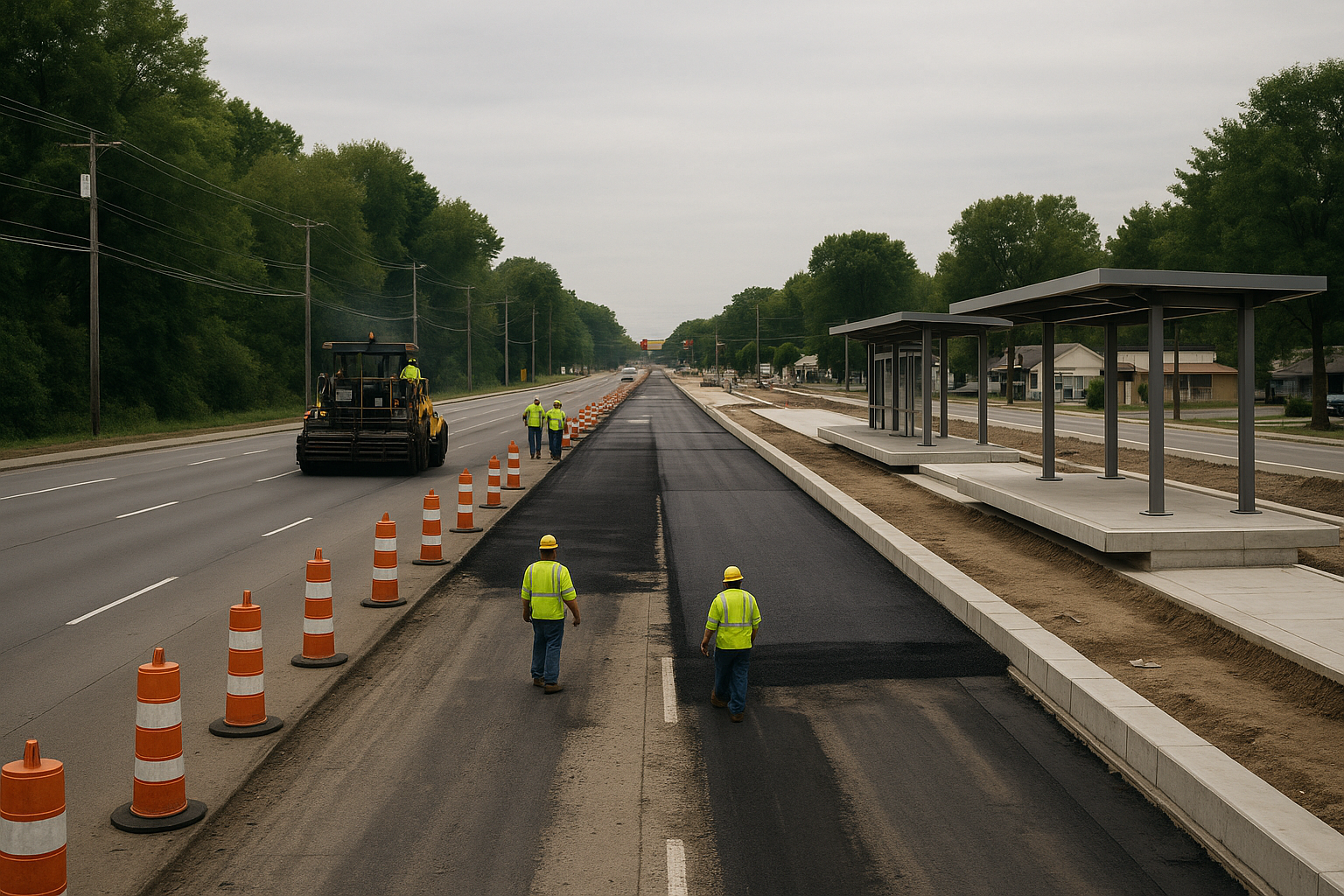

Construction on C-Tran’s third bus rapid transit corridor, the Purple Vine, is moving forward along Highway 99 in Clark County. According to reporting by The Columbian, the agency remains on schedule to launch service in 2027.
Public project documentation from C-Tran identifies the Purple Vine as the next expansion of its Vine bus rapid transit network, designed to replace or streamline portions of existing high‑ridership routes while adding dedicated infrastructure along the Highway 99 corridor. C-Tran’s published materials describe the project as part of a long‑range system build‑out that began with the Fourth Plain Vine and Mill Plain Vine lines.
Construction activity currently visible along Highway 99 includes roadway modifications, station preparation, and utility adjustments associated with BRT operations. According to C-Tran’s official project updates, these phases are standard for the agency’s bus rapid transit buildouts and typically proceed in coordinated segments to limit traffic disruptions.
While the Purple Vine corridor itself is located in Clark County, transit improvements in the Vancouver urban area have ongoing implications for Cowlitz County residents. Many Longview and Kelso commuters rely on intercounty connections—either through private vehicles, park‑and‑rides, or express service routes linking to the Vancouver transit network. Highway 99 also serves as a major commercial corridor for workers traveling from northern counties into the Portland metro region. Expanded BRT capacity is expected to affect travel times, park‑and‑ride dynamics, and employer transportation planning across the I‑5 corridor.
C-Tran’s project timeline, as presented in its public planning documents, maintains 2027 as the target for full Purple Vine service. Additional updates are typically published through the agency’s official channels during construction milestones.
Why this matters
Southwest Washington’s transportation network functions as a single economic ecosystem. Upgrades in Clark County often produce ripple effects upstream in Cowlitz County, where commuting patterns, freight movement, and regional labor markets depend on predictable access to the Vancouver-Portland core. Understanding major transit investments helps local residents anticipate future traffic changes, cross‑county transit connectivity, and potential shifts in roadway congestion patterns along I‑5.
Sources
- The Columbian: C-Tran Purple Vine construction on track for 2027 service
- C-Tran: Official website and project materials




Leave a Comment