

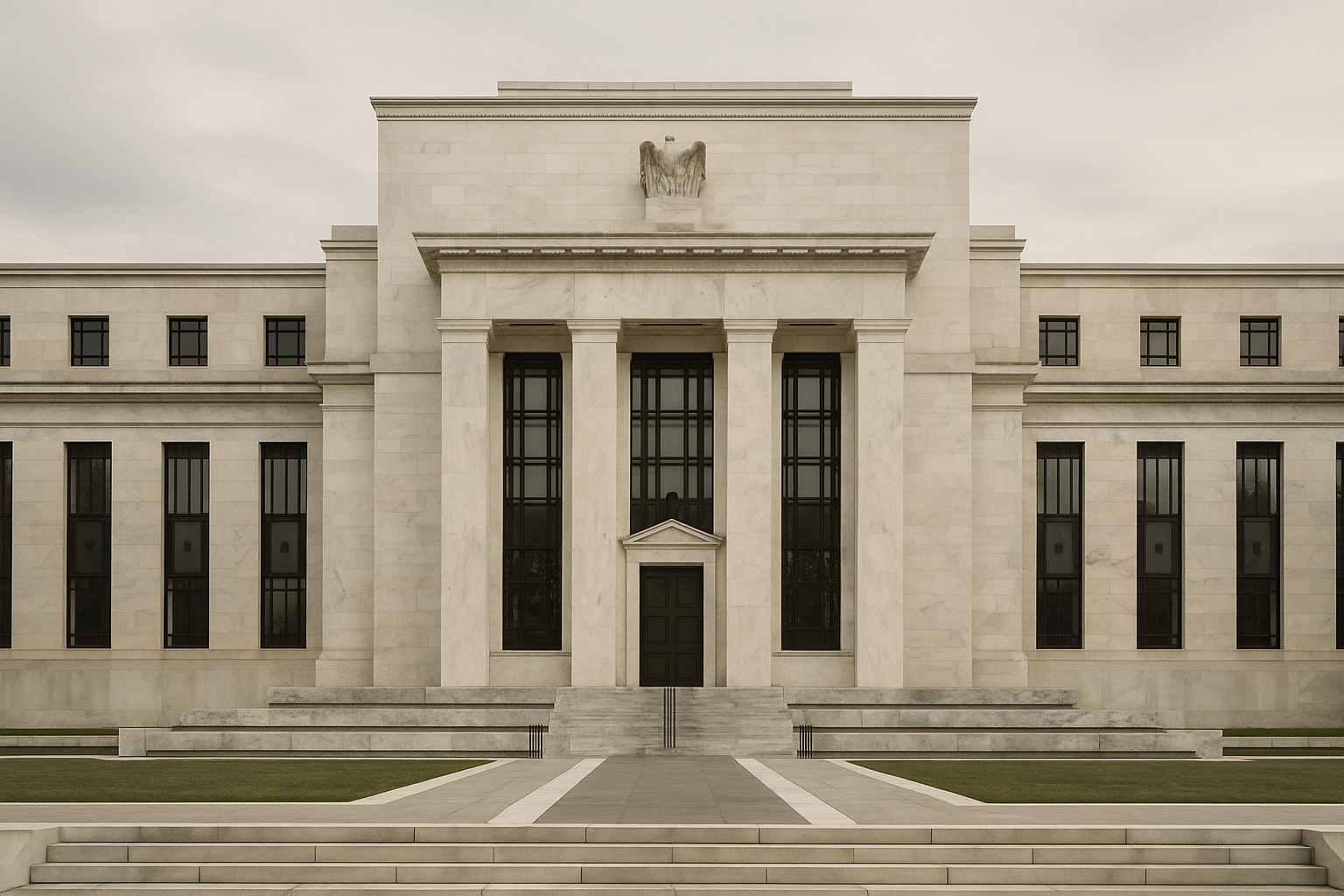

Federal Reserve governor Christopher Waller said Monday that the central bank’s next interest rate decision remains uncertain, describing the odds of a March rate cut as “close to a coin flip” during remarks delivered to the National Association for Business Economists. His comments, first reported by MyNorthwest, follow a stronger‑than‑anticipated January employment report that showed U.S. employers added roughly 130,000 jobs.
Waller said the January hiring surge could either signal sustained recovery or prove to be a temporary bump. He emphasized that the Federal Reserve would need another solid labor report in February to justify holding its benchmark interest rate at approximately 3.6%—a level maintained after three cuts late last year.
If the February report reflects continued improvement, Waller suggested the board may delay additional cuts to watch for ongoing inflation progress. But if January’s gains are revised downward or do not repeat, he said a rate reduction at the March meeting would be warranted.
National political pressure intensified last week when President Donald Trump criticized the central bank following news that fourth‑quarter economic growth slowed to an annual rate of 1.4%, down from 4.4% in the preceding quarter. In a public post, Trump again demanded lower rates and criticized Chair Jerome Powell.
While the debate remains centered in Washington, D.C., the outcomes matter locally. Interest rate decisions influence borrowing costs for Southwest Washington households and businesses, particularly in communities like Longview and Kelso where small‑business lending, home construction, and equipment financing remain sensitive to rate shifts. Mortgage activity across Cowlitz County has been subdued since mid‑2025, and local banks have reported tighter credit conditions for both commercial and consumer borrowers.
Regional employers—especially in manufacturing, logistics, and construction—are also watching the evolving labor picture. A stronger national job market could support continued wage stability in the region, while a weaker report could increase uncertainty for local hiring plans.
Why this matters
Southwest Washington’s economic stability is closely tied to interest‑rate policy. A delayed rate cut could prolong higher borrowing costs for residents seeking mortgages, auto loans, or business credit lines. Conversely, a March cut could ease financial pressure on households and support ongoing recovery in the local industrial sector.
The Federal Reserve’s next interest rate meeting is scheduled for March, and February’s employment report—expected in early March—will likely shape the board’s decision.
Sources
MyNorthwest: Fed’s Waller says rate cut in March is a ‘coin flip’ following a strong US jobs report




Leave a Comment