

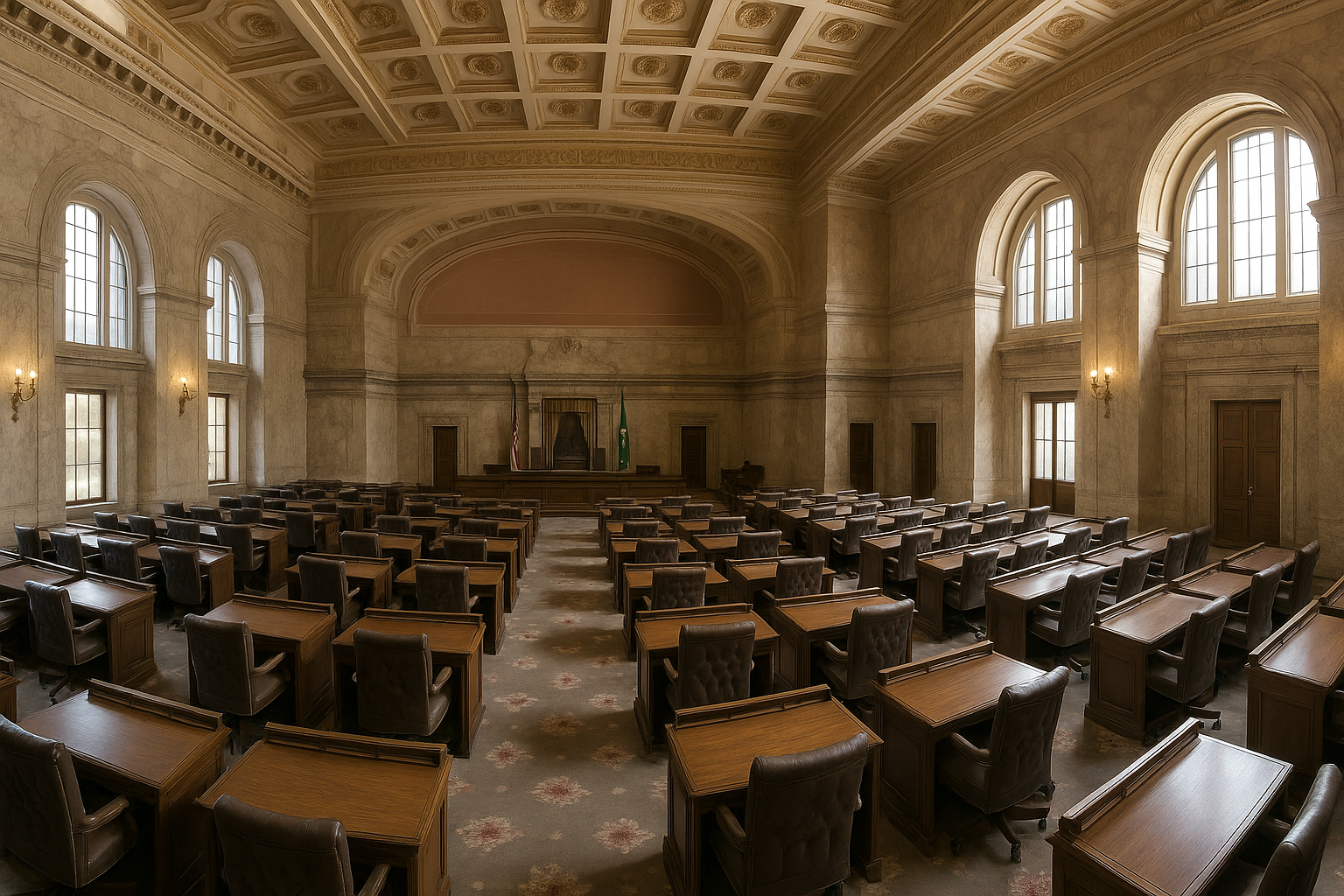

With the Washington Legislature reaching its third major deadline of the 2026 session on Tuesday, dozens of bills failed to advance, ending their chances for passage this year. The stalled measures — affecting homelessness policy, child welfare, gun safety, juvenile detention and more — were documented in reporting by The Reflector and statewide outlets. Lawmakers now turn to continued committee work as the March 12 adjournment approaches.
For communities along the I‑5 corridor, including Longview and Kelso, several failed bills intersect with ongoing local concerns. One of the most closely watched proposals, House Bill 2489, sought to limit cities’ and counties’ ability to criminalize public camping unless adequate shelter space was available. That measure did not advance. Local governments in Cowlitz County have been navigating increasing service demands around unsheltered homelessness, making any statewide shifts in camping policy especially consequential.
Multiple child welfare bills also died at the cutoff, including Senate Bill 6308, which would have expanded court oversight in cases involving young children who remain with parents instead of entering foster care, and Senate Bill 6319, which proposed a new referral pathway for families affected by fentanyl and other synthetic opioids. Washington State Standard reporting indicates that neither proposal reached a Senate vote. For Southwest Washington, where child welfare caseload pressures remain significant, the absence of new legislative guardrails means existing systems continue unchanged into another year.
Gun‑related legislation again stalled. House Bill 1152, designed to require secure firearm storage in homes and vehicles, failed to reach the House floor for the second consecutive year. The measure had been backed by statewide safety advocates but faced obstacles similar to those encountered in 2025. Locally, law enforcement agencies in Cowlitz County have previously highlighted firearm storage as a factor in accidental shootings and thefts, leaving the issue unresolved at the state level.
Other bills that faltered include Senate Bill 5973, which would have restructured rules surrounding signature gathering for statewide initiatives; House Bill 2389, aimed at addressing overcrowding and sentencing practices in youth detention; and Senate Bill 6190, which sought to impose recordkeeping and criminal penalties to combat rising copper wire theft. That last issue has been a recurring challenge for utilities and transit agencies statewide, and Southwest Washington has also experienced sporadic wire‑theft incidents affecting infrastructure.
The Legislature now moves into a compressed phase of budget negotiations and policy review on surviving bills. Democratic budget proposals are expected in the coming days. With another cutoff scheduled for next Wednesday, the landscape of what remains viable may shift further before the session ends on March 12.
Why this matters
Legislation that fails at procedural deadlines often reflects unresolved policy disagreements or competing statewide priorities. For Cowlitz County communities already grappling with housing instability, fentanyl‑related child welfare challenges, and infrastructure vulnerabilities, the absence of new state tools means existing local strategies must continue to bear the weight of regional problems.
Sources
The Reflector: More bills falter as time dwindles for Washington state Legislature
Washington State Standard: More bills falter as time dwindles for Washington Legislature



Leave a Comment