

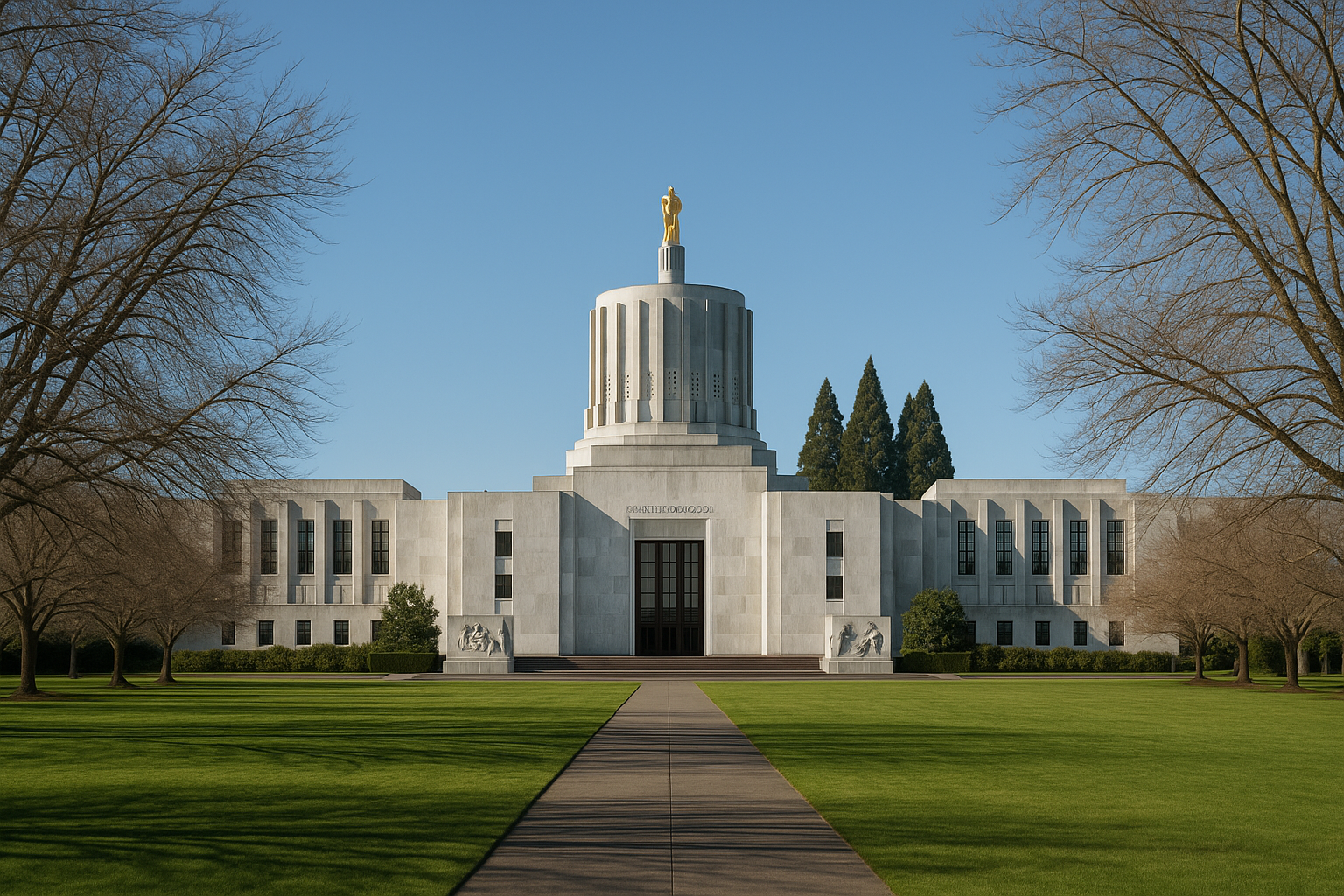

The Oregon Senate returned to full operation Thursday morning after a one‑day Republican walkout that halted legislative business in Salem. The maneuver — and the rapid reversal — has drawn attention from communities along the lower Columbia River, where any change to Oregon’s fuel tax structure can influence cross‑border travel, commerce, and regional transportation planning.
According to reporting by Oregon Public Broadcasting, nearly all 12 GOP senators were present when the chamber gaveled in shortly after 11 a.m. Thursday. Their return followed an unannounced refusal to attend Wednesday’s afternoon floor session, which denied Democrats the 20‑member quorum required to conduct business.
Republican lawmakers have tied their protest to Senate Bill 1599, legislation that would move up the scheduled public vote on last year’s gas tax and transportation fee increases. Under current law, voters are set to weigh in during the November 2026 general election. SB 1599 would shift that vote to the May primary — a change Republicans argue undermines the intent of the petitioners who forced the referendum.
Democrats opened Thursday’s floor session by delaying consideration of the bill until Friday. Senate Minority Leader Bruce Starr, R‑Dundee, publicly acknowledged those discussions but did not disclose any negotiated terms. GOP lawmakers likewise declined to detail whether any specific agreement led to their return.
For Oregon officials, the timeline is tight. Elections authorities have indicated that SB 1599 must be approved by both chambers and signed by Gov. Tina Kotek by Feb. 25 to guarantee placement on the May ballot. Democrats have framed the earlier vote as necessary to clarify revenue expectations for the Oregon Department of Transportation, while acknowledging that the tax increases face long odds with voters.
Republicans maintain that the bill’s timing is political. Sen. Christine Drazan, a Canby Republican now running for governor, told colleagues that moving the referendum would diminish the voice of petition signers who followed the required process to refer the tax package to voters.
Communities in Longview, Kelso, and greater Cowlitz County often feel the downstream impact of Oregon’s fuel tax decisions. Drivers routinely cross the Columbia River for work, shopping, or services, and businesses on both sides of the border monitor price differences closely. While SB 1599 concerns election timing rather than tax levels themselves, the outcome of the referendum will define whether the previously approved increases take effect — and whether cross‑border price gaps widen.
Why this matters
Southwest Washington residents regularly navigate the economic spillover of Oregon transportation policy. Any change to the timeline or certainty of Oregon’s fuel tax could influence commuting patterns, small business margins, and regional transportation coordination. With the vote deadline approaching and partisan conflict intensifying in Salem, Washington communities connected by the I‑5 corridor will likely feel the effects of whatever path Oregon lawmakers choose.
Sources
Oregon Public Broadcasting: Republicans return to Oregon Senate after Wednesday no-show



Leave a Comment