

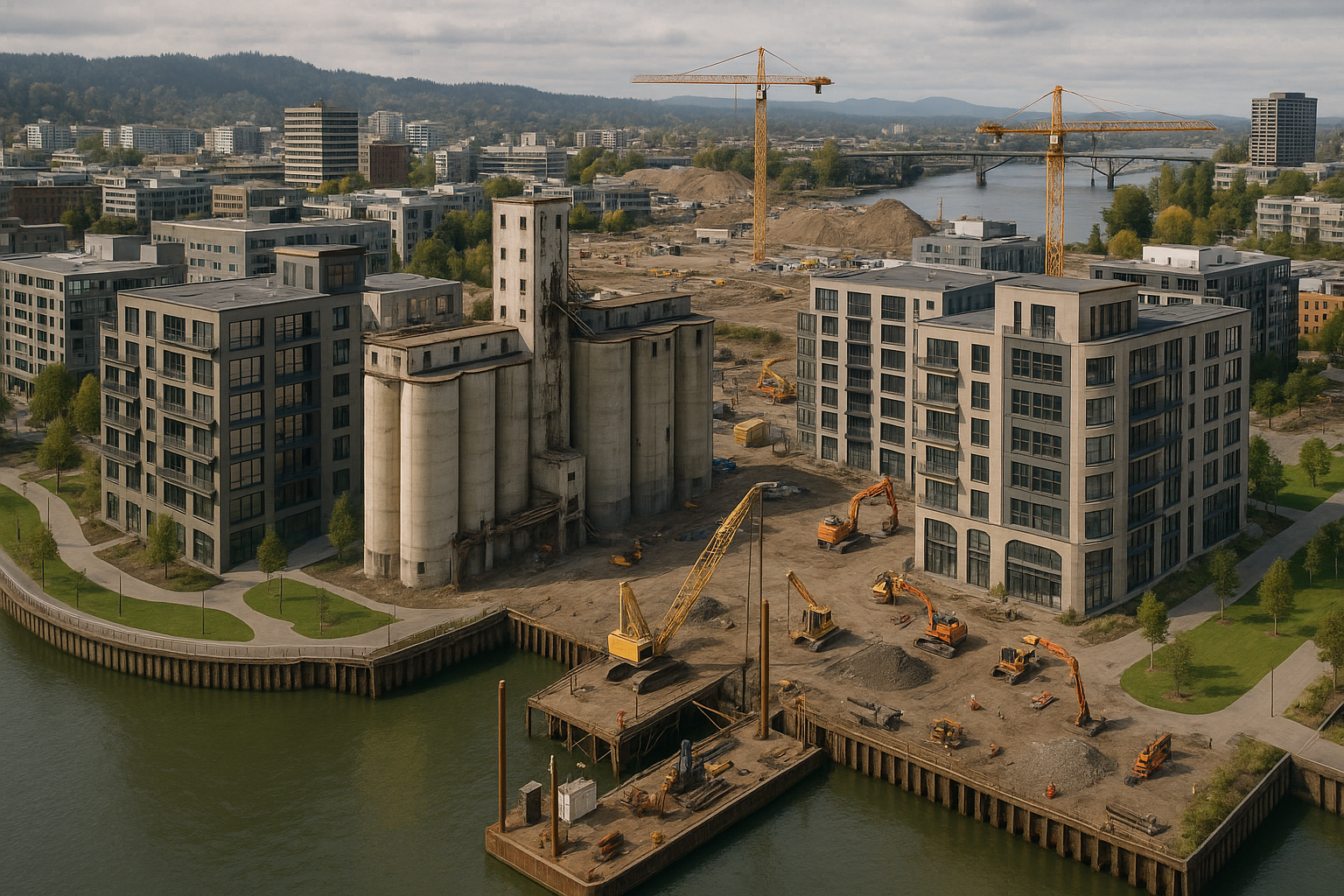

Leaders in Portland’s historic Albina neighborhood are advancing a major redevelopment effort that could ripple across the Columbia River into Southwest Washington’s workforce, housing patterns, and regional economic landscape. According to reporting by KOIN, the Albina Vision Trust and The 1803 Fund are partnering on plans to reclaim roughly 94 acres in Lower Albina, an area long shaped by displacement and disinvestment.
Recent reporting from OPB confirms that The 1803 Fund has begun purchasing key parcels, including the former grain terminal near the Moda Center, as part of a $70 million investment in historically Black neighborhoods. Additional details published by Axios indicate that the initiative includes seven acres of newly acquired land with redevelopment plans projected to generate hundreds of jobs.
Public documents from the City of Portland, including a Portland Housing Bureau announcement highlighting the recent opening of Albina One, show ongoing progress toward restoring community footholds in the broader Albina district. The bureau’s release, available through Portland.gov, notes that Albina One adds 94 units of affordable housing, with one-third reserved as deeply affordable for extremely low-income households. This milestone reflects a broader strategy of reconnecting longtime residents and descendants with a neighborhood transformed by past infrastructure and urban renewal projects.
Additional context reported by OPB shows that the Albina Riverside project—centered on repurposing historic grain silos—aims to create public spaces for education, recreation, and cultural activity. Mixed-use development planned for nearby tax lots is expected to become what project leaders describe as the heart of a revitalized Albina. Many of the properties, as noted in Portland Appraisal Blog, will require environmental remediation before construction can begin.
For residents of Longview, Kelso, and the surrounding I‑5 corridor, the transformation of Albina may influence regional labor markets, rental pressures, and cross-river commuting patterns. Portland’s history of urban renewal has previously had spillover impacts across county lines, including shifts in workforce demand and availability of affordable housing. As Albina’s redevelopment accelerates, its demand for skilled labor, small contractors, and construction support may draw workers from Cowlitz County. Likewise, new cultural and economic hubs could alter patterns of travel, employment, and educational exchange between the two metropolitan areas.
While the most visible impacts will occur within Portland city limits, Albina’s redevelopment is part of a larger conversation about how Northwest communities respond to legacies of displacement. For Southwest Washington—where long-standing concerns about housing affordability, transportation infrastructure, and equitable development persist—the scale and direction of Portland’s efforts may provide both lessons and early indicators of future regional dynamics.
Why this matters
The Albina redevelopment effort represents one of the largest coordinated attempts in the Pacific Northwest to restore community control in an area shaped by decades of displacement. For Cowlitz County residents, the project’s scope and investment may influence cross-border housing markets, economic opportunity, and regional planning decisions. Monitoring these developments helps clarify how neighboring urban centers can affect local conditions, even without direct governance ties.
Sources
KOIN: “Ambitious Black-led project aims to reclaim Portland’s gentrified Albina community” (linked above).
OPB: “Initiative to support Black Portlanders is investing $70M to redevelop waterfront” (linked above).
Axios: “$70M investment to reshape historic Albina” (linked above).
Portland.gov: “Albina One Opens Its Doors” (linked above).
OPB: “Portland’s 1803 fund reveals details for revitalization” (linked above).
Portland Appraisal Blog: “Adaptive reuse plans for Portland’s historic grain silos” (linked above).




Leave a Comment