

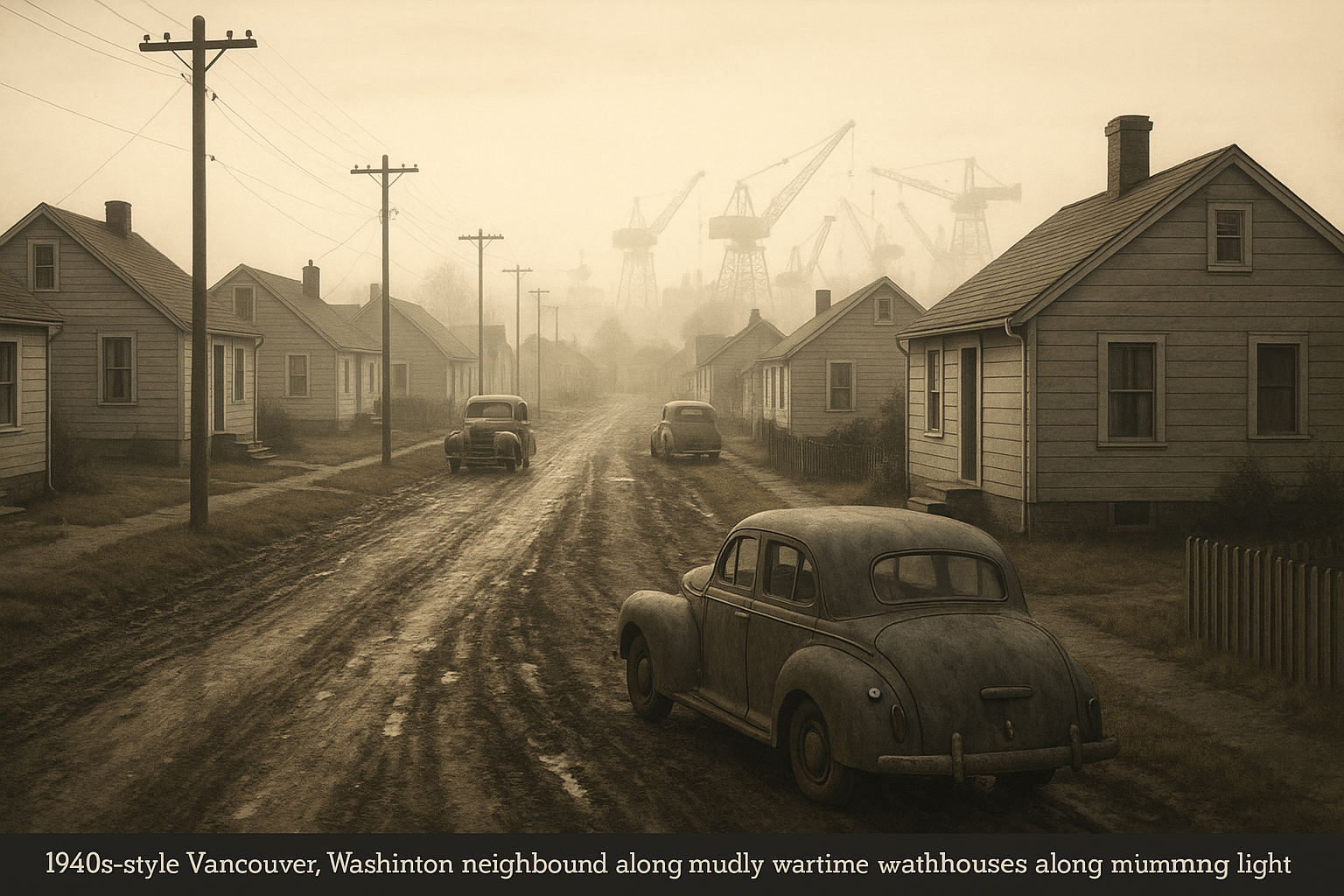

In the months after World War II, Vancouver entered 1946 with a paradox: tens of thousands of departing shipyard workers, yet almost no available housing. Reporting from the Jan. 1, 1946 edition of The Columbian, preserved in a recent historical feature at this archival retrospective, shows how sharply the region felt the transition as the massive wartime Kaiser Shipyards wound down.
According to that reporting, Kaiser employment fell by roughly 80 percent as contracts ended and the workforce dispersed. Despite the exodus, housing shortages persisted across Vancouver. Black residents and returning veterans faced some of the most significant barriers, a pattern mirrored nationally as federal housing programs expanded unevenly and local covenants, zoning, and lending structures shaped who could live where.
Although the boomtown conditions of wartime Vancouver did not extend fully into Cowlitz County, the post‑war housing pressures did. Longview and Kelso also saw rising demand for affordable homes as veterans returned and wartime wage patterns shifted. The regional infrastructure—shipping, timber processing, and rail—kept drawing workers even as wartime industries receded. By early 1946, rental scarcity and construction delays were already common points of concern in local government meetings across Southwest Washington.
Historians note that the Kaiser Shipyards story offers a useful lens on how quickly a local housing landscape can destabilize when jobs disappear faster than homes can be repurposed or built. It also underscores how disparities formed when returning GIs sought housing at the same moment that discriminatory local practices limited where Black residents could buy or rent. Vancouver’s wartime neighborhoods, including the large wartime developments built to house shipyard workers, became flashpoints for these conflicts.
For Southwest Washington today, the archival record offers more than a snapshot of a single industrial transition. It highlights structural dynamics—rapid population inflow and outflow, constrained housing stock, and unequal access—that continue to shape local policy debates. The historical example shows that even in moments of declining employment, a community can experience severe housing pressure when long‑term supply has not kept pace with prior growth.
While the circumstances of 1946 differ from today’s economic conditions, the region’s leaders continue to grapple with versions of the same challenge: balancing growth, affordability, and equitable access to housing across the I‑5 corridor. The post‑war experience in Vancouver remains an early and influential chapter in that ongoing story.
Sources
The Columbian: Image from the Attic: Clark County History for Feb. 21, 2026



Leave a Comment