

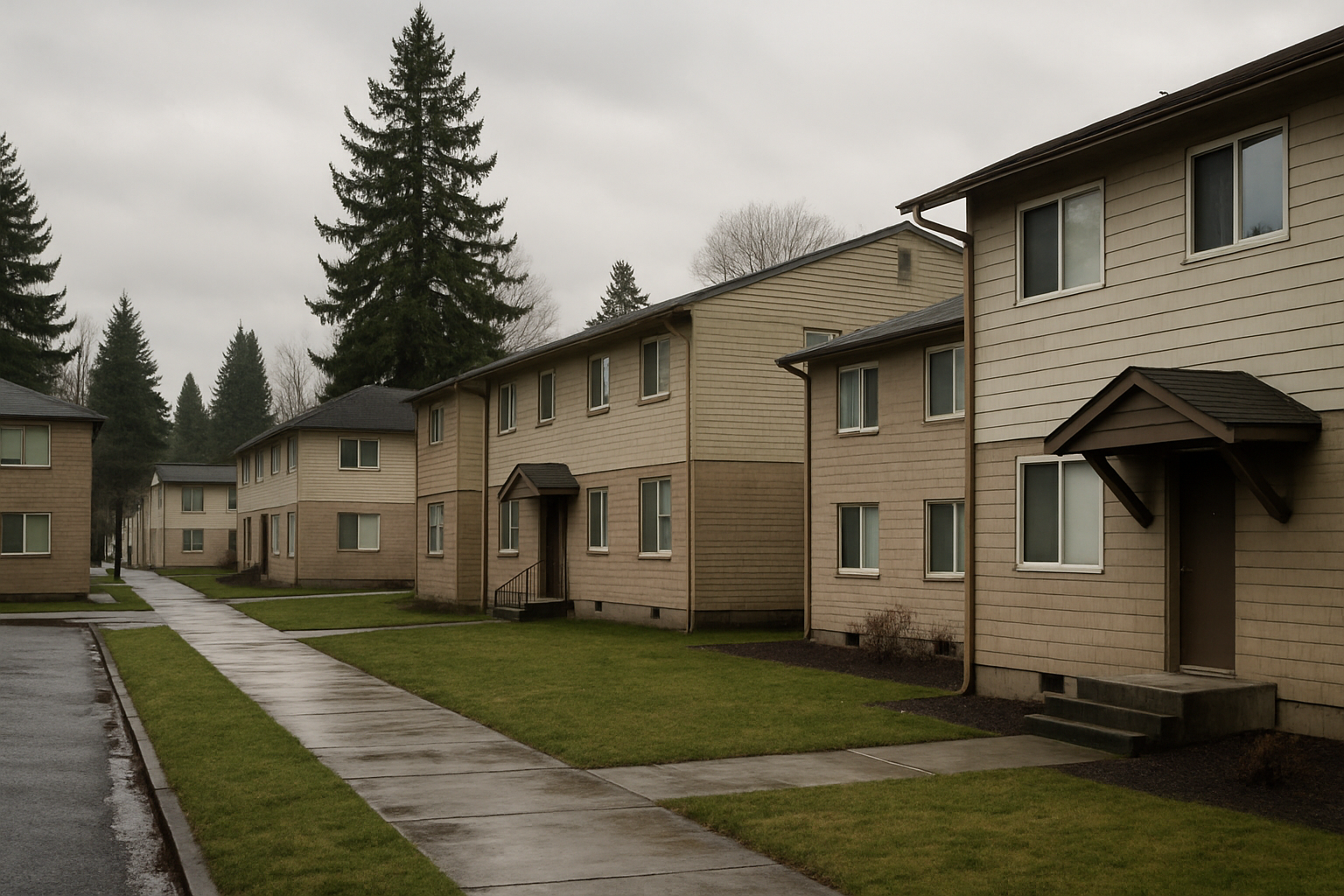

A newly proposed federal rule from the U.S. Department of Housing and Urban Development (HUD) has raised concerns among housing providers and legal advocates in Southwest Washington, where federally assisted housing plays a significant role in supporting low‑income families. The notice of proposed rulemaking, published in the Federal Register, would require every member of a HUD‑assisted household to verify U.S. citizenship or eligible immigration status without exceptions for older adults.
Under the proposal, mixed‑status households—families containing both eligible and ineligible members—would no longer qualify for HUD rental assistance. According to policy analyses from organizations such as the National Low Income Housing Coalition and the Center on Budget and Policy Priorities (CBPP), this kind of policy shift could place thousands of families at risk of eviction nationwide. The CBPP estimates that up to 20,000 families, representing roughly 80,000 people, could lose their housing assistance if the rule is finalized.
Local housing authorities, including those serving Longview, Kelso, and the broader Cowlitz County region, have not yet issued detailed guidance on how many residents might be affected. However, federal data show that mixed‑status households do exist throughout Washington State’s public housing and Housing Choice Voucher programs, making the implications of the rule relevant for the local waiting lists and already‑strained affordable housing stock.
The proposed rule would also require all adult residents, including those aged 62 and older who previously only needed to verify their age, to provide citizenship documentation. National research cited in the Federal Register filing notes that millions of U.S. citizens lack immediate access to such documents, meaning that implementation issues could extend beyond immigrant communities.
Advocacy organizations, including the National Housing Law Project and CBPP, have criticized the proposal, warning that it could split families or leave them without stable housing. Representatives from these groups argue that long‑standing federal policy has allowed families with mixed immigration statuses to remain together while receiving prorated assistance only for eligible members. They emphasize that undocumented individuals have never been eligible for HUD rental assistance, and that the new rule would shift the burden onto citizen family members as well.
HUD has not yet clarified how long the rulemaking process may take or when a final rule could go into effect. As with other federal regulatory proposals, the rule will undergo a public comment period before HUD determines next steps.
Why this matters for Cowlitz County
Cowlitz County faces a persistent shortage of affordable housing, with local authorities reporting long waitlists for public housing and voucher programs. Any change that reduces the number of eligible households—or increases administrative barriers for current residents—could further strain the system.
Local service organizations note that many families who rely on rental assistance are working families with deep roots in the community. Changes to federal eligibility rules may increase demand for emergency shelters, rental assistance programs, and community services that are already operating near capacity.
HUD’s proposed rule is still in its early stages, and no immediate changes have been implemented. Residents who participate in HUD‑assisted programs should monitor official communications from their housing authority for updates as the federal process moves forward.
Sources
- MyNorthwest: HUD proposes rule that would force noncitizens from public housing
- Federal Register: Notice of Proposed Rulemaking (HUD – Verification of Eligible Status)
- Center on Budget and Policy Priorities: Policy analysis on proposed HUD eligibility rule




Leave a Comment