

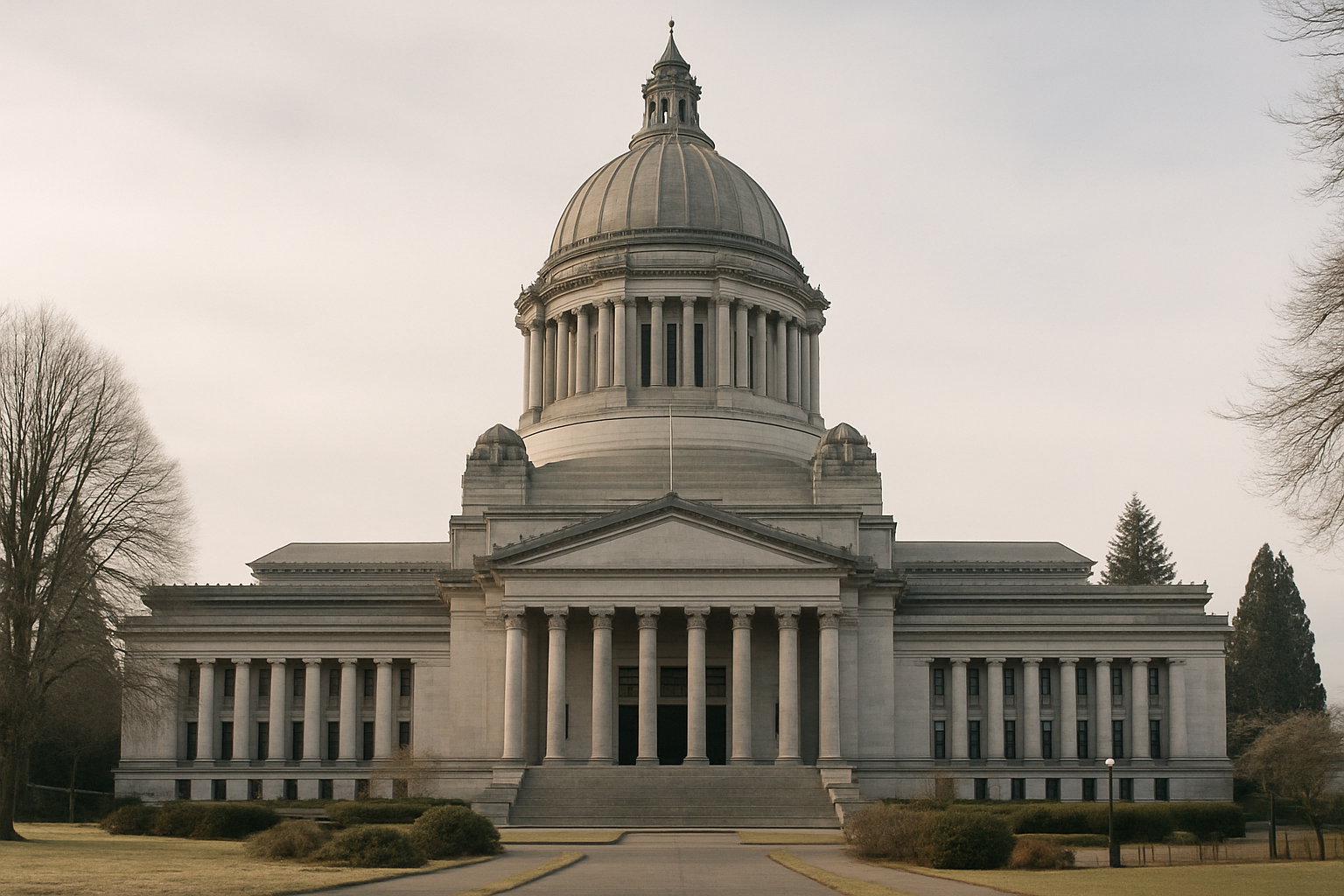

OLYMPIA — Democratic budget writers in the Washington House and Senate introduced their updated state spending plans on Sunday, outlining proposals aimed at maintaining essential services despite mounting financial pressures linked to federal funding reductions and rising operational costs. The plans, confirmed in reporting by The Columbian, were formally presented on February 23.
According to additional details reported by The Spokesman-Review, both chambers’ proposals draw heavily from the deficit‑reduction framework previously advanced by Gov. Bob Ferguson. Those elements include ending tax exemptions for drug wholesalers and data centers, shifting unspent funds across agencies, and withdrawing approximately $1 billion from the state’s rainy day fund. Lawmakers also adopted a plan to roll back the state’s top estate tax rate from 35% to 20%.
State Rep. Timm Ormsby, D-Spokane, who chairs the House Appropriations Committee, noted on Sunday that the governor’s plan contained what he described as “nonviable cuts” to state services and data discrepancies totaling an estimated $400 million through June 2029 within the Washington State Healthcare Authority. Ormsby said the Legislature’s budget writers recalculated needs and adjusted the proposals accordingly.
House and Senate budget writers received some relief earlier in the week when an updated state revenue forecast projected approximately $827 million more in expected revenue through June 2027 than previously estimated. Ormsby said that increase helped cover essential maintenance-level adjustments and allowed lawmakers to avoid several of the governor’s proposed service reductions.
The new plans call for increased spending through the current biennium, which runs until June 2027, with priorities described by lawmakers as centered on food access, public health, housing stability, and continuity of government operations.
Why This Matters for Southwest Washington
For communities in Longview, Kelso, and the broader Cowlitz County area, state budget decisions can significantly influence funding for public health programs, school district support, and local human services. With federal cuts continuing to shape statewide fiscal decisions, the coming negotiations in Olympia may determine the stability of key social and educational services relied upon throughout the region.
Columbia Countercurrent will continue monitoring the legislative process as budget debates advance toward final negotiations.
Sources:
The Columbian: Washington Democratic leaders unveil state budget plans amid escalating costs
The Spokesman-Review via Yahoo News: Washington Democratic leaders unveil state budget plans amid escalating costs



Leave a Comment