

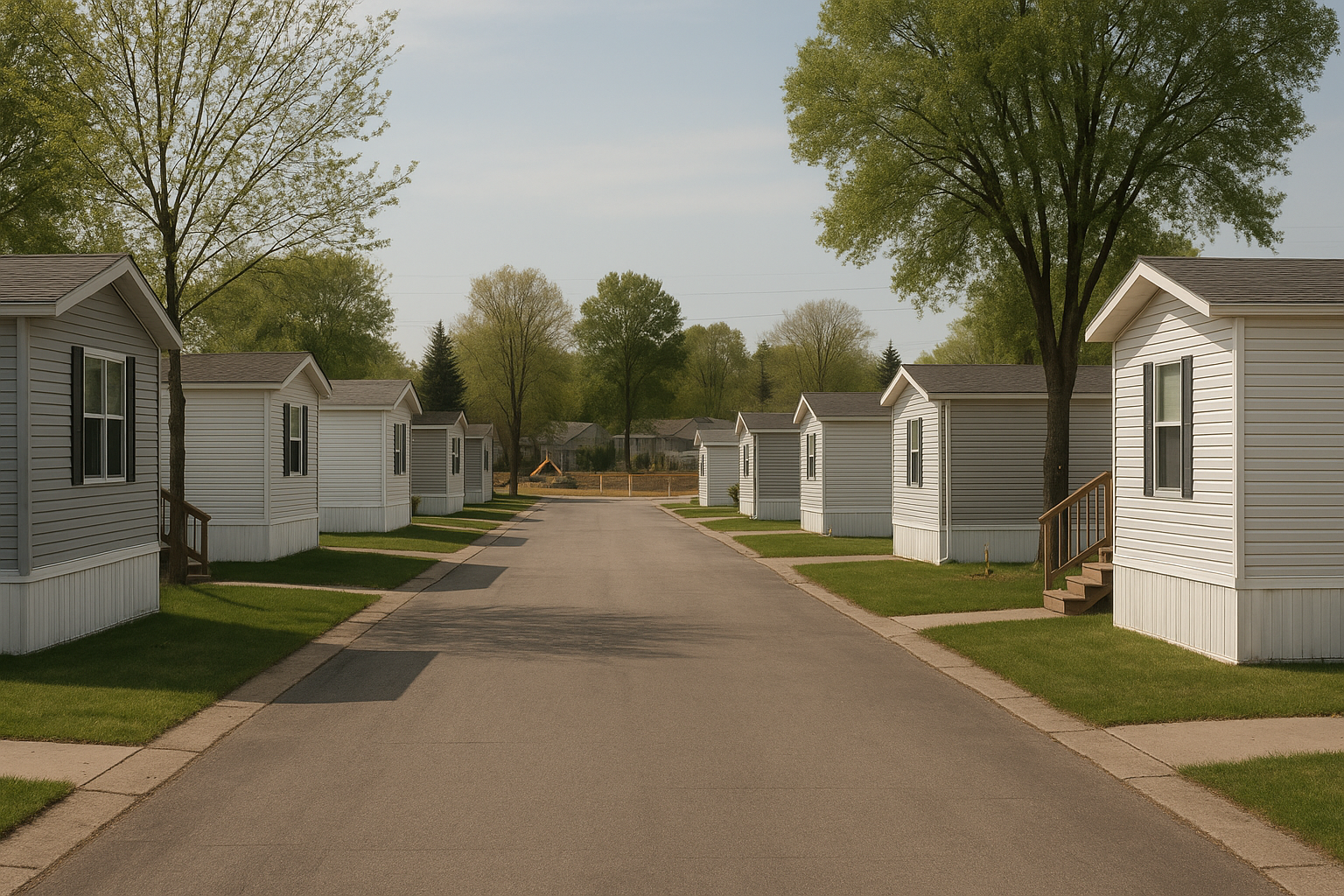

Evergreen Habitat for Humanity is pursuing a major acquisition of two adjacent mobile home parks in Vancouver’s Hazel Dell neighborhood, a proposal that could add as many as 280 affordable units just outside city limits. The plan, detailed in reporting by Oregon Public Broadcasting, underscores broader housing pressures increasingly reflected north along the Interstate 5 corridor, including in Longview and Kelso.
The properties—Hidden Village 1 and 2—represent nearly 19 acres between Highway 99 and Interstate 5. Evergreen Habitat for Humanity has raised $6 million toward the $12 million purchase price, including funding from the Washington State Department of Commerce’s Housing Trust Fund and private commitments. The organization is now seeking an additional $4 million from the Washington Legislature through a budget appropriation. According to Evergreen Habitat representative Heather Cochrun, the scale of the project would be a significant expansion of the nonprofit’s typical work.
The proposal includes repairs and replacement of deteriorated mobile homes, followed by construction of new affordable housing types such as townhomes or apartments. Vancouver Mayor Anne McEnerny-Ogle expressed support in a letter to lawmakers, citing the site’s transit access and the need to preserve and expand permanently affordable housing.
Mobile home parks remain one of the last sources of unsubsidized affordable housing nationwide, yet they have also become targets for real estate investors who purchase parks and raise lot rents. That trend has been documented across Washington, with some Vancouver residents paying more than $1,000 a month to rent the land beneath homes they already own.
Nonprofits in other states have attempted similar interventions. A Habitat for Humanity chapter in Virginia transformed a 16-unit mobile home park into a 70-unit mixed‑income development that preserved existing residency while adding homes. Other organizations, including Resident Owned Communities, help residents buy and control their parks directly.
Evergreen Habitat’s Vancouver proposal is still refining its ownership model, but Cochrun said it will likely resemble a community land trust: homeowners would own their units while the nonprofit retains ownership of the underlying land. Lot leases are estimated at around $30–$40 per month, far below market rents.
The outcome will depend heavily on the Washington Legislature’s supplemental budget, scheduled for finalization by March 12. Lawmakers are currently grappling with a multibillion‑dollar shortfall despite modest improvements in the state’s budget outlook.
For residents of Longview, Kelso, and surrounding Cowlitz County communities, the proposal signals broader regional shifts. Rising land values and investment‑driven purchases of manufactured home parks have increasingly pushed low‑income and fixed‑income households toward areas with fewer services or limited transportation. If the Hazel Dell project moves forward, it could serve as a test case for whether nonprofit‑led park acquisitions can slow displacement pressure along the I‑5 corridor.
Why this matters for Cowlitz County
Cowlitz County has experienced its own shortage of stable, low‑cost housing, and mobile home parks remain a key part of the housing stock for retirees, working families, and people on fixed incomes. A successful nonprofit purchase in Hazel Dell may offer a model that local groups or governments could study, particularly as aging parks face sale, redevelopment, or closure.
Stable, locally controlled ownership models—whether land trusts or resident cooperatives—have implications for housing security in every community along the corridor, including those where margins are tighter and options fewer.
Sources
Oregon Public Broadcasting: Evergreen Habitat for Humanity hopes to buy Vancouver mobile home park to build more affordable housing




Leave a Comment