

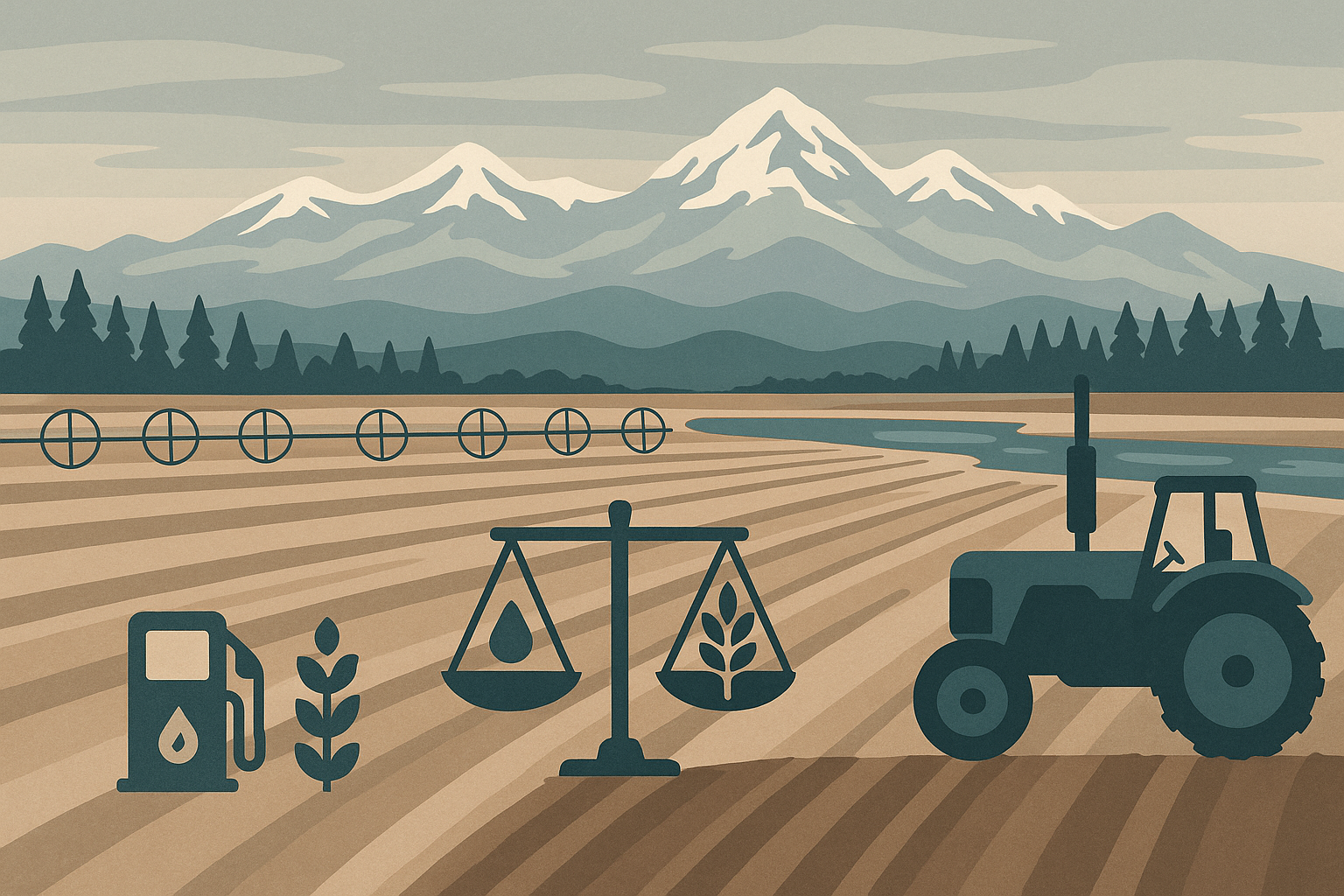

Several Washington agricultural organizations, including the Whatcom County‑based group Save Family Farming, have called on state leaders to address what they describe in a recent letter as a severe and worsening economic climate for farmers. According to reporting by The Reflector, the letter follows new federal data indicating Washington ranks last in the nation for farmer take‑home pay in 2024.
The groups cite findings from the USDA Economic Research Service showing that returns for Washington farm operators in 2024 totaled $295 million in the red ([everettpost.com](https://www.everettpost.com/state-news/wa-farm-groups-send-letter-to-state-leaders-over-dramatic-drop-in-ag-profitability/?utm_source=openai)). With gross farm receipts of $13.8 billion and expenses of $14.1 billion, farmers statewide reported difficulty breaking even. The letter, addressed to Gov. Bob Ferguson and legislative leadership, warns that the state’s current policies — particularly fuel surcharges under the Climate Commitment Act and recent labor policy changes, including the full phase‑in of mandatory overtime — are compounding already difficult market pressures ([everettpost.com](https://www.everettpost.com/state-news/wa-farm-groups-send-letter-to-state-leaders-over-dramatic-drop-in-ag-profitability/?utm_source=openai)).
Washington’s low ranking has been confirmed in multiple independent analyses. According to reporting by Capital Press, the state landed last in the nation for financial returns to operators in 2024, with experts pointing to global trade impacts, high production costs, and persistent regulatory pressures as contributing factors ([capitalpress.com](https://capitalpress.com/2025/12/04/washington-ranks-last-in-farmer-take-home-pay-in-2024/?utm_source=openai)). Local farm operators in Cowlitz County, where producers rely heavily on trade access and affordable fuel, face similar challenges.
Save Family Farming President Markus Rollinger stated in a news release that rising input costs, labor expenses, regulatory compliance demands, and energy prices are straining operations statewide. According to reporting by The Center Square, the letter also warns that renewed trade tensions and tariffs are sharpening uncertainties for major Washington export commodities, including wheat, cherries, and dairy products ([everettpost.com](https://www.everettpost.com/state-news/wa-farm-groups-send-letter-to-state-leaders-over-dramatic-drop-in-ag-profitability/?utm_source=openai)).
The financial strain documented in the letter aligns with earlier statewide trends. A 2025 analysis presented to state lawmakers showed Washington agriculture falling from 28th to 43rd in national net farm income, driven by rising labor costs and regulatory burdens. According to reporting by Capital Press, many commodity sectors have seen widening gaps between revenues and production expenses, with only a few remaining profitable ([capitalpress.com](https://capitalpress.com/2025/10/06/report-shows-washington-ag-income-has-dropped-to-43rd-place-2/?utm_source=openai)).
Local producers in Southwest Washington have not been singled out in the letter, but the issues highlighted — fuel prices, labor rules, export market instability, and thinning profit margins — mirror challenges reported by farmers in Cowlitz County and surrounding areas. Agricultural operations in the region depend on the same fuel‑intensive transport networks and trade corridors that have been affected by policy changes and market fluctuations.
The farm groups’ letter urges lawmakers to review policies that growers say are accelerating financial losses and jeopardizing the state’s long‑term agricultural viability. Whether the state will revise these policies remains an open question as the 2026 legislative session continues.




Leave a Comment