

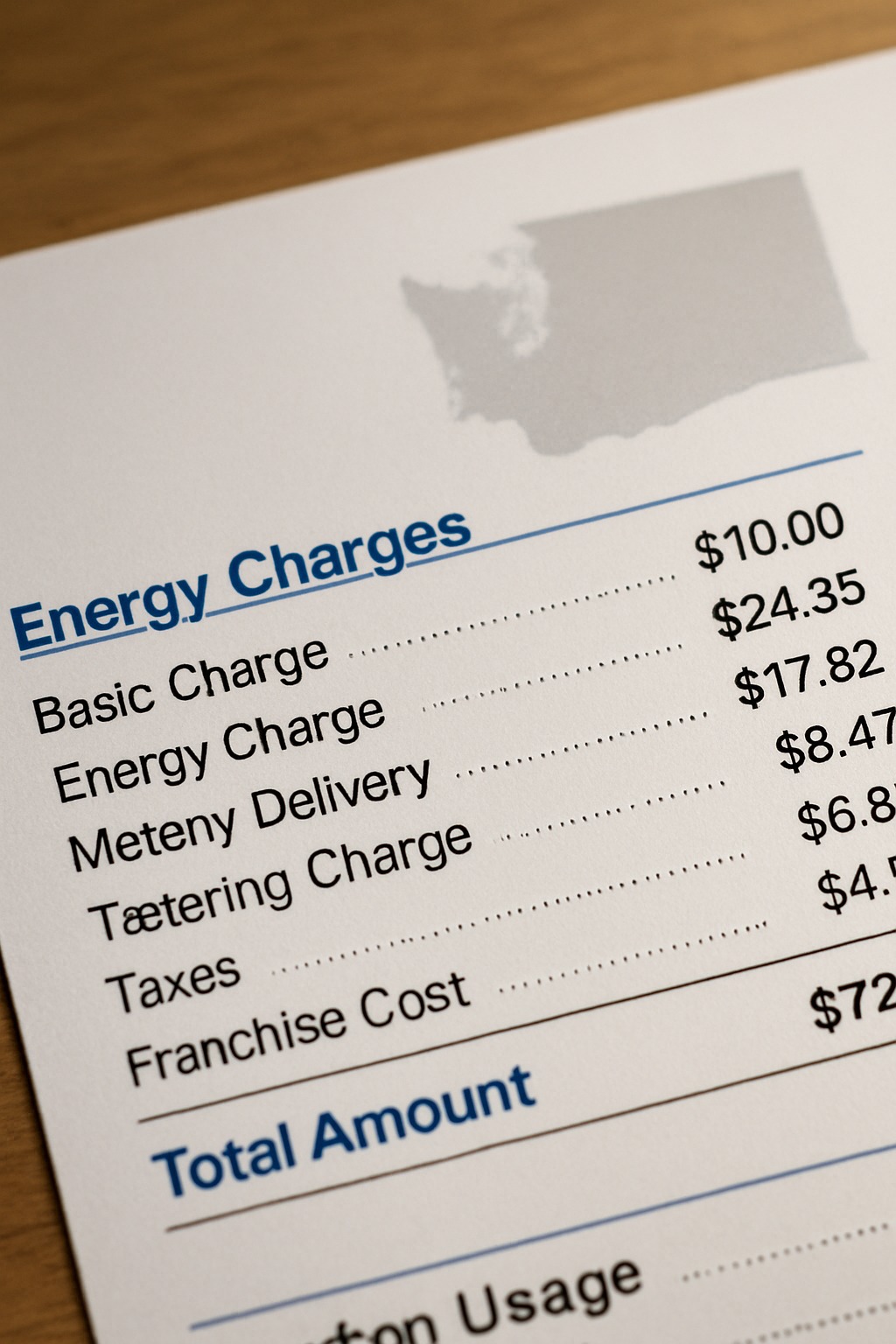

After months of public pushback, the Washington Utilities and Transportation Commission (UTC) has ruled that utilities may now identify Climate Commitment Act (CCA) costs directly on customer bills, reversing an earlier policy that prevented utilities from itemizing those charges.
The UTC’s new decision allows companies like Puget Sound Energy to list how much ratepayers are contributing to the state’s carbon market, established through Washington’s 2021 Climate Commitment Act. The CCA sets a statewide cap on greenhouse gas emissions and charges large polluters for allowances that fund state-run climate programs. Revenues from the program have already surpassed $1.5 billion.
The Commission’s earlier stance had barred utilities from displaying those costs as separate line items, prompting criticism from lawmakers, watchdogs, and members of the public who said the rule obscured the true impact of climate policy on household energy bills. In a public statement accompanying the reversal, the UTC acknowledged the need for clearer billing transparency and said the new approach would help customers better understand changing electricity and natural gas prices.
Public frustration intensified after the Washington Department of Commerce admitted to a major data error in its 2024 greenhouse gas reporting, overstating the CCA’s early benefits by more than 8,000%. Critics said that mistake further undermined public trust in how CCA revenues are being used.
For ratepayers in southwest Washington—including those served by utilities that source electricity through statewide markets—the Commission’s shift could soon mean more informative billing. Energy providers will have the option to show CCA-related charges beginning later this year, according to UTC guidance.
Advocates of transparency welcomed the move, arguing that the public should be able to see where climate-related funds are collected and how they align with state goals. Opponents of the CCA, meanwhile, contend that even with clearer billing, the policy’s financial impact remains substantial for families and small businesses during a period of rising energy costs.
The UTC has not yet indicated whether additional consumer disclosures or educational materials about the CCA’s price impacts will accompany these billing changes. The agency said it intends to evaluate further reporting options as part of its ongoing climate policy oversight.