

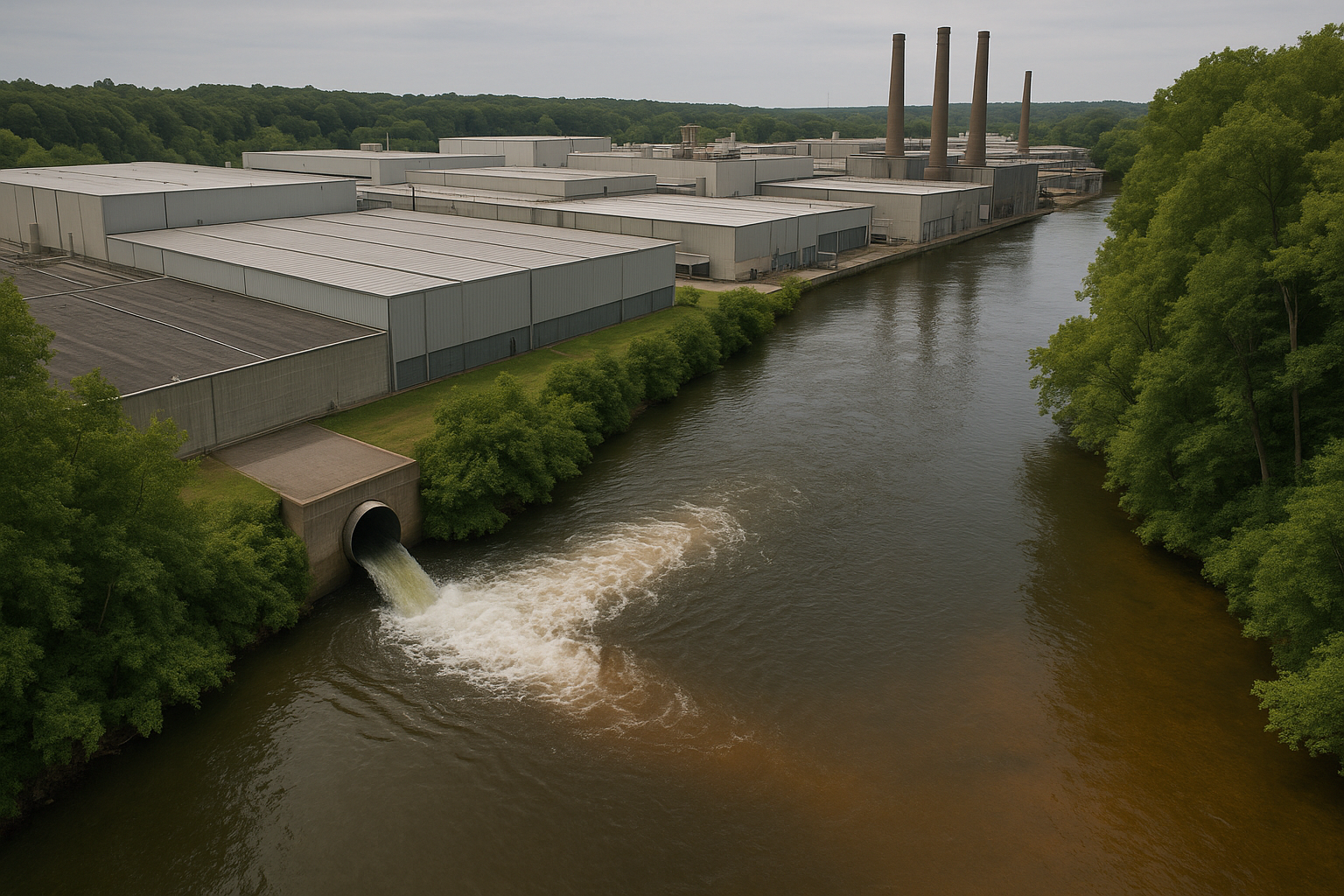

A sweeping multi-outlet investigation by The Associated Press, FRONTLINE (PBS), and others has revealed how the multibillion-dollar carpet industry centered in Dalton, Georgia, knowingly discharged toxic ‘forever chemicals’ into waterways for decades, contaminating rivers, wells, and communities across the Southeast. The story focuses on per- and polyfluoroalkyl substances, or PFAS—synthetic compounds used in stain-resistant coatings that persist indefinitely in the environment and human body.
The Dalton region’s mills, dominated by Shaw Industries and Mohawk Industries, relied heavily on PFAS-based products like 3M’s Scotchgard and DuPont’s Stainmaster. Even after internal disclosures of contamination in human blood and warnings from the Environmental Protection Agency, the industry continued to use similar chemicals for years. Wastewater from mills dumped into the Conasauga River system led to widespread pollution, reaching hundreds of thousands of downstream residences and farms across Georgia and Alabama. Residents now face elevated PFAS concentrations in their blood and, in some cases, significant health problems.
The revelations have triggered lawsuits, new federal safety standards, and calls for systemic cleanup. But state regulators in Georgia mostly allowed the textile industry to self-monitor, resulting in decades of unchecked chemical discharges. The scandal’s public health fallout now includes high PFAS blood concentrations in local populations, widespread groundwater contamination, and hundreds of millions of dollars in litigation settlements. A 2025 Emory University study found that three out of four residents tested near Dalton had PFAS levels requiring medical screening according to National Academy of Sciences guidelines.
Though the Dalton case is a Southeastern crisis, it mirrors quieter anxieties forming in southwest Washington. The same types of chemicals—formerly used in firefighting foams, manufacturing, and water-resistant coatings—have been detected in the Columbia River Basin and in localized testing around industrial sites and airports in Cowlitz, Clark, and Lewis Counties. Washington’s Department of Ecology has confirmed several PFAS detections in municipal wells statewide, prompting proposed rules to align with new EPA drinking water limits finalized in 2024.
In Longview and Kelso, where legacy mills, port operations, and water treatment infrastructure share a similar mid-20th-century industrial profile to Dalton, the Georgia findings serve as a warning. PFAS compounds migrate easily through soil and water, remain essentially non-degradable, and pass through most wastewater treatment systems—posing a complex challenge for utilities downstream of legacy industrial discharge zones. The Georgia case demonstrates how intertwined local industries and public utilities can sometimes delay necessary environmental oversight when jobs, political influence, and municipal revenue depend on a single industry’s success.
Local drinking water operators in Cowlitz County have begun voluntary PFAS monitoring under Washington’s new testing framework. State regulators plan to publish updated findings later in 2026, which could identify potential priority remediation areas. While no widespread contamination at the scale of Dalton’s has been reported in southwest Washington, officials caution that PFAS’s persistence makes early detection essential. The Georgia case illustrates how economic dependency on major employers can slow responses to emerging contaminants—a dynamic long familiar to communities built around timber, pulp, or manufacturing in the Pacific Northwest.
The federal government has now imposed national PFAS drinking water standards, though enforcement will take years. In Georgia, and in Longview alike, questions of who should pay to clean up decades-old pollution remain politically charged. The Dalton case exposes one model of industrial prosperity that left behind a toxic legacy—a story with implications far beyond the carpet capital of the world.
Primary reporting from AP, FRONTLINE, and partner newsrooms; local context by Columbia Countercurrent.