

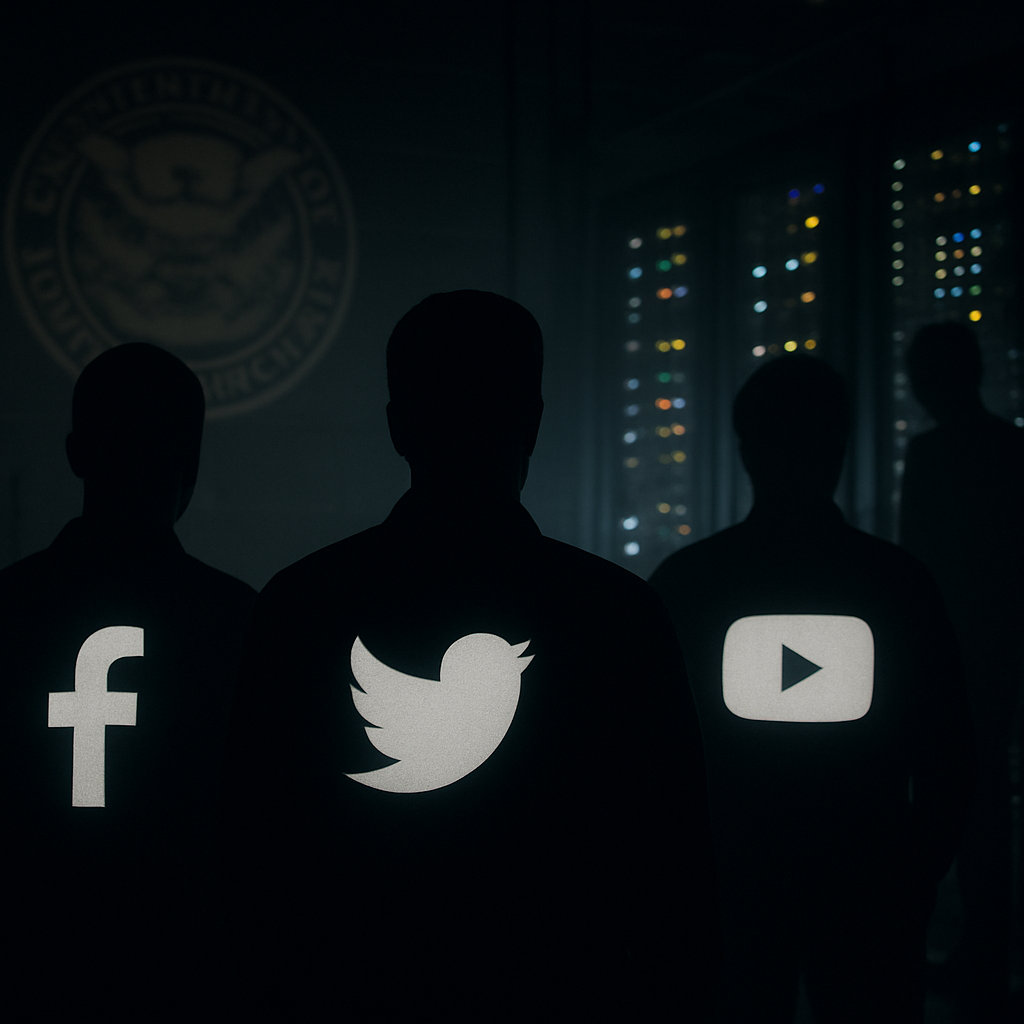

A recent report by TechCrunch alleges that the U.S. Department of Homeland Security (DHS) has issued administrative subpoenas to major technology companies, including Meta, demanding user data linked to accounts critical of former President Donald Trump. According to the report, the demand included personal information associated with at least one social media account that frequently posted political commentary about Trump and his allies.
The subpoenas were reportedly issued through the department’s investigative arm, raising immediate civil liberties concerns among privacy advocates who argue that such actions blur the line between legitimate national security interests and potential political surveillance. Legal experts emphasize that while administrative subpoenas do not require judicial approval, they are generally expected to be tied to specific, lawful investigations rather than political expression.
Efforts to compel technology companies to disclose user data have historically been contentious. Companies like Meta, Google, and X (formerly Twitter) maintain internal review processes to evaluate the legality and scope of government requests before compliance. In this case, it is not yet clear which companies received the subpoenas or whether they complied.
Civil rights groups have cautioned that the development, if confirmed, would represent an escalation in federal monitoring of online speech. The American Civil Liberties Union (ACLU) and other digital privacy organizations have long warned that the use of administrative subpoenas—without warrants—can be weaponized against protected political speech under the First Amendment.
While this report has not yet been corroborated by official DHS statements, it has sparked renewed calls for oversight. Lawmakers from both parties have in recent years voiced concern over politically motivated investigations within federal agencies, particularly those involving access to private digital data.
If substantiated, the use of Homeland Security powers in this context could have significant implications for transparency and accountability across government institutions, especially in the run-up to the 2026 election cycle.