

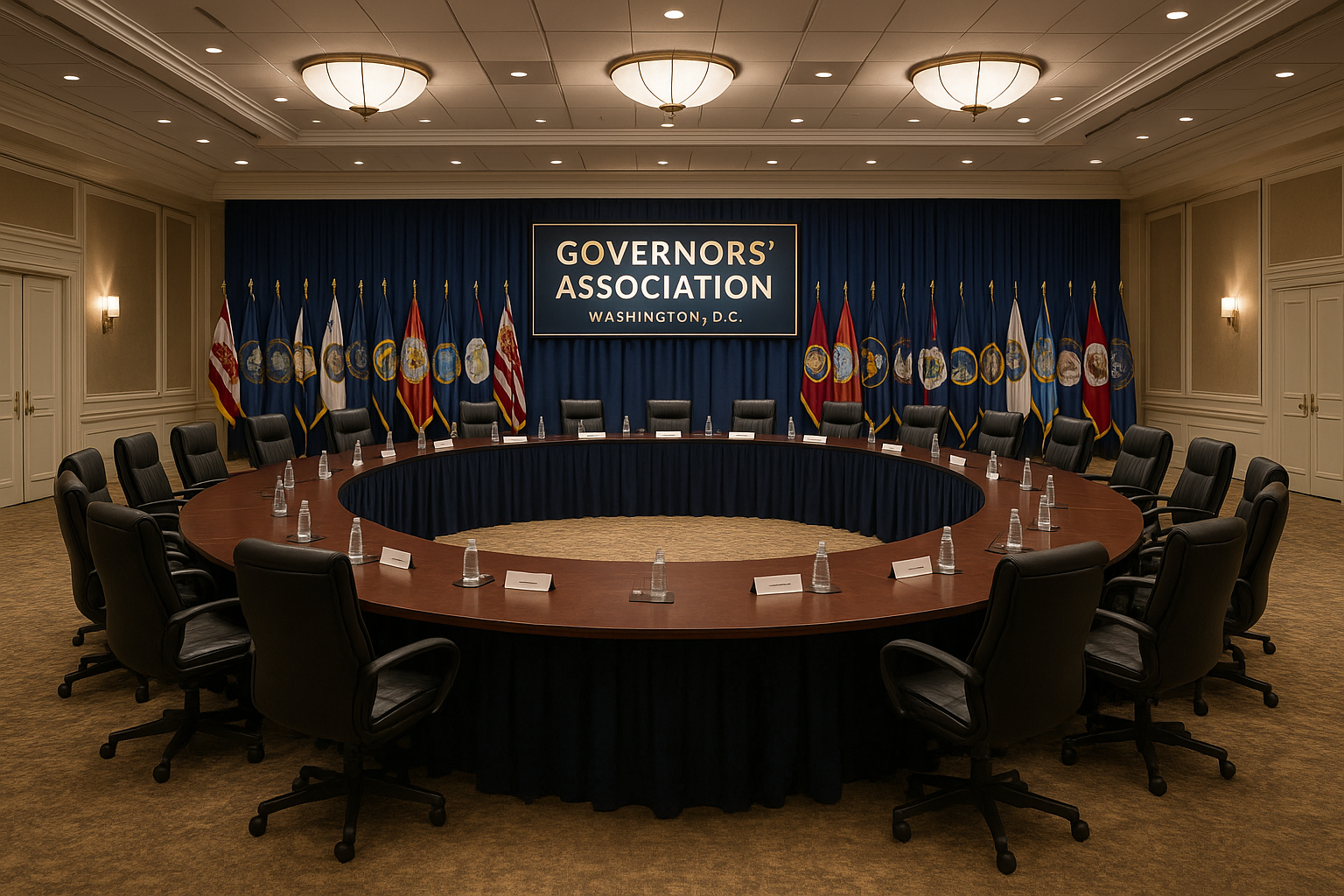

The National Governors Association (NGA) has called off plans for a formal meeting with former President Donald Trump following notice that the White House intended to restrict attendance to Republican governors only, according to a letter from NGA chair and Oklahoma Governor Kevin Stitt, a Republican.
The NGA was scheduled to convene in Washington, D.C. from February 19–21. Stitt’s letter, as reported by MyNorthwest and attributed to the Associated Press, stated that the organization withdrew its participation after being informed that invitations for the planned February 20 session with Trump would exclude Democratic governors. Stitt wrote that such a meeting would conflict with the NGA’s mission to represent all 55 state and territorial governors, and that the event was therefore removed from the official conference agenda.
Representatives for the NGA and the White House did not immediately comment publicly. The decision marks a rare disruption in the group’s longstanding tradition of bipartisan dialogue. The NGA, founded in 1908, typically serves as a space for collective deliberation on pressing policy issues beyond party lines. In recent years, however, political polarization has complicated that role.
Last year’s gathering was reportedly marred by partisan confrontation between Trump and then–Maine Governor Janet Mills, who is now a U.S. Senate candidate. According to accounts from the 2025 meeting, Trump criticized Mills over her opposition to his order concerning transgender athletes in women’s sports. Mills replied, “We’ll see you in court,” prompting Trump to predict the end of her political career. The encounter reportedly contributed to some Democratic governors opting not to renew their membership dues to the NGA afterward.
Although these developments largely unfold in Washington, D.C., they carry implications for states like Washington and Oregon, whose governors traditionally use NGA forums to coordinate on regional issues, from wildfire management to interstate transportation infrastructure. The breakdown of bipartisan engagement may reduce opportunities for cross-border collaboration in the Northwest and beyond.