

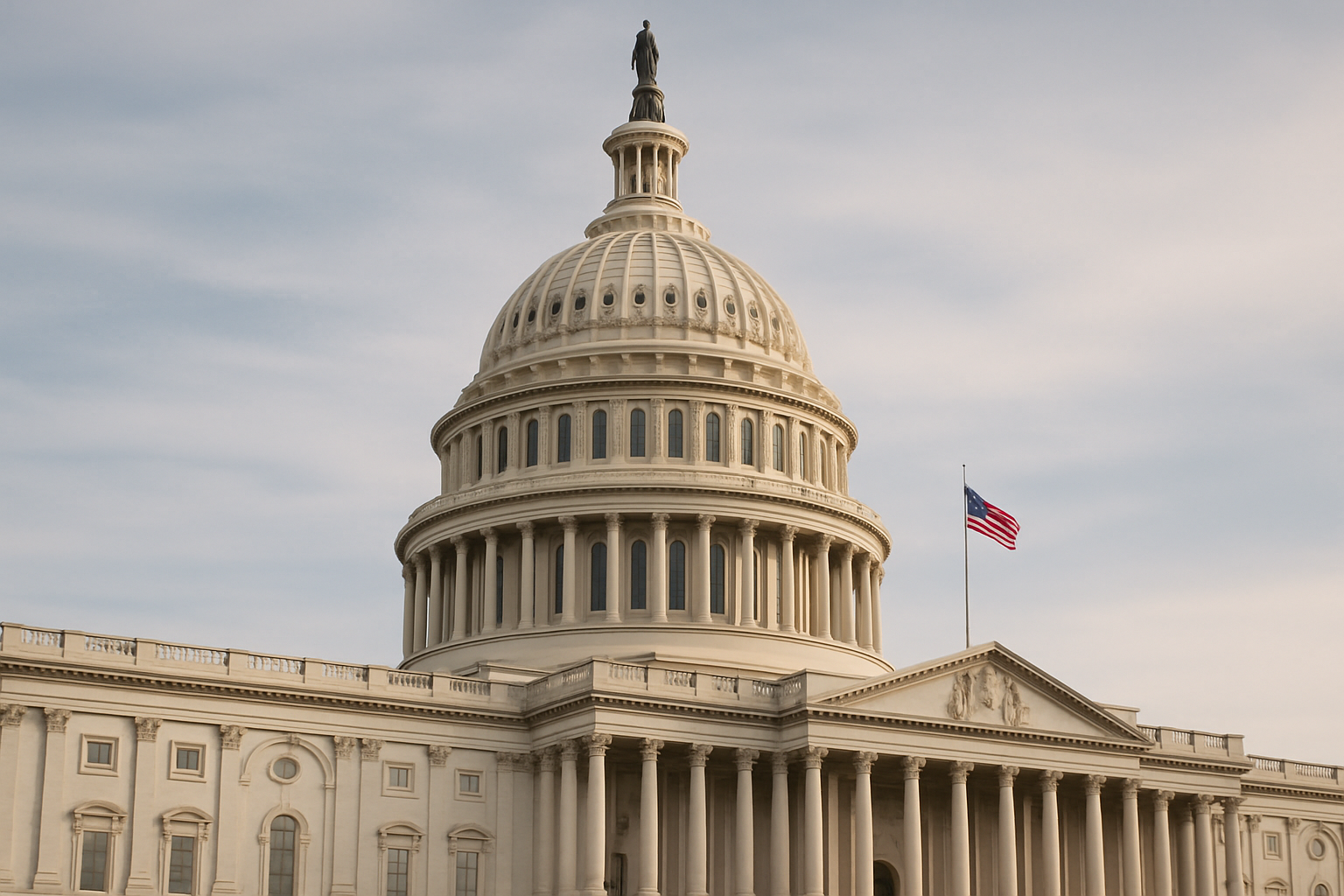

On February 11, 2026, the U.S. House of Representatives narrowly passed the SAVE America Act—legislation imposing strict requirements on voter registration and ballot casting, including documentary proof of U.S. citizenship and government-issued photo identification. The measure passed on a near-party-line 218–213 vote, with only one Democrat (Rep. Henry Cuellar of Texas) joining Republicans in support.
In a notable departure from her previous votes on similar election legislation, Representative Marie Gluesenkamp Perez (D–WA‑03) joined nearly all House Democrats in voting against the SAVE America Act. Her ‘no’ vote marks a significant reversal from April 2025, when she was one of just four Democrats to support the earlier iteration of the bill known as the SAVE Act. In that vote, she aligned with Republicans in backing a measure requiring proof of citizenship to register to vote; that bill passed the House 220–208 and did not advance in the Senate.
This change in stance was underscored by a public comment she made on social media following the vote: referencing one provision of the bill, she criticized its design, stating, “if your legislation requires government to provide free photocopy services, you have not written a good piece of legislation.”
Advocacy groups swiftly condemned the SAVE America Act. The Brennan Center for Justice warned that the bill would disenfranchise millions of eligible voters, including married women, low-income individuals, and naturalized citizens, by mandating difficult-to-obtain documents like passports or birth certificates. The ACLU denounced the legislation as a dangerous federal overreach that risks hampering election administration and suppressing voter turnout. Meanwhile, the League of Women Voters described the bill as a direct attack on voting freedom, especially for historically marginalized communities.
Why this matters locally: For constituents in Cowlitz County, Pierce County, and across Washington’s 3rd Congressional District, access to voting by mail is a foundational element of our democratic participation. Representative Gluesenkamp Perez has previously emphasized her support for secure and accessible vote-by-mail systems. Her vote against this legislation reinforces her district’s longstanding trust in those systems and affirms the integrity of local election administration practices. It also reflects a measured response to legislation that even she has labeled poorly designed.
As the SAVE America Act moves to the U.S. Senate, its fate remains uncertain in the face of potential filibuster and strong opposition. Representative Gluesenkamp Perez’s evolving position adds a critical local voice to the broader debate over voter access and election law reform.