

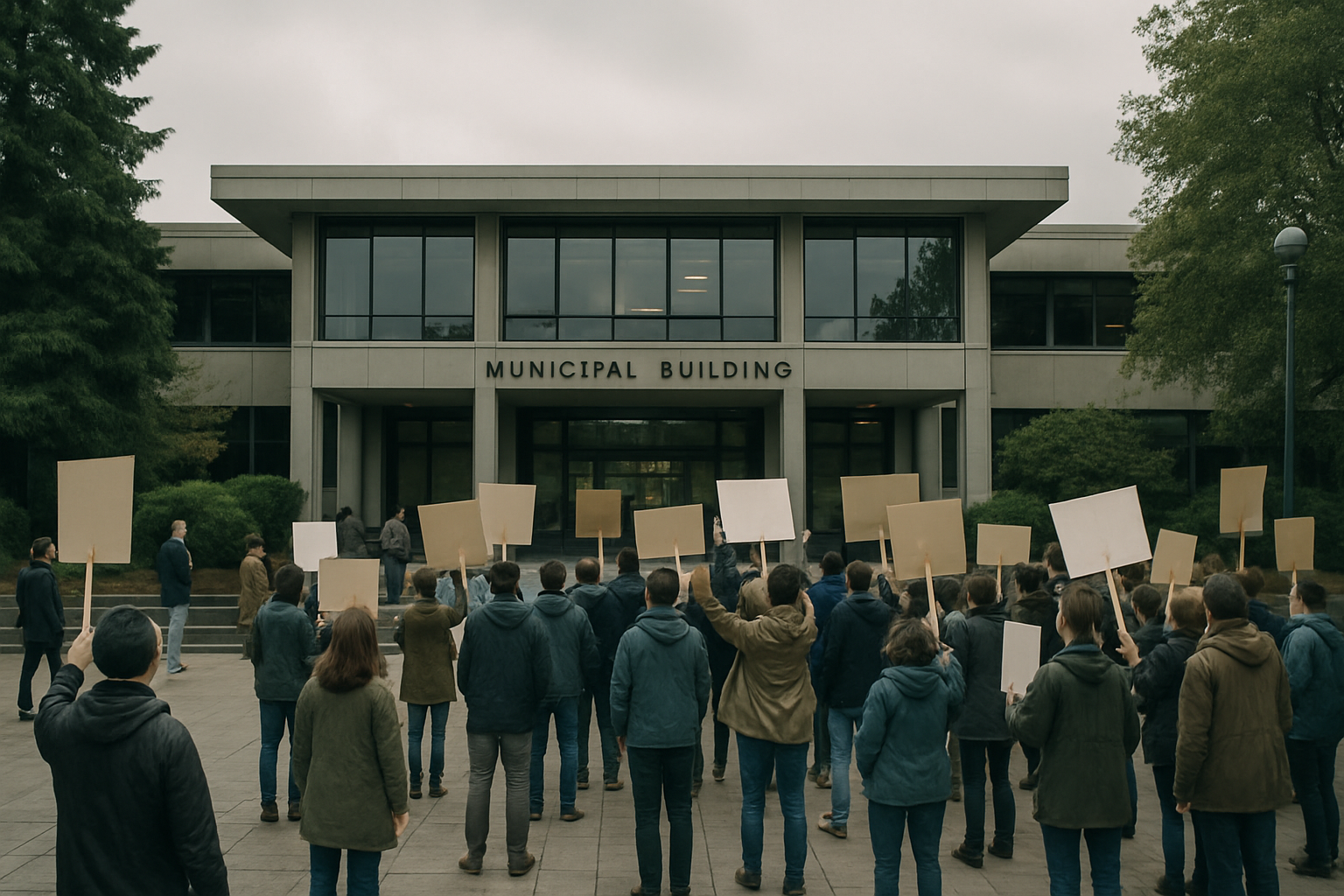

On February 10, approximately 150 people gathered both outside and inside the Tacoma Municipal Building during a Tacoma City Council meeting, demanding that the Council take action to shut down the Northwest ICE Processing Center and divest from Immigration and Customs Enforcement (ICE). Protesters entered the building during the meeting and used chants and vocal applause to amplify their message—prompting Mayor Anders Ibsen to call an uncommon recess due to the disruptions. The event was part of a sustained campaign by the Pierce County Immigration Alliance, which organized this as the third protest of its kind in recent weeks. KIRO 7 reported that protesters continued chanting inside council chambers and that Mayor Ibsen warned the council might end the community forum if disruptions continued. Meanwhile, Yahoo News and The News Tribune confirmed that Talison Crosby of the Pierce County Immigration Alliance called on the city to revoke the business license of the Northwest Detention Center, asserting the city has the authority to do so.
This latest action follows earlier protests—including a demonstration two weeks prior that blocked traffic on Market Street—and marks continued pressure from local advocates seeking to escalate city accountability regarding Tacoma’s role in ICE detention and enforcement. Yahoo News documented how protesters disrupted traffic and later entered the Municipal Building in late January.
Why this matters to Cowlitz County
The issues raised in Tacoma echo Bellingham-area ICE operations and have direct resonance in our region’s history. In Longview, the community previously witnessed involvement in an ICE operation, locally referred to as “Operation Charlotte’s Web.” Though it took place under a different operational context, the reference underscores how federal enforcement actions extend beyond urban hubs and into rural and smaller communities. The fear of unchecked federal overreach and its implications for local authority, civil liberties, and public safety remains a shared concern across southwest Washington.
Moreover, Washington state has enacted a law intended to bolster oversight of privately run ICE facilities like the one in Tacoma. Signed by Governor Bob Ferguson in May 2025, the law empowers the state Department of Health to conduct unannounced inspections to ensure compliance with standards such as food safety, access to medical care, and running water. The GEO Group, which operates the facility, has challenged the law’s constitutionality. Axios
Conclusion
The February 10 Tacoma rally reflects sustained and intensifying local demands that the City Council not only oppose federal immigration enforcement but also withdraw operational and legal support for ICE through the municipal business license. This protest aligns with broader legislative efforts in Washington to hold the facility’s private operator accountable for detainee conditions. The movement’s persistence underscores regional anxieties about the expansion of ICE authority and the capacity of local and state actors to exert oversight and protect civil liberties.
For Cowlitz County readers, this warrants attention: as Longview once saw involvement in federal ICE operations, the outcomes of legislative and civic battles in Tacoma could set precedents affecting communities across the state.