

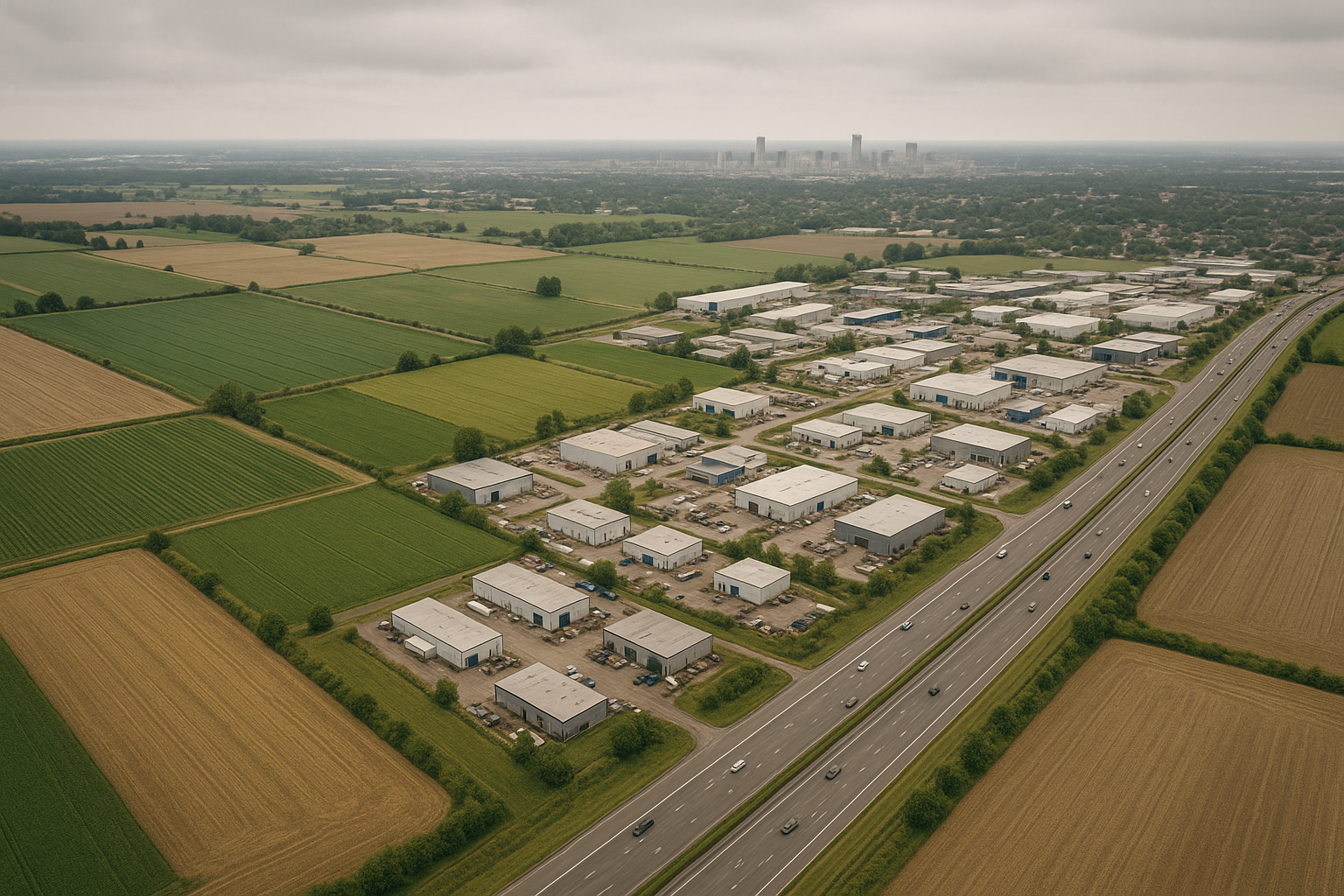

Oregon lawmakers spent hours on Monday debating Senate Bill 1586, a proposal that would open hundreds of acres north of Hillsboro to advanced manufacturing. Supporters argue the move is essential to keep semiconductor and biotechnology jobs in the state. Opponents say it risks sacrificing prime Willamette Valley farmland. While the dispute is unfolding across the Columbia River, the outcome could influence land‑use, power‑grid planning, and industrial recruitment strategies affecting Southwest Washington communities along the I‑5 corridor.
The bill would bring 373 acres of rural land into Hillsboro’s urban growth boundary and rezone an additional 1,400 acres for future industrial development. The tract sits just south of U.S. Highway 26 and near existing semiconductor facilities, including Intel’s Jones Farm campus. Hillsboro officials say few sites statewide are as ready for immediate development, citing nearly two decades of planning work. Local farmers and land conservation groups counter that the area represents some of the valley’s best agricultural soil.
Farmers who testified Monday warned that speculation tied to potential industrial expansion has already driven up land prices. Hillsboro farmer Aaron Nichols told lawmakers that rising costs have made agricultural expansion nearly impossible and argued SB 1586 would accelerate those pressures.
The land in question has been a flashpoint before. In 2024, Gov. Tina Kotek considered bringing the same acreage into the growth boundary under temporary authority granted during that year’s legislative session. She ultimately declined after Oregon did not secure a federal research hub designation, as reported by Oregon Public Broadcasting. SB 1586 would bypass the normal public process that governs boundary expansions and would override a 2014 agreement to keep the land in farm use for 50 years.
Much of the tension centers on data centers, which have proliferated in Hillsboro. An industry map maintained by Data Center Map, available at this link, shows roughly 14 data center sites in the city, though watchdog organizations such as Friends of Smart Growth estimate the total is far higher. SB 1586 would restrict stand‑alone data centers on the new land but allow them as accessory uses to manufacturing or research facilities. Opponents argue the language leaves substantial room for expansion.
The bill’s supporters say advanced manufacturing often requires data infrastructure and that Oregon risks losing out to other states without more industrial land and targeted incentives. Sen. Janeen Sollman, one of the bill’s sponsors, said Oregon must grow “modestly” to maintain economic competitiveness.
The broader impacts reach beyond Oregon’s border. In recent years, utilities across the Northwest have struggled to meet the energy and water demands of large data centers. Oregon utility watchdogs have accused Portland General Electric of shifting long‑term costs to residential customers, documented in reporting by OPB. In The Dalles, officials have pursued additional water rights in the Mount Hood National Forest, as covered in January reporting, while denying that the move is connected to Google’s expanding local footprint.
Those pressures matter in Cowlitz County, where industrial energy users already compete with household demand, and where public utilities must forecast long‑term regional growth. Any large‑scale tech expansion in Hillsboro could increase strain on shared transmission infrastructure, influence future resource planning, or shift regional market dynamics for energy‑intensive industries.
Lawmakers did not finish reviewing the full volume of testimony Monday. According to OPB, most written comments submitted so far oppose the bill. The Senate committee is expected to revisit SB 1586 on Wednesday. If advanced, the measure could set a new precedent for bypassing Oregon’s long‑standing growth‑management process—one that neighboring states may watch closely as they confront similar pressures to accommodate both agricultural preservation and high‑tech development.
Why this matters for Southwest Washington
Communities from Longview to Ridgefield sit within the same regional power grid as Hillsboro’s tech corridor. Decisions that encourage new semiconductor or data‑center clusters just across the Columbia River can influence cross‑border infrastructure costs, electricity planning, and industrial recruitment. Local leaders have increasingly warned that energy‑heavy industries affect long‑term utility rates and resource availability. Monitoring Oregon’s policy direction helps clarify what competitive pressures and infrastructural demands Southwest Washington may face in the coming years.
Sources
- Oregon Public Broadcasting: Oregon senators court tech development near Hillsboro over farm group objections
- Oregon Public Broadcasting: Rural farmland north of Hillsboro unchanged after governor backs off proposal
- Oregon Public Broadcasting: Utility watchdogs accuse PGE of skirting new law meant to make data centers pay for rising demand
- Oregon Public Broadcasting: As Google’s water demands grow, The Dalles aims to pull more from Mount Hood forest