

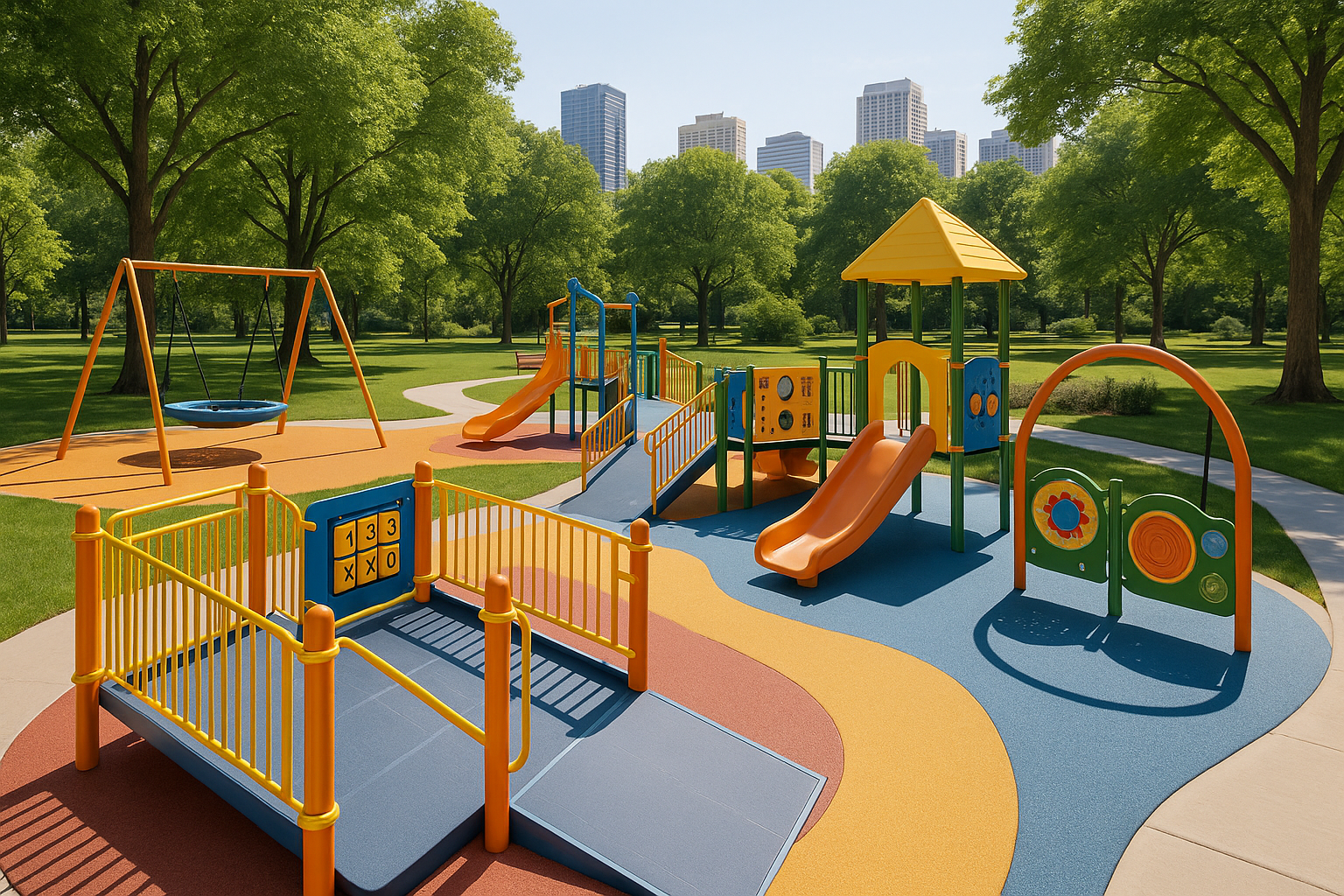

The City of Longview has announced plans to transform Cloney Park into what it describes as Cowlitz County’s first fully inclusive playground, marking a significant investment in accessible public spaces for residents of all ages and abilities. The announcement was published in a city news release available at the City of Longview’s official website.
According to the city’s statement, the project has been in development for several years and is expected to cost approximately $4.37 million. Most of the funding is derived from state and regional grants awarded to support community recreation and accessibility initiatives. Construction is scheduled to begin in April, though the city did not specify an exact start date.
The planned upgrades will focus on ensuring that the park can be used by individuals with a wide range of physical, cognitive, and sensory needs. While the city has not yet released full design schematics, the news release highlights an emphasis on barrier-free equipment, accessible surfacing, and features intended to encourage social and intergenerational play.
Cloney Park’s redevelopment comes as communities across Washington continue expanding accessibility in public spaces, often through coordinated grant-making efforts at the state level. For Longview, this project represents one of the city’s most significant recent investments in recreational infrastructure.
The city has not yet announced whether additional community input sessions or public briefings will take place before construction begins. As the project moves forward, Longview residents will be watching to see how the inclusive design translates into on-the-ground improvements for children and adults with diverse mobility and sensory needs.
Why this matters
Fully inclusive parks remain rare in many parts of Washington, particularly in smaller counties where recreational budgets are tight and grant funding plays a central role in major upgrades. If completed as described, Cloney Park would mark the first such facility in Cowlitz County, expanding accessible play options for local families and bringing the city in line with broader statewide efforts to improve equitable access to public spaces.
Sources
- City of Longview: Cloney Park to Become Cowlitz County’s First Fully Inclusive Park