

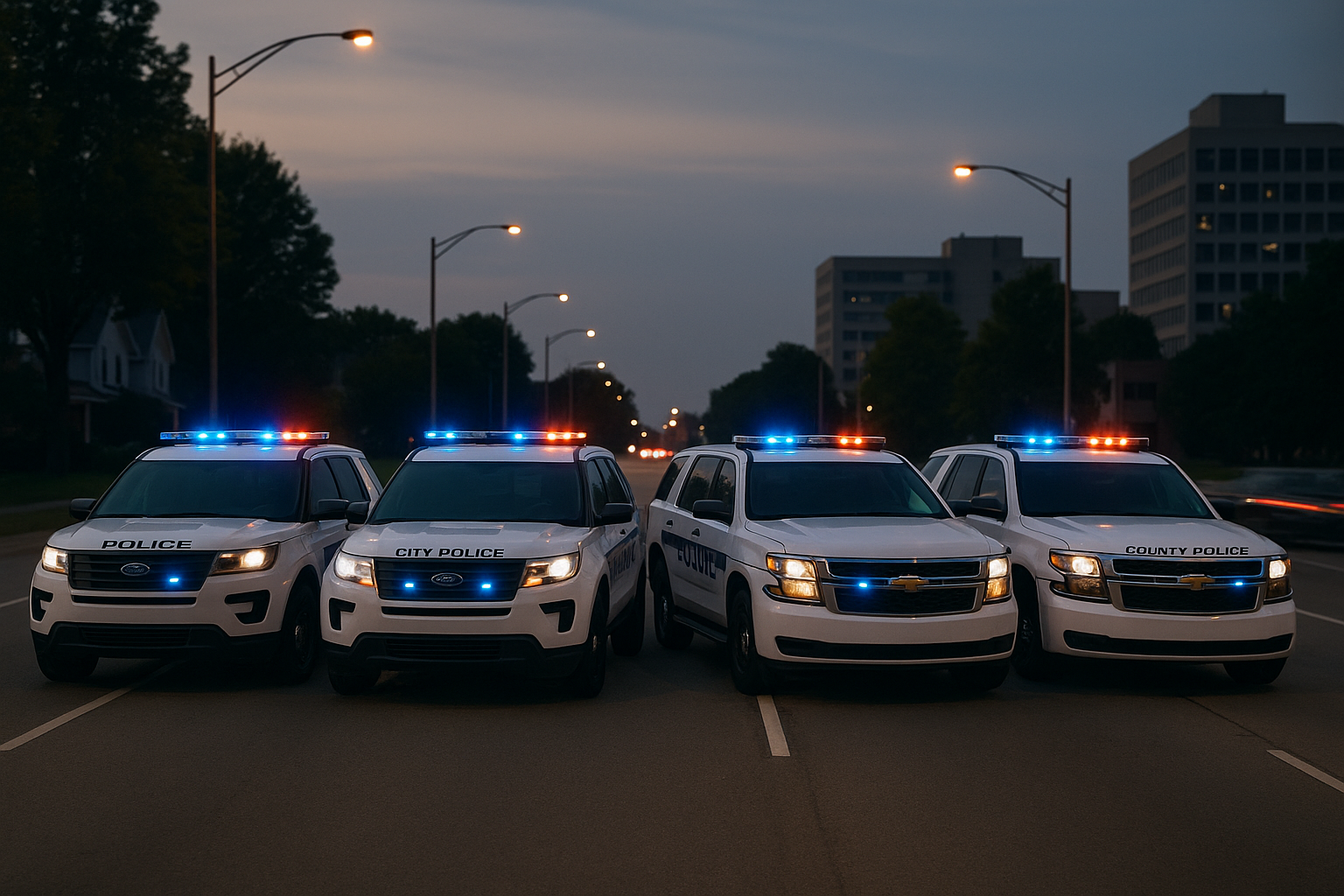

Police departments in Bellevue, Kirkland, Redmond, and Issaquah have jointly launched a new Eastside Safe Streets Task Force aimed at curbing reckless driving, street racing, and high-speed collisions. The initiative, confirmed through reporting by MyNorthwest, brings together four Eastside agencies that say the problem has become too regional for any single city to manage on its own.
Bellevue Police Department spokesperson Drew Anderson stated that drivers who endanger others in any of the participating cities should expect coordinated enforcement. Anderson pointed to a recent crash that began with reckless driving in Bellevue but resulted in a collision in Redmond as an example of why multi‑city collaboration has become critical.
The task force is described by participating agencies as an open‑ended partnership. Officers can coordinate in real time, share information, and continue pursuit or investigation across city boundaries in cases where dangerous drivers cross jurisdictions. According to the statements cited in the Eastside reporting, departments intend to “trade notes” and synchronize resources in order to make evasion more difficult.
Residents in those communities are encouraged to report dangerous driving when safe to do so, but officials emphasize that drivers should avoid confrontation and instead pull over before placing a call. Departments have credited community reporting as a significant factor in successful emphasis patrols on the Eastside.
While the initiative is located on the opposite side of the Puget Sound region, its formation echoes ongoing concerns in Southwest Washington about speeding and dangerous driving along Interstate 5, State Route 432, and rural connectors throughout Cowlitz County. Local agencies — particularly in Longview and Kelso — have periodically highlighted the challenge of responding to high‑speed incidents that cross city lines, especially when collisions occur just outside a jurisdiction’s borders but originate within city limits.
Regional approaches like the Eastside Safe Streets Task Force offer one model for interagency coordination at a time when dangerous driving remains a leading source of severe crashes statewide. Whether similar cross‑city partnerships emerge in Southwest Washington may depend on future crash patterns, available resources, and public demand for more synchronized enforcement.
Why this matters
For communities in Cowlitz County, where major transportation corridors link several small jurisdictions, enforcement gaps can emerge when dangerous drivers move between city limits faster than dispatch or patrol units can adapt. The Eastside model highlights one potential path for improving coordination without requiring consolidation of departments or dramatic policy shifts.
As statewide traffic fatalities have trended upward in recent years, regional collaboration — whether formalized or ad hoc — may play an increasing role in how local agencies address high‑risk driving behaviors.