

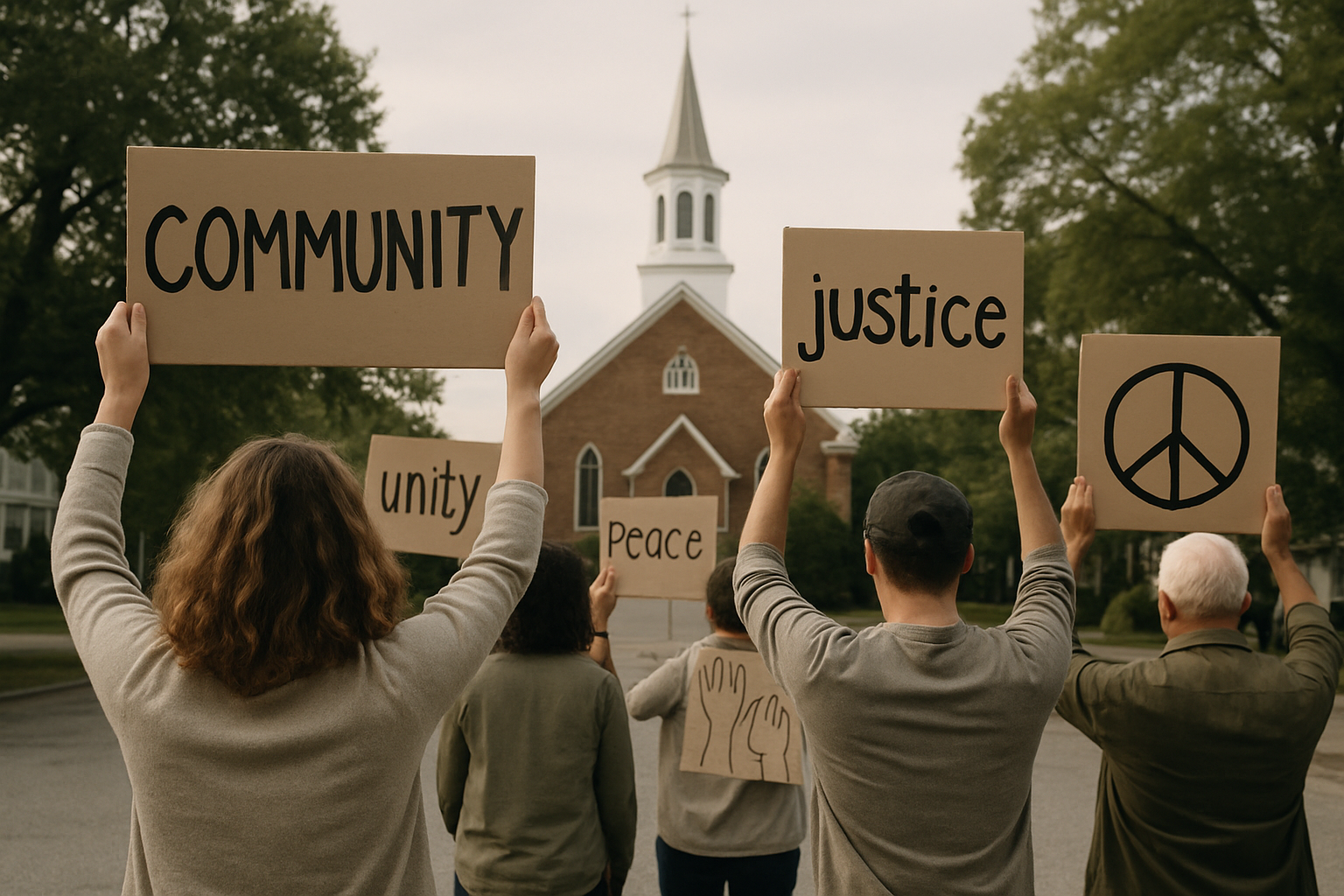

CAMAS — Members of Camas Friends Church have spent recent months using their weekly “open sharing” time to raise concerns about actions taken by U.S. Immigration and Customs Enforcement, according to reporting by The Columbian. Congregants told the newspaper that federal enforcement activity, including high‑profile operations across Southwest Washington, has prompted them to organize visible demonstrations and public discussions about the role of immigration policing in local communities.
According to The Columbian’s reporting, church members have participated in peaceful demonstrations outside the Camas Friends Church campus and in downtown Camas, describing their efforts as an attempt to call attention to how federal immigration actions can affect families, workplaces, and schools throughout the region. While the congregation’s concerns are focused locally, the reporting notes that their discussions reflect broader national debates over immigration enforcement and federal authority.
Clark County organizations and community groups have periodically raised similar concerns in recent years, especially during periods of increased federal activity. The Columbian’s account highlights how those conversations are now present within faith communities, which historically play a significant role in local civic engagement across Southwest Washington.
Although Camas lies in neighboring Clark County, shifts in immigration enforcement practices have implications along the I‑5 corridor, including in Cowlitz County, where industries rely on immigrant labor and where families can be directly affected by federal actions taken elsewhere in the region. Faith leaders interviewed by The Columbian emphasized the importance of community awareness and open dialogue as congregations weigh their responsibilities in responding to federal policy.
At the time of publication, The Columbian’s reporting did not reference any direct federal response to the concerns raised by Camas Friends Church members.
Why this matters
Southwest Washington’s civic landscape is often shaped by the interaction between local institutions and federal authority. When community groups or faith congregations begin addressing immigration enforcement as a weekly topic, it can signal rising concern about how federal actions intersect with everyday life in nearby counties. For Cowlitz County residents, those discussions can help clarify how regional enforcement patterns may influence local families, workplaces, and support networks.
Sources
The Columbian: Camas Friends Church members protest ICE’s actions, existence