

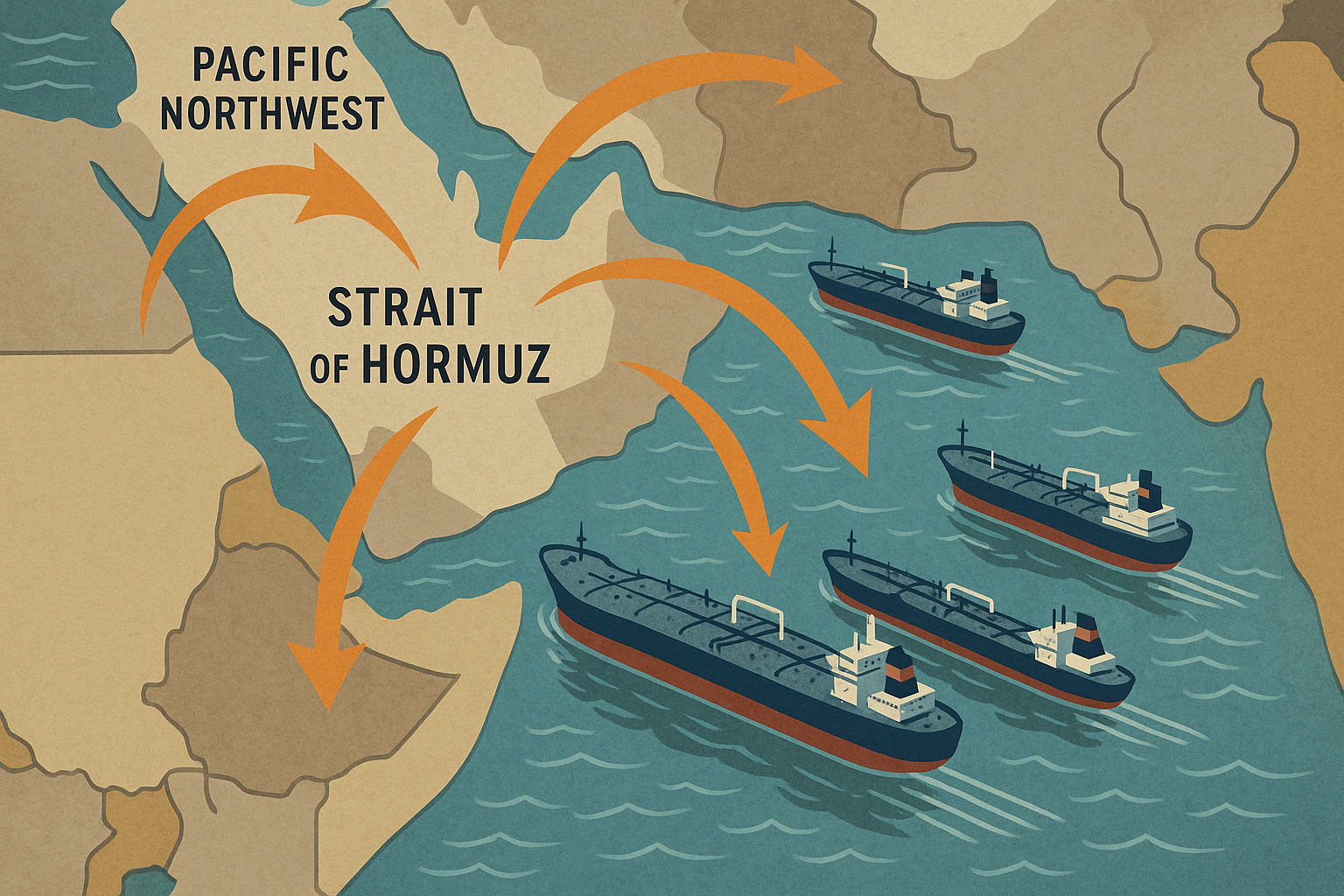

Residents across Cowlitz County may feel the effects of escalating tensions near the Strait of Hormuz, a global shipping chokepoint that plays an outsized role in determining the price of gasoline and diesel sold throughout the Pacific Northwest. According to reporting by KGW, the narrow passage at the entrance to the Persian Gulf handles roughly one‑fifth of the world’s petroleum liquids. That estimate aligns with historical assessments by U.S. and international energy agencies.
Because so much of the world’s oil supply moves through this single corridor, any military escalation or shipping disruption has the potential to ripple quickly through global markets. The Cowlitz County area does not receive fuel directly from the Middle East, but prices at local pumps are tied to global supply conditions. When the cost of crude oil rises in response to uncertainty abroad, wholesale fuel prices across the West Coast often follow.
Energy analysts have noted for years that the Strait of Hormuz operates as one of the world’s most vulnerable maritime routes. In past periods of conflict, even limited interference with tanker traffic has triggered short‑term spikes in oil prices. The recent concerns highlighted by KGW reflect that same pattern of global sensitivity.
At the local level, fuel distributors and transportation companies typically adjust their costs based on market movements rather than direct supply changes. This means Longview and Kelso residents could see price fluctuations even if no physical shortage occurs. According to federal energy data, retail fuel markets across Washington State have historically responded within days to global price swings tied to events in the Persian Gulf.
For communities in Southwest Washington, where many households commute along the I‑5 corridor and small businesses rely on steady transportation costs, volatility in international shipping lanes can translate into practical day‑to‑day impacts. While energy officials have not announced any immediate shortages, the economic sensitivities surrounding the Strait of Hormuz serve as a reminder of how geopolitical events abroad can influence budgets at home.
At the time of publication, national and international agencies have not issued new forecasts specific to the current tensions, but past disruptions provide a clear precedent: instability near the strait tends to raise global oil prices, which can in turn affect pump prices in Cowlitz County.
Why this matters
Fuel costs shape everything from family budgets to government transportation spending. When global routes like the Strait of Hormuz face risk, communities far from the Middle East—such as those in Southwest Washington—may still experience economic aftershocks. Continued monitoring of global supply indicators will determine whether any local price adjustments are temporary or more sustained.
Sources:
KGW: Strait of Hormuz: Oil and gas costs could rise if trade route is disrupted by conflict