

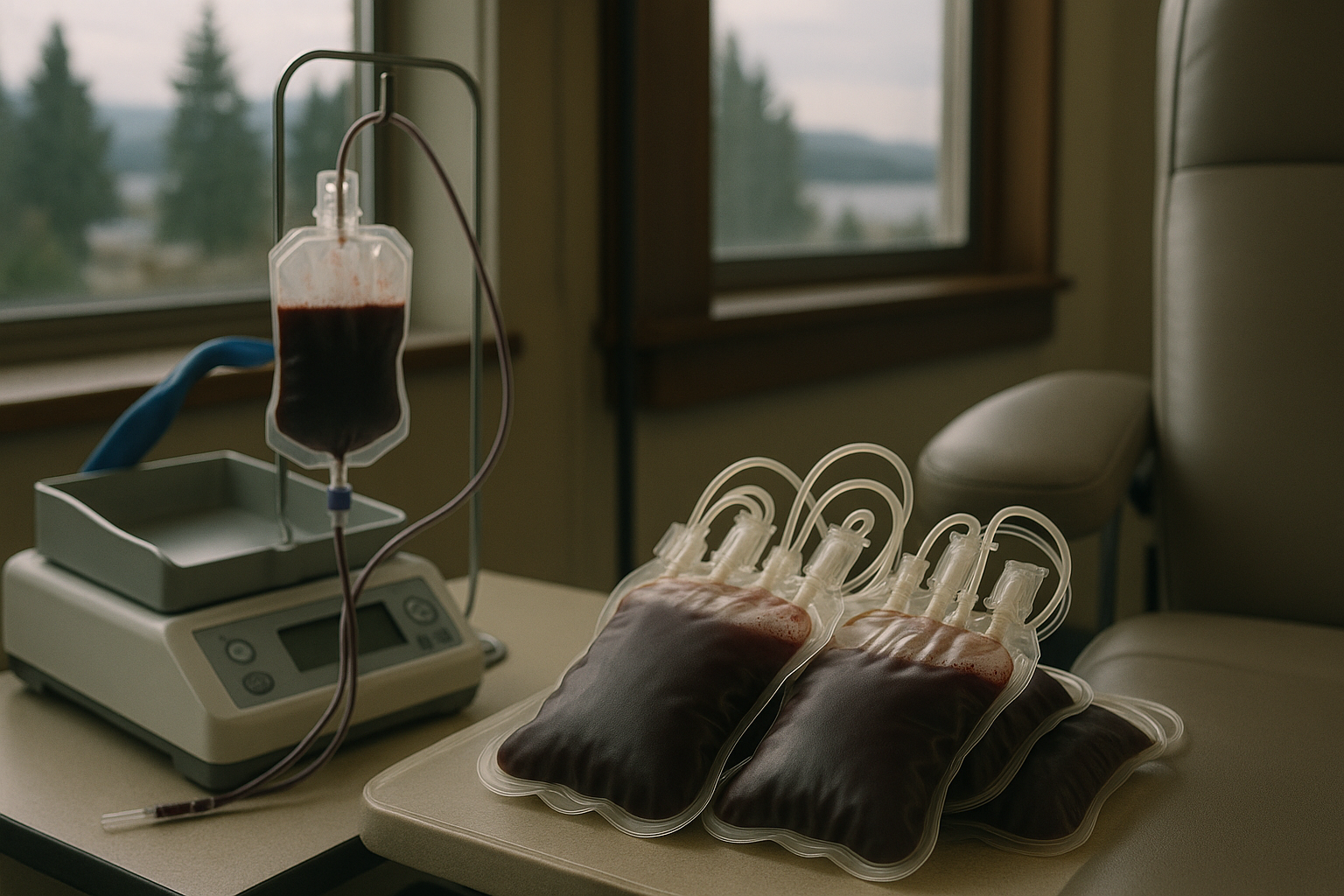

Bloodworks Northwest has issued a regional “Code Red” alert, warning that the Pacific Northwest’s blood reserves have fallen to critically low levels — just a one- to two-day supply in some areas. The organization, which supplies dozens of hospitals across Washington and Oregon, says the shortage could impact local facilities in Cowlitz County if donations don’t rapidly increase.
The alert follows weeks of winter weather disruptions that have reduced donation turnout and delayed scheduled blood drives. Bloodworks Northwest operates a donation center in Longview, and staff there confirmed that appointments remain open for the coming week. Type O blood — the universal donor type — is in especially short supply, though all types are urgently needed.
Juan Cotto, community engagement director for Bloodworks Northwest, warned that a stable blood system needs roughly a five- to seven-day cushion to meet everyday medical needs. “When supply drops faster than donations come in, that’s when we enter what we call a Code Red situation,” Cotto said. Bloodworks estimates that several thousand donors are needed across the region to restore stability.
The shortage could strain local hospitals in Longview and Kelso, which depend on the organization for transfusions and trauma care. Bloodworks distributes blood to healthcare systems from Vancouver to Seattle and beyond, including emergency centers that often rely on immediate access to type O supply.
Residents who want to contribute can make an appointment through Bloodworks Northwest’s website. Donors must be at least 16 years old, weigh at least 110 pounds, and be in good health on the day of donation.
Why this matters: Cowlitz County’s hospitals regularly depend on regional blood banks rather than maintaining large local reserves. A sustained shortage could result in delayed non-emergency procedures or reduced capacity for trauma response during a crisis. With weather-related disruptions still affecting regional logistics, consistent local donation is one of the most effective ways to maintain resilience in the healthcare system.
Source: Bloodworks Northwest; Washington Department of Health; reporting by MyNorthwest.




Leave a Comment