

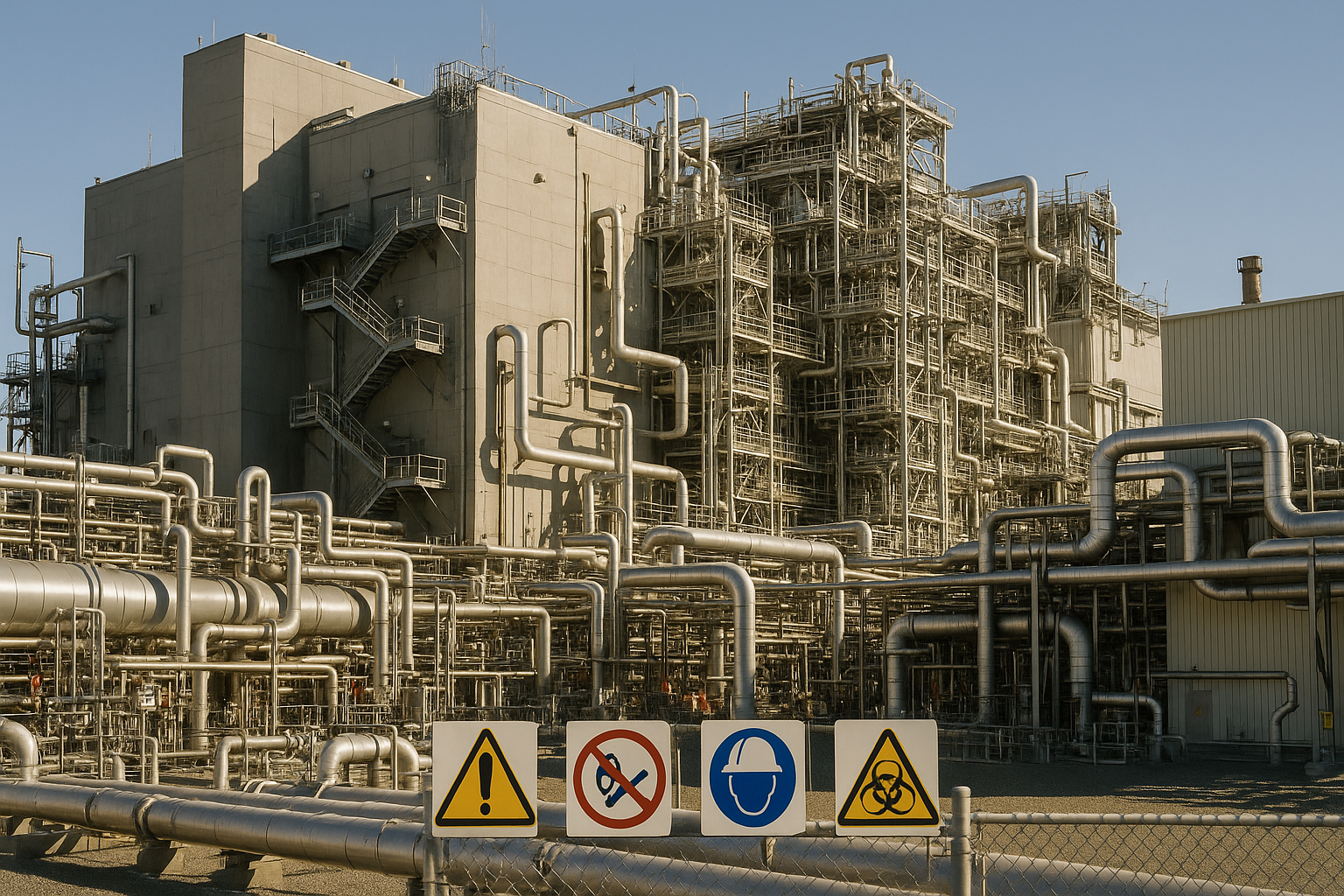

The U.S. Department of Energy (DOE) is investigating a series of anhydrous ammonia leaks at the Hanford Waste Treatment and Immobilization Plant in southeast Washington. DOE’s Office of Enforcement representatives visited the site last week to assess the incidents, according to an employee familiar with the matter who spoke anonymously due to job security concerns.
The leaks reportedly occurred within the plant’s complex that processes radioactive waste into stable glass forms. Federal safety board documents suggest multiple leaks have taken place since late 2024, with one event prompting a ‘take cover’ order for workers in mid‑2025. DOE and Washington’s Department of Ecology have declined to comment on ongoing leaks or enforcement actions.
Contractor Bechtel, which oversees plant operations, confirmed ammonia is used onsite to neutralize nitrogen oxides in emissions from the vitrification process. The company maintains two large ammonia storage tanks totaling about 7,600 gallons and says monitoring systems are installed throughout the facility. Bechtel has stated that earlier leaks involved minor valve issues during initial system pressurization and that corrective tightening has been completed.
Ammonia is a hazardous chemical—both flammable and corrosive—and exposure can cause respiratory injury or burns. While DOE officials, including acting Hanford Field Office manager Brian Harkins, have downplayed the scale of the leaks, asserting that safety responses have been “conservative,” federal oversight continues amid questions about long‑term maintenance and worker protection at the site.
For communities across southwest Washington, Hanford’s performance matters beyond its boundaries. The plant treats waste generated from past plutonium production—some 56 million gallons of highly radioactive material stored nearby—and its stability underpins decades of cleanup commitments that still define federal‑state relations in the Columbia Basin.
DOE has not specified when its enforcement review will conclude or whether penalties could follow.
Source: Original reporting by Oregon Public Broadcasting.



Leave a Comment