

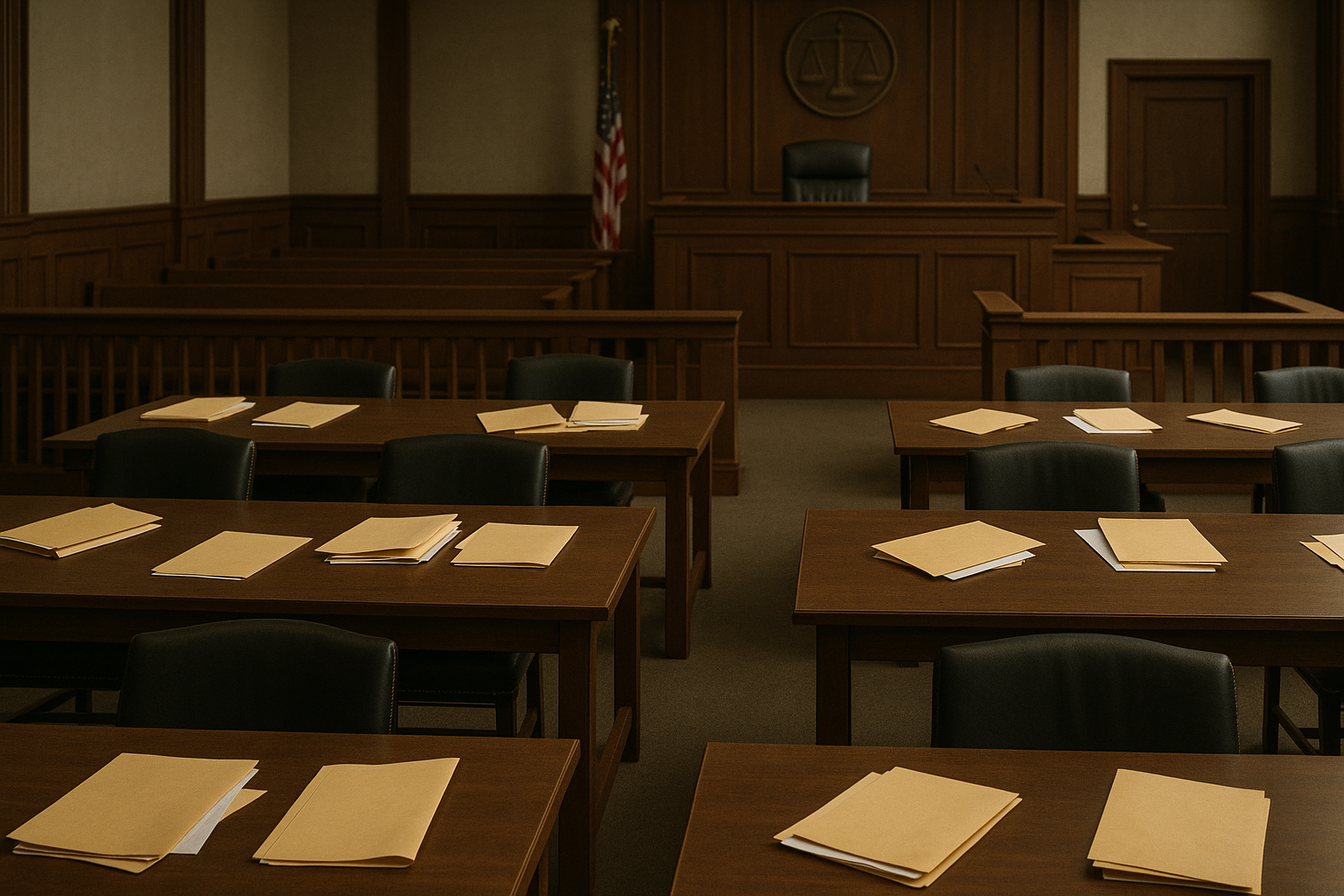

A funding and staffing crisis in Washington’s public defense system reached a visible breaking point this week when a Clark County District Court judge told a courtroom of defendants that the court could not guarantee their constitutional right to legal representation. According to information reported by The Columbian, the judge apologized openly before setting hearings to determine whether several cases must be dismissed due to the continued absence of appointed attorneys.
The pressures now surfacing in Clark County reflect a statewide strain. In a letter sent last year, the county’s District Court judges warned that local caseload capacities were near exhaustion and that available appointed counsel could soon disappear entirely. That letter—summarized in reporting by Clark County Today—described a rapidly shrinking pool of defense attorneys, ongoing conflicts limiting assignments, and stalled efforts to recruit new contract counsel. Judges cautioned that without additional attorneys stepping forward, defendants could be left without any representation while cases continued to stack up.
Washington’s recent move to lower caseload limits for public defenders has also intensified the challenge. Under new statewide standards, reported by TVW, public defender workloads are being reduced significantly in response to longstanding concerns about burnout, turnover, and constitutional violations. While intended to improve representation quality, these reductions require counties to hire additional attorneys—something many jurisdictions, including Clark County, have been unable to accomplish.
The constitutional right to counsel, affirmed under both state and federal law, places responsibility squarely on trial courts to ensure indigent defendants receive an attorney. When no attorney is available, dismissal can become the only legally permissible remedy. The judge’s remarks this week underscore just how close Clark County may be to reaching that point.
How many cases could ultimately be dismissed—and what the longer‑term consequences may be for the county’s justice system—remains uncertain. For now, the court has scheduled individual hearings to determine the appropriate outcome in each case.


Leave a Comment