

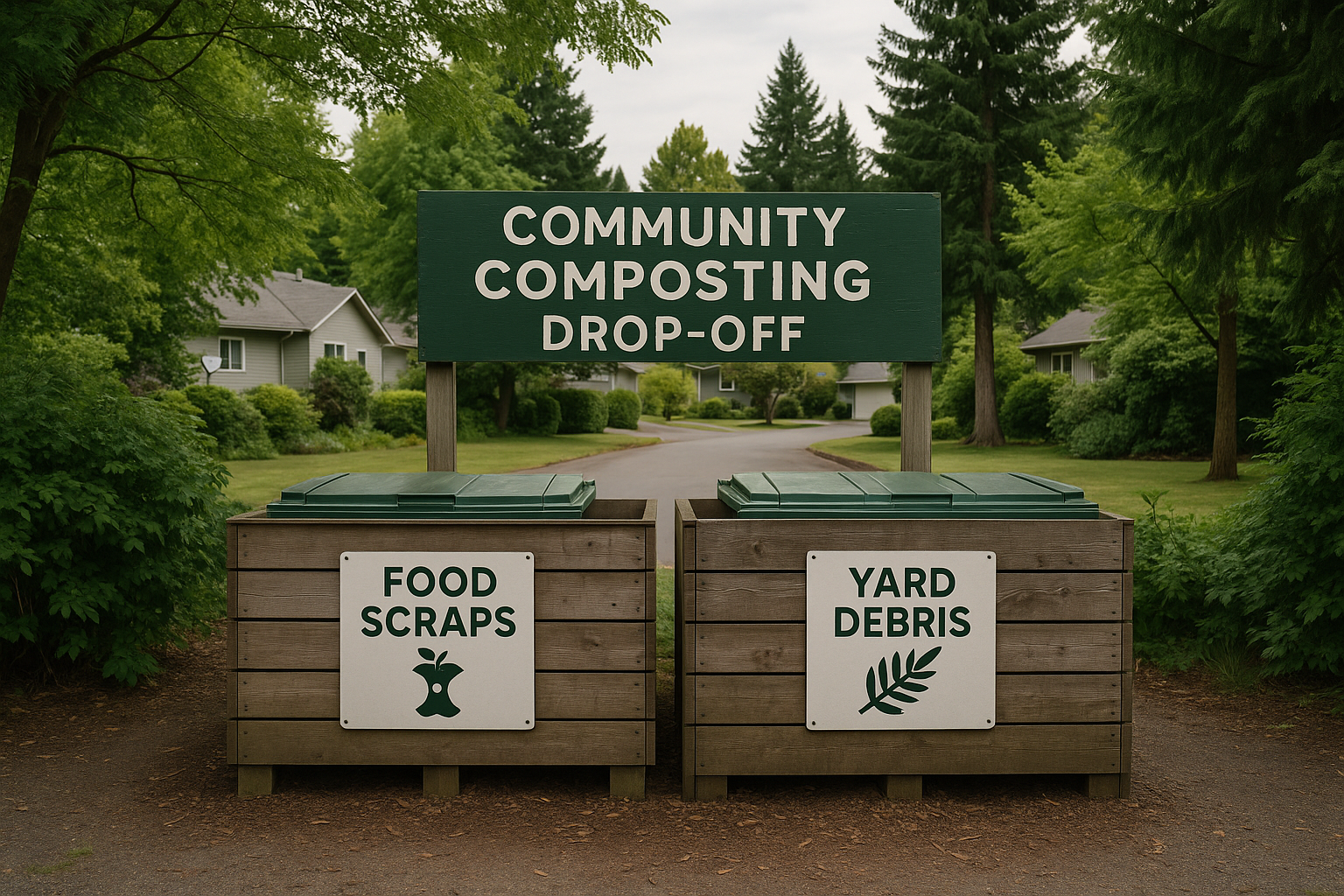

Clark County’s community composting program, known locally as We Compost, logged a record 186,000 pounds of collected food waste in 2025, according to reporting by The Columbian. The scale of participation marks the program’s strongest year since launch and signals a growing regional interest in small‑scale, community‑driven organics diversion.
While Clark County’s program does not operate in Cowlitz County, the results carry implications for communities along the I‑5 corridor—particularly Longview and Kelso, where residential composting options remain limited and municipal waste streams continue to trend upward.
According to The Columbian’s reporting, the We Compost model relies on neighborhood‑sited drop‑off hubs, local stewardship, and volunteer involvement. That structure allows households without yard‑debris bins or curbside organics service to divert food scraps away from landfills, reducing methane emissions and easing pressure on solid waste facilities. Food waste continues to represent a significant portion of municipal garbage across Southwest Washington.
In Cowlitz County, landfill capacity, rising tipping fees, and long‑term waste planning remain regular points of discussion at public meetings. Local governments have not yet adopted a community‑based composting model similar to Clark County’s, though smaller projects—such as school garden compost loops and nonprofit‑run soil programs—operate at limited scale.
Clark County’s 2025 participation numbers provide a concrete example of how quickly diversion can increase when community access points are widely distributed and paired with education. For Cowlitz County residents and policymakers evaluating future waste‑system investments, the neighboring county’s experience offers a data point rather than a blueprint, but one grounded in demonstrable outcomes.
Why this matters
Local decisions about waste management affect landfill lifespan, emissions, neighborhood livability, and long‑term rates. Clark County’s record year shows what sustained participation can look like when residents are provided easy, community‑level pathways to reduce waste. Whether Cowlitz County adopts similar approaches remains an open question, but the regional conversation is unlikely to fade as disposal costs and environmental pressures continue to climb.



Leave a Comment