

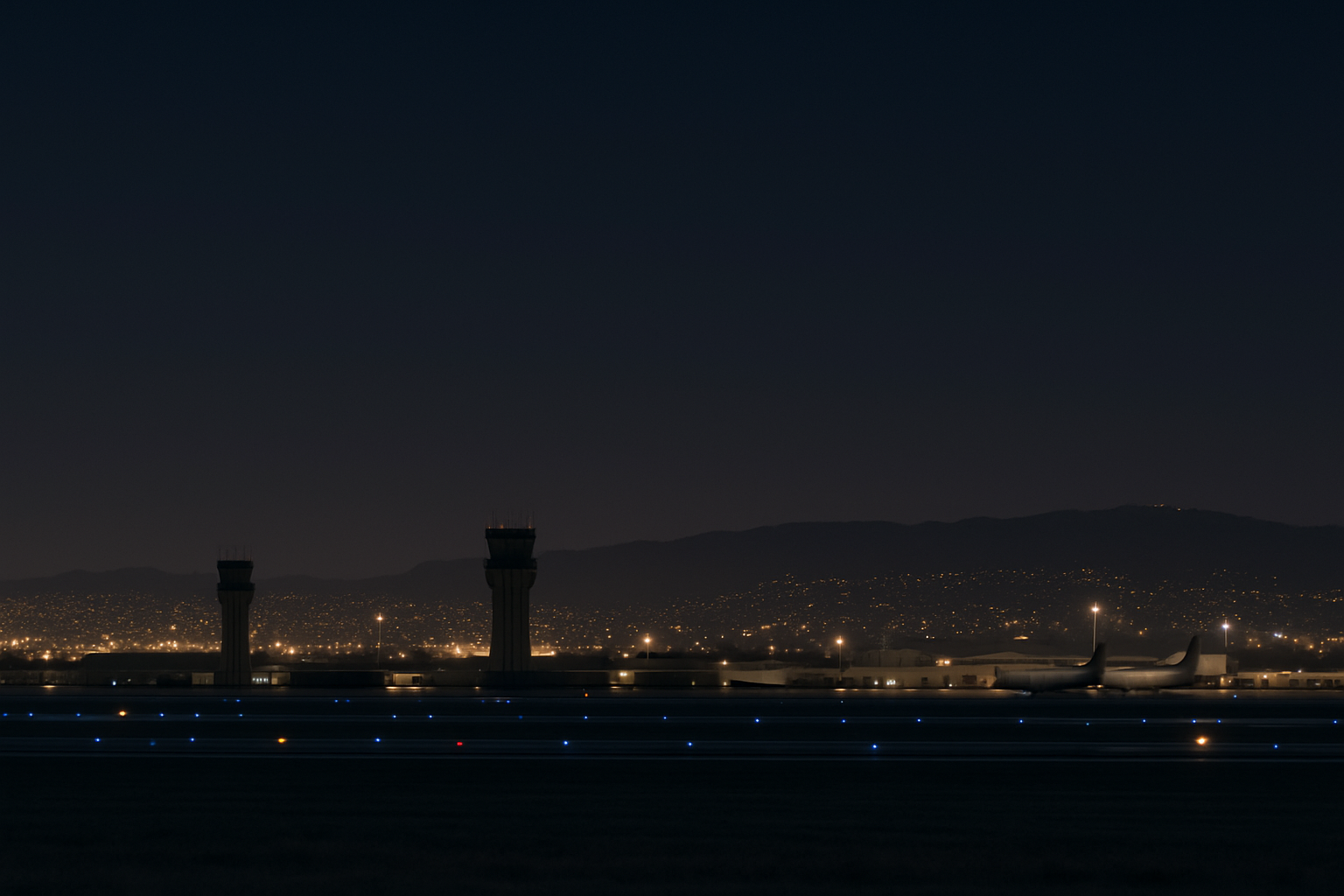

The temporary closure of airspace over El Paso, Texas, late Tuesday night — and its reopening just hours later — has raised questions in Washington and along the border about how the Federal Aviation Administration (FAA) and the Department of Defense coordinate during potential security incidents.
The FAA confirmed that it had briefly restricted flights in and out of El Paso International Airport before lifting the order early Wednesday. According to the agency’s public statement on its official account, the closure was temporary and normal operations resumed shortly thereafter.
Transportation Secretary Sean Duffy attributed the move to a reported incursion of a Mexican drug cartel drone into U.S. airspace, writing on social media that federal authorities had “neutralized” the threat. However, members of Congress and local officials quickly expressed skepticism. U.S. Rep. Veronica Escobar, who represents El Paso, said in a press conference that congressional briefings did not match the administration’s description of events and that local leaders were not notified before the closure occurred.
El Paso Mayor Renard Johnson criticized the disruption, which diverted medical evacuation flights to Las Cruces, New Mexico, calling it a major lapse in interagency communication. “You cannot restrict airspace over a major city without coordinating with the city, the airport, the hospitals, the community leadership,” he said.
For residents of southwest Washington — particularly those living near military or commercial aviation routes in Longview and Kelso — this episode underscores the practical and legal complexities of airspace restrictions. Local emergency management and aviation professionals in Cowlitz County regularly coordinate with federal agencies to ensure that sudden airspace closures do not interfere with hospital transport or wildfire response operations. The procedural gaps revealed in Texas illustrate how even brief disruptions can have cascading effects when communication fails.
Sen. Ted Cruz, chair of the Senate Commerce Committee, announced that his committee would seek more information on the decision-making process and potential breakdowns between the FAA and military command. His statement emphasized the need for transparency around how security-related flight restrictions are managed in civilian areas.
While officials offered differing explanations, all accounts acknowledged significant confusion during the shutdown. As investigations proceed, both the FAA and the Pentagon may face renewed pressure to clarify who has the final word when potential airborne threats intersect with public safety and commercial operations.
Source: Oregon Public Broadcasting


Leave a Comment