

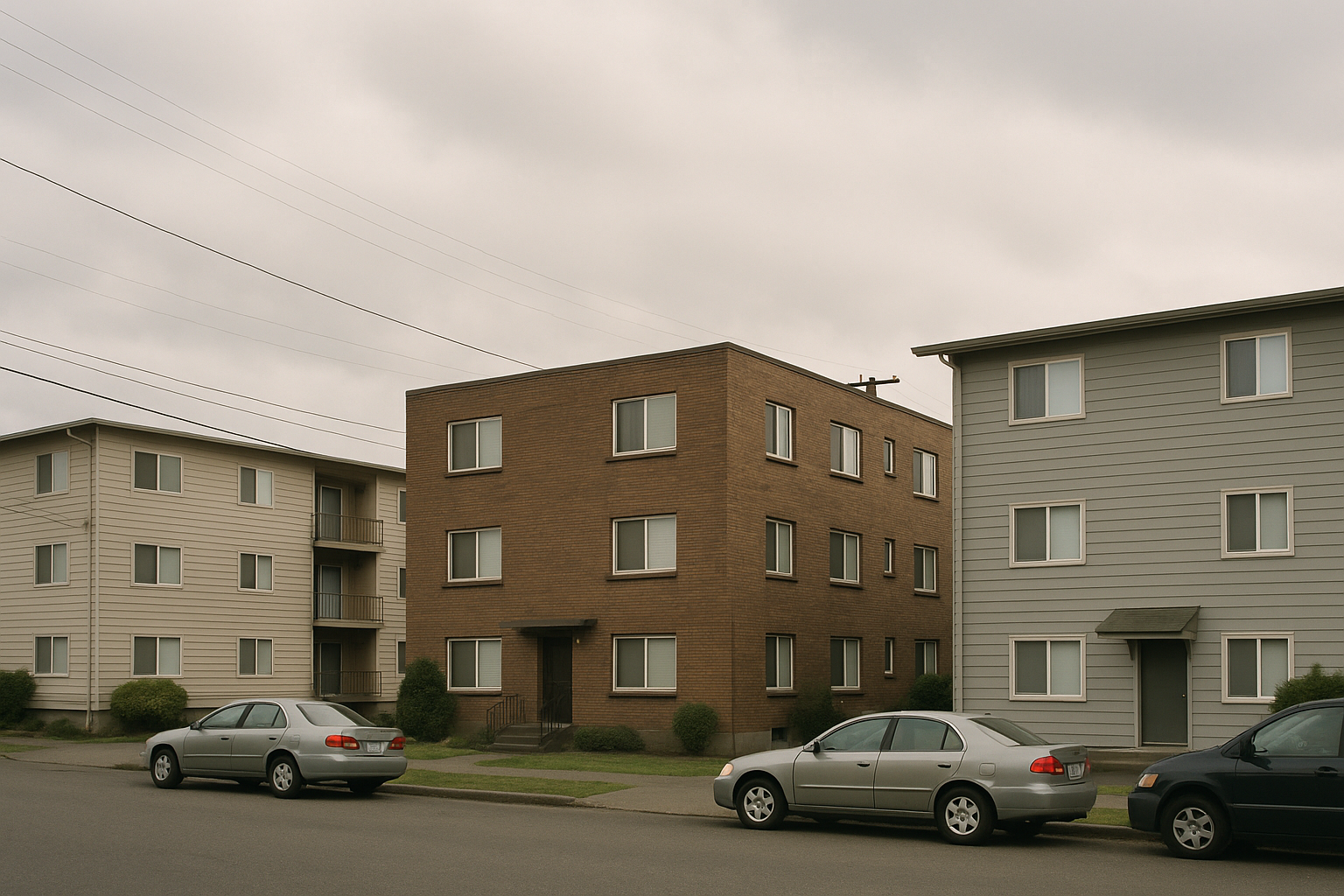

Clark County has recorded the highest number of eviction filings per capita in Washington for the third year running, underscoring a stark affordability crisis across the region.
According to reporting by The Columbian, state data show Clark County continues to top Washington counties in filings relative to its renter population. Legal aid attorneys attribute the trend to a widening gap between soaring rents and stagnant incomes.
Analyses from the Eviction Research Network confirm that Clark County’s eviction rate reached approximately 3.4 filings per 100 renter households—surpassing Pierce County at 2.9% and Thurston at 2.4%—representing the highest rate in the state as of late 2024. This follows a pattern of record‑setting eviction counts statewide, with nine counties—including Clark—breaking previous records in 2024. Nine counties, including Clark, surpassed historical filing counts during January–November 2024. Eviction Research Network
Statewide, eviction filings hit a record high in 2024, with fiscal year totals marking the highest in Washington’s history. Reports indicate that filings rose roughly 41% from 2023 to 2024. The trajectory continues upward into 2025, projecting yet another year of unprecedented displacement. Washington State Standard
Across the state, legal aid resources are stretched to capacity. The Office of Civil Legal Aid’s Right to Counsel program, launched in 2021, is now unable to represent all eligible tenants in counties like King—indicating deepening strains on the system. OPB / InvestigateWest
Update
Newly released 2025 figures show that Clark County landlords filed 2,275 eviction cases last year, an increase of roughly 33% since 2023. Housing advocates interviewed in early February 2026 reiterate that the driving cause remains the same: renters’ incomes are not keeping pace with escalating housing costs.
The interview also highlights additional statewide pressures. Washington’s rent stabilization law—signed in May 2025—now caps annual rent increases at no more than 10%, or 7% plus inflation, whichever is lower. While intended to slow displacement, rising rents and past lapses in affordability protections continue to push tenants into crisis.
Legal aid capacity remains a key concern. The Washington State Office of Civil Legal Aid reports that its Right to Counsel program has served more than 30,000 people since its launch, with nine out of ten resolved cases ending in a permanent housing solution. Yet the program currently faces a $3 million shortfall for the upcoming fiscal year, a funding gap that could leave an estimated 2,000 tenants without representation. Officials warn that reduced staffing—equivalent to 17 fewer attorneys statewide—could intensify housing instability for those facing eviction.
Local homeless service providers in Clark County continue to document the connection between court‑ordered displacement and unsheltered homelessness. Recent data show that of the roughly 9,000 people who experienced homelessness in the county last year, 460 identified eviction as the direct cause. On‑the‑ground reports from encampments indicate similar patterns, with several individuals citing eviction and the absence of legal help as factors in their current homelessness.
Together, these developments further illustrate the mounting strain on courts, legal aid offices, and social service systems as Clark County enters its fourth consecutive year of leading the state in eviction filings per capita.
Why This Matters Locally: For residents of Longview, Kelso, and the wider Cowlitz County area, the situation in Clark County acts as a cautionary tale. If rising rents and limited incomes continue unchecked, our communities may face similar pressure on housing stability. The failure of rental affordability to keep pace with wage growth—compounded by the rollback of pandemic-era protections—is fueling evictions across the region. Without stronger rental assistance, tenant representation, and affordable housing development, Cowlitz County could be next.
Columbia Countercurrent will continue to monitor local rent and eviction trends, ensuring community leaders, housing advocates, and residents stay informed.




Leave a Comment