


More than 500 Washington residents have signed a petition urging the Pierce County Library System to cancel all future public events hosted by Sheriff Keith Swank. The petition, available through Action Network, argues that Swank’s public statements on transgender people, undocumented immigrants, and collaboration with federal immigration authorities create an environment that some community members view as intimidating rather than informative.
The controversy escalated after KIRO Newsradio host Gee Scott criticized Swank’s use of library meeting rooms during a recent segment of “The Gee and Ursula Show.” Scott referenced Swank’s publicly accessible posts on X — highlighted in reporting by MyNorthwest — including comments describing transgender identity as a mental health issue and questioning whether trans individuals should be prohibited from owning firearms. Swank has also expressed support for cooperating closely with U.S. Immigration and Customs Enforcement.
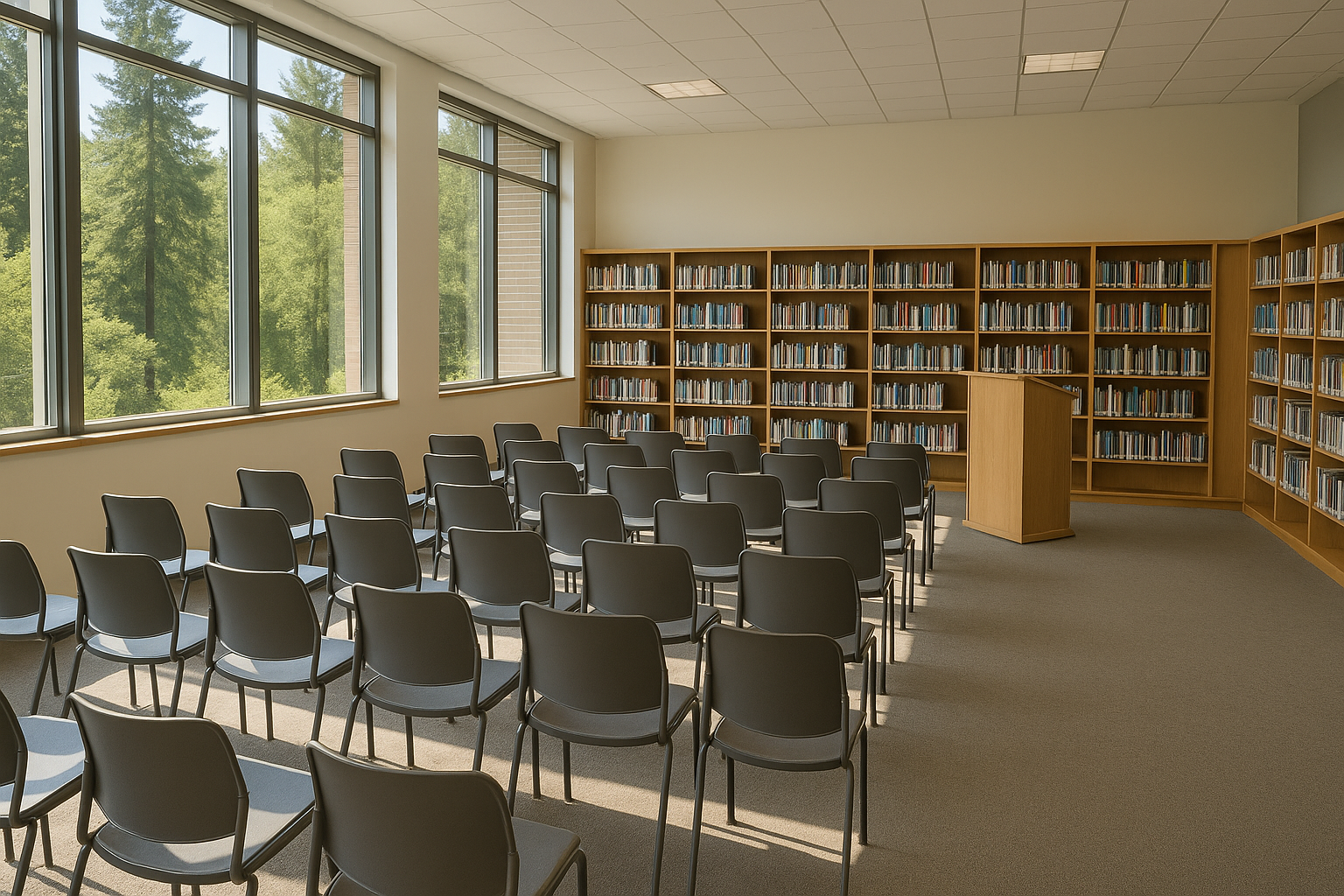
According to The Tacoma News Tribune, the Pierce County Library System says it cannot deny public meeting room reservations based on viewpoint or political speech. Under longstanding First Amendment and public‑forum rules, the system treats meeting rooms as open access spaces allocated on a first‑come, first‑served basis. The library confirmed that Swank has reserved space for a full year.
Scott argued that the issue is not simply one of general public access but of the authority associated with Swank’s position as the county’s top law‑enforcement officer. In his view, comments posted by an elected official with police power carry different implications than those of an ordinary resident using a public forum.
The subject remains a point of contention for local governments throughout Western Washington. Public institutions, particularly libraries, continue to face pressure over meeting‑room access, speech protections, and safety concerns. While the debate is centered in Pierce County, similar questions have emerged in smaller communities along the I‑5 corridor — including in Cowlitz County — where libraries are often among the few remaining truly open civic spaces. The tension between viewpoint neutrality and community safety concerns is increasingly shaping how those spaces are used.
As of February 18, 2026, no policy change has been announced by the Pierce County Library System. The petition remains active, and Swank continues to hold the scheduled events.
Why this matters for Cowlitz County
Public meeting room access policies are broadly similar across Washington. Any shift in one county’s practices — whether through legal challenge, legislative action, or administrative change — could influence how libraries in Longview, Kelso, and surrounding communities navigate conflicts between open access and public safety concerns. With libraries serving as hubs for civic dialogue in smaller cities, the outcome in Pierce County may help define the boundaries of neutrality and responsibility for public institutions statewide.




Leave a Comment