

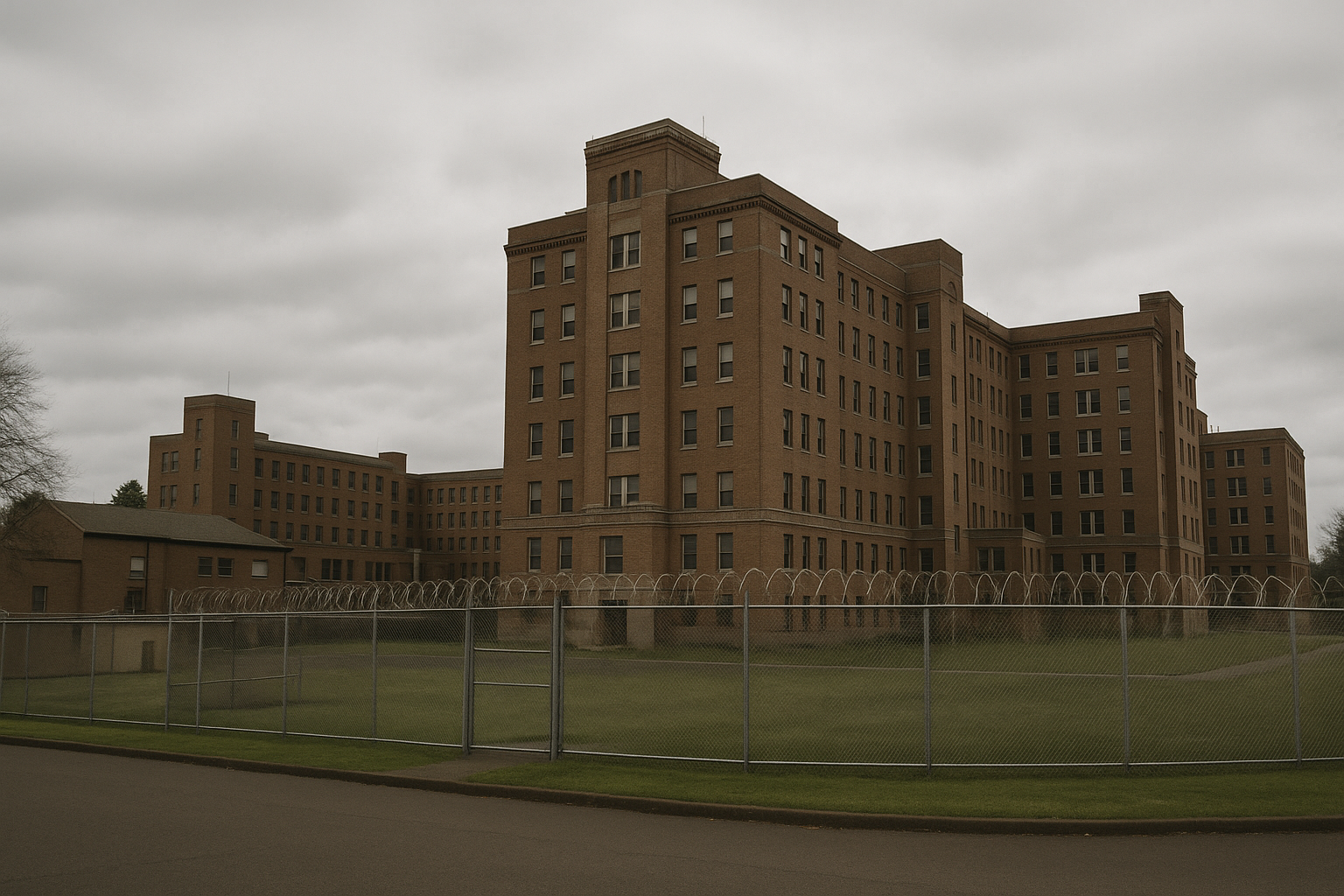

Marion County officials are raising urgent alarms after the Oregon State Hospital released a convicted sex offender with a documented history of violence and expressed intent to reoffend. The man, identified as Grant Brannaman, was discharged from the hospital on February 10, 2026, following the expiration of the Psychiatric Security Review Board’s (PSRB) maximum five‑year supervision period — a statutory limit applied to individuals adjudicated Guilty Except for Insanity (GEI). Despite explicit warnings from Marion County law enforcement and prosecutors about the ongoing public safety risks, the state hospital proceeded with the release once legal authority expired [a](“Marion County Public Safety Leaders Warn …”) [b](“Marion County Public Safety Leaders Warn …”).
Brannaman’s criminal record includes serious offenses: second‑degree arson; multiple counts of first‑ and second‑degree criminal mischief; felon in possession of a restricted weapon; and, in earlier convictions from various counties, rape in the third degree, sexual abuse in the third degree, assault, and other violent charges. He was classified as a Level 3 sex offender and reportedly expressed a desire to reoffend. His supervision by the PSRB ended on February 8, 2026, and despite repeated objections from local safety officials—including the district attorney, sheriff, and Salem’s police chief—OSH released him to a secure residential treatment facility inside Marion County, though he has no local ties and his crimes occurred elsewhere [a](“Marion County Public Safety Leaders Warn …”) [b](“Marion County Public Safety Leaders Warn …”) .
This case crystallizes a broader systemic issue in Oregon’s mental health and forensic care systems. The PSRB’s fixed maximum timeline for GEI supervision leaves no legal avenue to extend hospitalization based on ongoing risk evaluations. Simultaneously, Oregon lacks adequate secure residential treatment alternatives for individuals whom the state hospital deems unsafe to release and whose hospital jurisdiction has lapsed. Marion County officials had urged state authorities, including hospital administration, a federal oversight monitor, and the Department of Justice, to allow Brannaman to remain in OSH—but their concerns were overridden by legal constraints [a](“Marion County Public Safety Leaders Warn …”) [b](“Marion County Public Safety Leaders Warn …”) .
While this incident is unique to Oregon, other jurisdictions illustrate the costs of systemic neglect. In New York, WMCHealth was investigated by the Attorney General and found to have discharged psychiatric patients without proper evaluation or stabilization, resulting in harm and at least one death. The hospital agreed to reforms including restoring inpatient beds and improving discharge planning [c](“Hospital system put psychiatric patients at risk …”) . Moreover, Oregon State Hospital has been under federal scrutiny following multiple safety failures, including patient assaults, a death in seclusion, and insufficient oversight, prompting corrective action plans and eventual reinstatement of CMS compliance in early 2026 [d](“Safety lapses contributed to patient assaults …”) [e](“After care and safety violations …”), [f](“Oregon State Hospital makes ‘significant’ improvements …”) .
Why this matters locally: Marion County and its neighbors face the fallout from a policy that discharges high‑risk individuals when supervision periods expire—even when the patients present clear danger—but the state lacks alternatives to house or treat them effectively. The Brannaman case underscores a policy gap: forensic psychiatric patients with time‑limited legal jurisdiction but persistent risk fall between systems. The cost is public safety and community confidence in mental health accountability.
Absent changes to legal structures, such as PSRB timelines or expansion of secure community‑based treatment options, local communities bear the burden. This is especially pressing in rural and under‑resourced counties already contending with narrow behavioral health infrastructure.
Conclusion
The February 2026 discharge of Grant Brannaman spotlights a legal and structural failure in Oregon’s mental health system: once GEI supervision time lapses, patients pose a real potential danger without recourse to continued treatment or secure placement. Marion County’s public safety leaders were sidelined despite credible warnings. Unless policymakers bridge this procedural gap and augment secure community treatment capacity, the state is left to confront a revolving door between forensic institutions and community risk zones—especially in regions without adequate care infrastructure.



Leave a Comment