

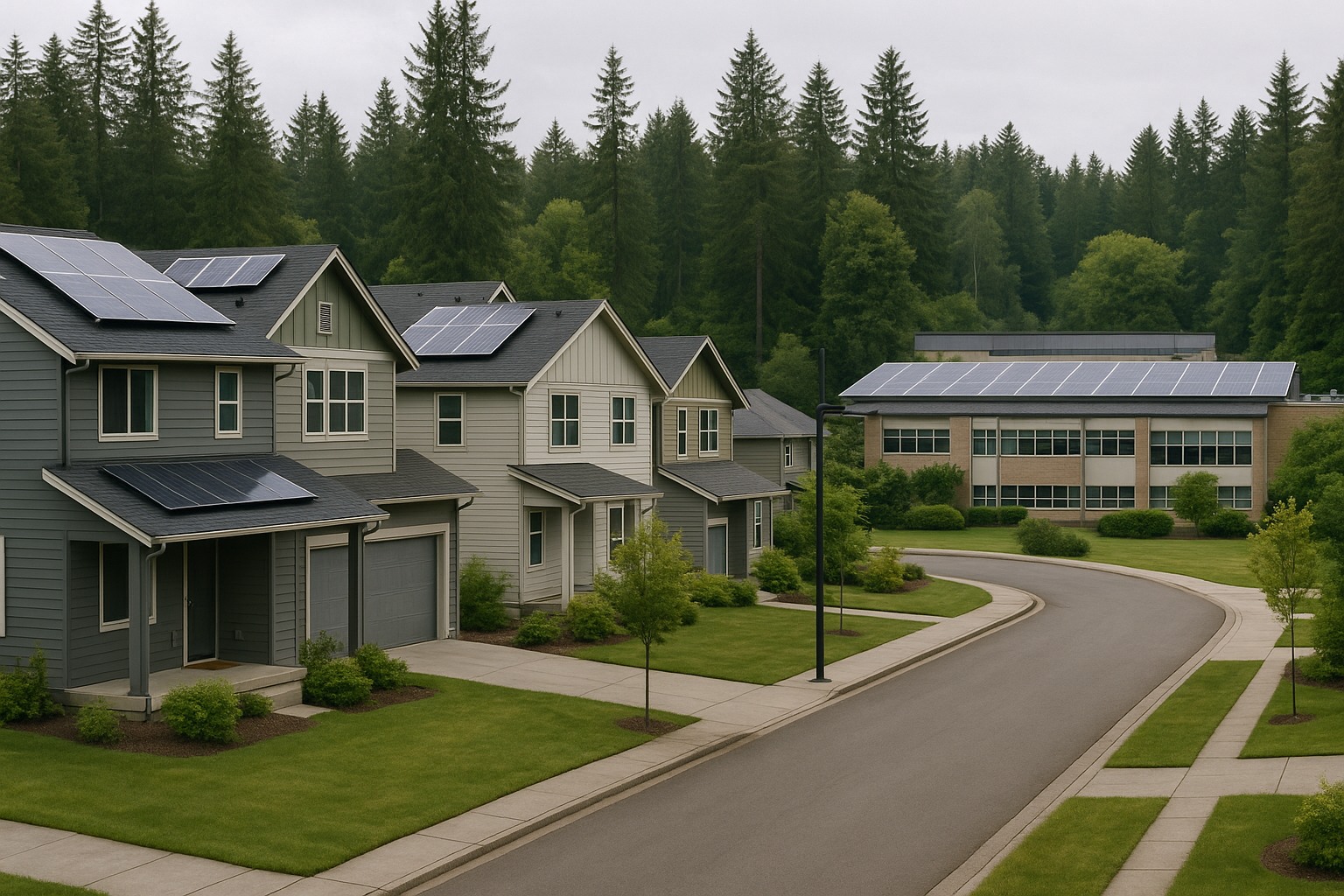

In recent years, energy policy has rarely made headlines outside the usual suspects: big wind projects, solar farms, or debates about the construction of new nuclear or hydropower infrastructure. But a subtler, more effective tool may be quietly reshaping the Pacific Northwest’s energy future. In Oregon—giving our neighbors in Southwest Washington pause for reflection—the emphasis is increasingly on energy efficiency as a core strategy to meet climate goals, improve grid reliability, and decrease consumer bills.
The Oregon Public Broadcasting spotlighted this approach in a Feb. 3, 2026 profile highlighting stories like Maureen Perry’s in Gladstone, who replaced a drafty 1966 manufactured home with a modern, insulated, wheelchair-accessible unit—and now saves around $15 a month on her energy bills. That change may seem small in isolation, but it echoes a regional strategy that has saved enough energy since the late 1970s to power eight cities the size of Seattle for a year—roughly $5 billion in consumer savings and avoiding 25.5 million metric tons of carbon emissions. That’s equal to the carbon sequestered in Oregon and Washington’s national forests. The Oregon Department of Energy is calling energy efficiency its “least cost, least risk” pathway forward in reaching clean-energy goals. For homeowners like Maureen, and for systems-level gains across the grid, the payoff can be profound.
Here’s how it breaks down:
- Origin story: Oregon and its neighbors operate under the framework of the 1980 Northwest Power Act. The act created the Northwest Power and Conservation Council (NWPCC) and enshrined efficiency as a key component of regional energy planning. Jennifer Light, the council’s director of power planning, emphasizes that avoiding infrastructure costs through conservative use of power has been foundational—and remains central—to how the region has balanced costs, growth, and environmental goals.
- Tangible results: Since 1978, the region has avoided energy usage equivalent to eight Seattle-sized cities for a year and spared households approximately $5 billion in energy costs. Carbon emissions reductions equal the amount captured by national forest lands in Oregon and Washington. The NWPCC projects that by 2050, achieved efficiency gains could have an effect equivalent to doubling Portland General Electric’s 2024 output.
- Funding the future: Much of Oregon’s efficiency progress is driven by the Energy Trust of Oregon, a nonprofit funded via a “public purpose charge” surcharge on utility bills. In 2025 alone, the Trust operated with a budget of around $350 million—and anticipates accelerating to $500 million over the next five years—to support efficiency upgrades in homes, businesses, schools, and public institutions.
- Real-world impact: Among 216 energy-efficient manufactured homes delivered since 2022 was Maureen Perry’s in Gladstone. Similarly, Hillsboro’s Liberty High School—built in 2003 and spanning nearly 300,000 square feet—received $636,000 in incentives to upgrade climate controls, replace boilers, install LEDs, and add solar arrays. The result: a one-third reduction in energy use, and $140,000 in annual savings.
Why it matters to us locally: As southwest Washington watches Oregon pursue efficiency for grid resilience and affordability, similar opportunities may exist here. Our own Cowlitz County homes, mobile parks, schools, and small businesses could benefit from weatherization, incentive programs, or nonprofit-led efficiency upgrades. While we don’t have Energy Trust of Oregon or the Northwest Power and Conservation Council directly on our side, organizations like the Northwest Energy Efficiency Alliance—including Cowlitz PUD as a funder—are already partnering across the region to accelerate efficient technologies and practices.
Why this matters
Understanding Oregon’s efficiency pivot offers us a blueprint rather than a case study. It underscores that community climate solutions don’t always require megaprojects. Lighting upgrades, better insulation, walk-in showers and accessible designs in manufactured home replacements, or high-efficiency boilers at schools—these changes can add up to real dollars saved, fewer emissions, and improved energy security. For a region facing aging infrastructure and future load growth, efficiency may well be the most democratic, least disruptive path forward.
For readers or local officials interested in exploring similar mechanisms here—whether through utility-supported programs, nonprofit partnerships, or targeted school district initiatives—this story suggests there’s more than one way to shore up affordability, comfort, and climate progress, one home, one school, one community at a time.




Leave a Comment