

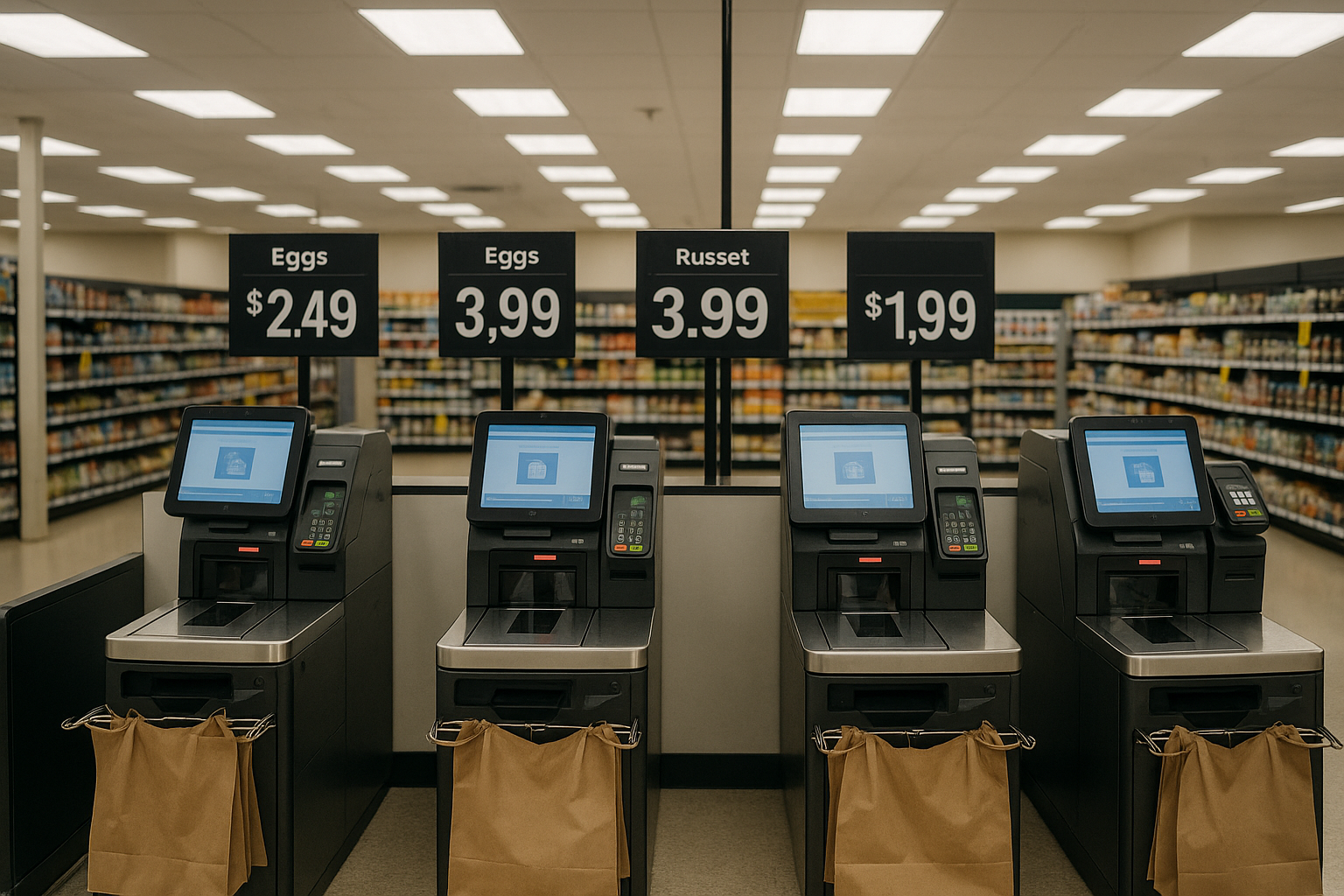

A new bipartisan effort in Washington, D.C. seeks to curb emerging corporate practices that threaten fairness at the grocery store checkout.
On February 12, 2026, U.S. Senators Jeff Merkley (D–Oregon) and Ben Ray Luján (D–New Mexico), ranking member of the Senate Agriculture Subcommittee on Food and Nutrition, introduced the Stop Price Gouging in Grocery Stores Act of 2026. The legislation aims to ban “surveillance pricing”—the use of personal data, mobile apps, electronic shelf labels, facial recognition, and biometric technologies to set individualized grocery prices—ensuring equitable treatment of consumers at retail outlets both in person and online. It also would require retailers to disclose use of facial recognition, prohibit electronic shelf labels in larger grocery stores, and establish enforcement mechanisms. The bill is backed by the United Food and Commercial Workers International Union.
The introduction of the bill was first announced via the Senate offices of Merkley and Luján, and was also reported by KOIN, noting the aim to halt grocery price gouging. KOIN emphasized that the bill would ban surveillance pricing, require disclosure of facial recognition use, prohibit electronic shelf labels, and create accountability for offenders.
Why this matters locally
In Longview, Kelso, and across Cowlitz County, residents already face elevated food costs. If passed, this legislation could help protect local shoppers from discriminatory or dynamic pricing tactics tied to income, zip code, or digital profiling. Especially in lower-income neighborhoods or for families relying on SNAP benefits, equitable pricing could alleviate some financial stress on households navigating high living expenses and limited access to healthy food options.
What remains unresolved
The bill is newly introduced and has not yet been referred to a Senate committee for hearings or markup. Its path forward—passage, potential amendments, and ultimate fate—will determine whether its provisions can translate into meaningful protections for shoppers in southwest Washington. Activists and local officials interested in its implications may wish to monitor hearings, submit public comment, or reach out to their congressional delegation.
As it stands, this legislation is a federal-level initiative that, if enacted, could yield tangible benefits for consumers in Cowlitz County. It underscores growing concern over tech-driven pricing unfairness and the need for transparency and accountability in the grocery sector.


Leave a Comment