

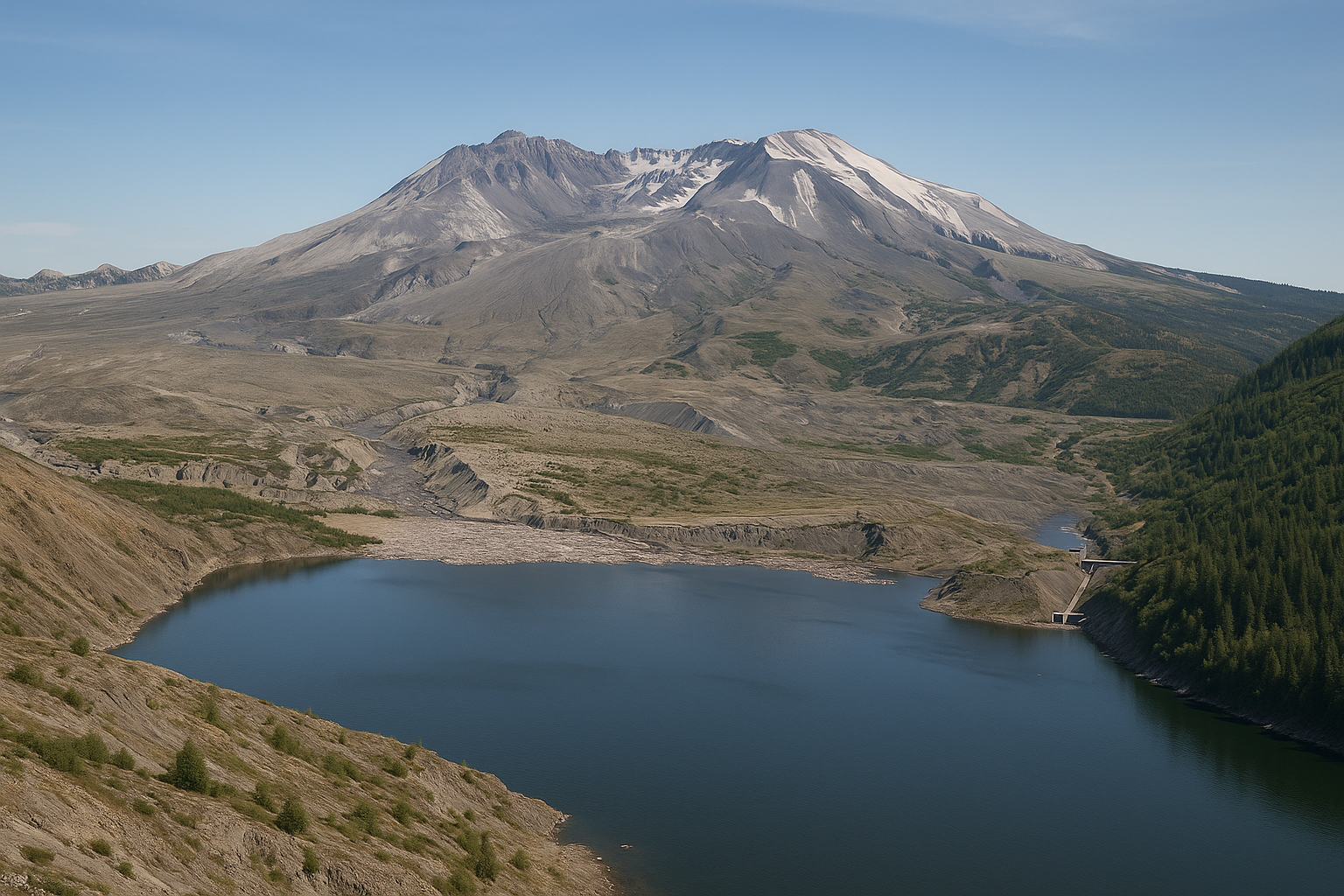

Federal officials have confirmed that the Spirit Lake outlet tunnel, the critical drainage conduit built after the 1980 eruption of Mount St. Helens, is back in operation following recent repairs. The lake had risen approximately 13 feet during the tunnel’s two‑month closure, but water levels are now receding as the system resumes normal function.
The tunnel, which runs roughly 1.6 miles through volcanic rock beneath Mount St. Helens, was constructed in 1985 by the U.S. Army Corps of Engineers to regulate Spirit Lake’s level and prevent catastrophic flooding of the North Fork Toutle and Cowlitz rivers. It remains the only engineered outlet for the lake, and routine maintenance is essential to ensure safety for downstream communities, including Kelso and Longview.
According to the U.S. Forest Service, which manages the site through the Gifford Pinchot National Forest, the latest repairs addressed structural issues that necessitated the temporary shutdown. The tunnel’s function has since been restored, allowing controlled outflow to reduce the lake’s volume.
Beyond immediate repairs, a long‑term planning effort—the Spirit Lake Outflow Safety Improvement Project—continues to evaluate permanent safety and modernization options. These include rehabilitating or replacing the existing tunnel and potentially adding redundant systems to stabilize long‑term water management. A draft Environmental Impact Statement addressing these alternatives is open for public comment until October 30, 2025, with an in‑person meeting scheduled for October 7, 2025, at the Cowlitz County Event Center in Longview.
Why this matters locally
The reopening of the Spirit Lake tunnel restores a vital safeguard protecting tens of thousands of downstream residents. The recent 13‑foot rise in lake levels underscores the aging infrastructure’s fragility and the stakes for Cowlitz County communities that rely on its integrity. As federal agencies move toward a long‑term fix, sustained public involvement and transparency remain essential to ensure the region’s safety and resilience.




Leave a Comment