

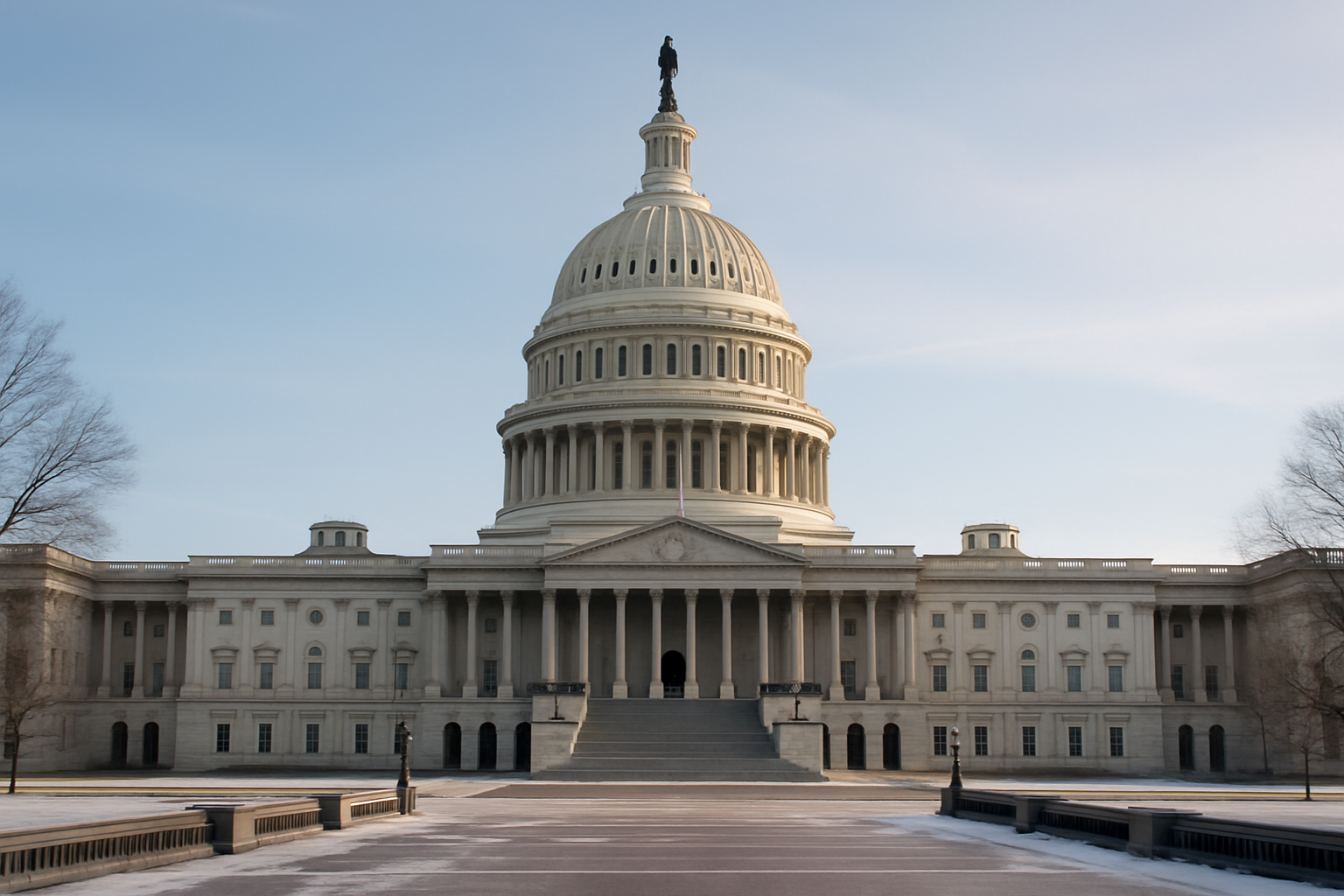

In a rare bipartisan challenge to the former president’s trade policy, the U.S. House of Representatives voted on Wednesday, February 11, 2026, to rescind the national emergency declaration that underpins President Donald Trump’s tariffs on Canadian goods. The resolution, authored by Representative Gregory W. Meeks (D-NY), passed by a narrow margin of 219–211, with six Republicans joining nearly all House Democrats in opposition to the tariffs—even as former President Trump vowed political retribution against dissenters.
The resolution specifically aims to terminate the national emergency Trump declared to justify tariffs on Canadian products—an action widely viewed as overreach of executive authority and costly to American consumers. But its passage remains largely symbolic. It now proceeds to the Senate, and while the upper chamber has shown some willingness to challenge the tariffs, the resolution is expected to face a veto from Trump, which would require a two-thirds majority in both chambers to override—a leap most forecasters deem highly unlikely. The vote illustrates congressional frustration with Trump’s economic approach, even within a GOP-controlled chamber.
Representative Meeks framed the vote as a choice between lowering the cost of living and maintaining loyalty to one man. In his floor remarks, he painted the tariffs as unfounded and damaging, noting that they have cost American families nearly $1,700 and driven down U.S. exports to Canada by over 21 percent. He questioned the legitimacy of labeling Canada—an ally—as a national emergency and characterized the move as executive impulse inflicted on the public and their wallets.
The resolution picked up surprising support from six House Republicans: Don Bacon (NE), Thomas Massie (KY), Kevin Kiley (CA), Dan Newhouse (WA), Jeff Hurd (CO), and Brian Fitzpatrick (PA). Their defection reflected a mix of economic concern and constitutional conservatism. Bacon denounced the extension of executive power over Congress, while Kiley, Massie, and others framed their decisions as affirmations of legislative authority over trade and spending.
Speaker Mike Johnson (R-LA) had attempted to block floor action on the resolution by advancing a procedural motion to delay consideration and await a pending Supreme Court decision. That tactic fell apart when several Republicans broke ranks at the procedural stage. His failure to rein in the dissent deepened internal GOP tensions and raised questions about the cohesion of his leadership.
President Trump responded swiftly, warning via social media that any Republican opposed to his tariff policy would “seriously suffer the consequences come Election time” and face challenges in primaries. His statement underscores the enduring grip of his political base and willingness to punish intra-party dissent.
From Canada, Ontario Premier Doug Ford hailed the vote as “an important victory,” urging continued collaboration to lift the tariffs and strengthen bilateral economic growth. The resolution may pressure Canadian-linked businesses and communities dependent on trade across the border, especially in regions like Washington state, where commerce with Canada is vital.
Why this matters locally
Southwest Washington’s economy is deeply intertwined with cross-border trade. Tariffs on Canadian goods can reverberate through local industries, raising costs for consumers and disrupting supply chains. The House vote signals congressional willingness to defend the economic interests of trading regions—even against strong executive actions. Constituents facing higher prices could find a measure of relief if the political momentum extends beyond symbolic rebuke toward real policy change.
The measure now heads to the Senate, where previous efforts to block the tariffs garnered bipartisan support. In April 2025, the Senate approved a similar resolution—led by Senator Tim Kaine (D-VA)—with support from Republicans including Susan Collins, Mitch McConnell, Lisa Murkowski, and Rand Paul. Whether the House’s action will catalyze enough bipartisan momentum for durable legislative limits on emergency tariff authority remains to be seen.


Leave a Comment