

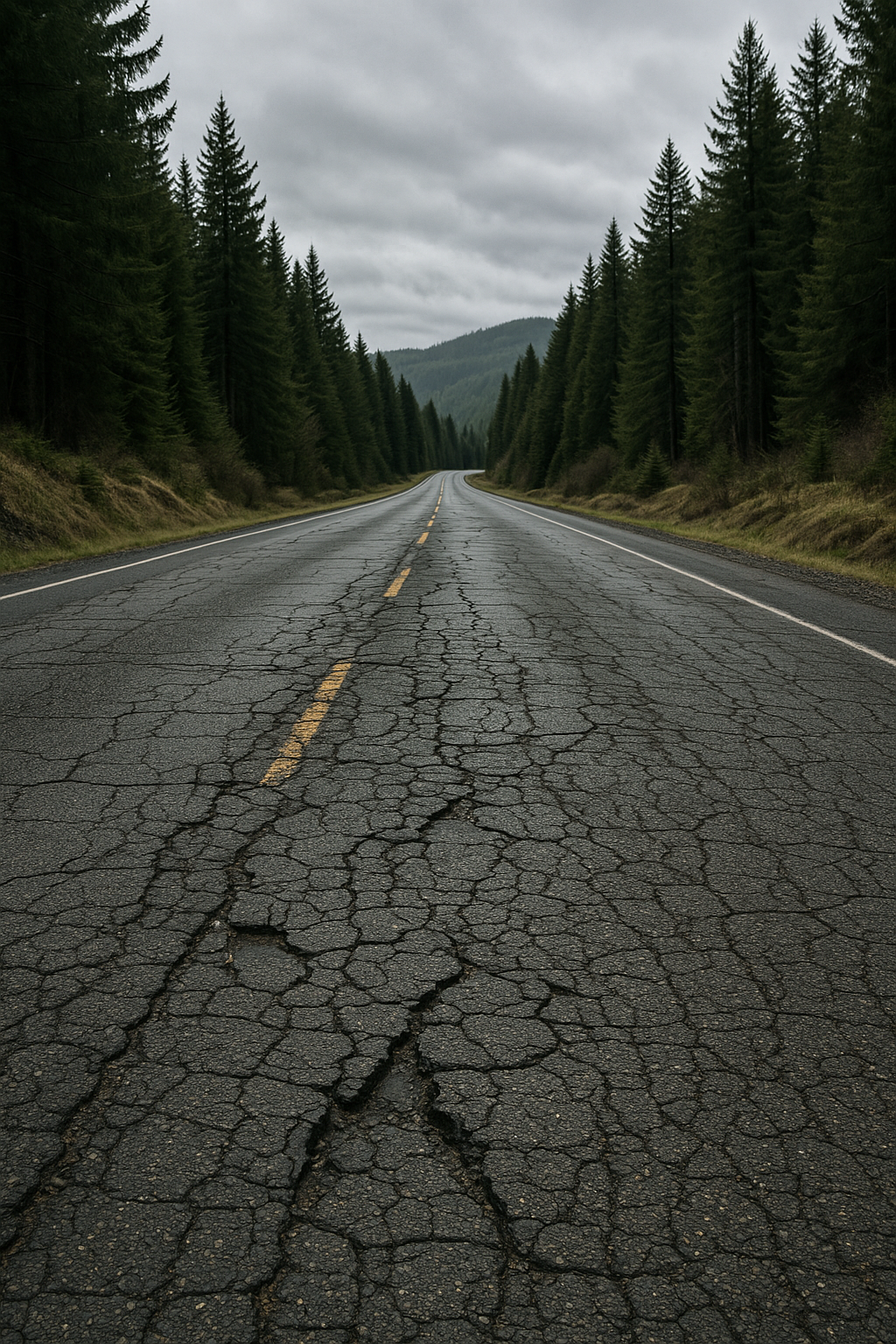

A recent analysis by personal finance platform MoneyGeek, drawing on U.S. Department of Transportation highway data, has ranked Washington among the states with the roughest roads in the country. According to the December 2025 study, Washington ranks eighth‑worst nationally, with a Road Roughness Index of 125.0 and approximately 25% of lane‑miles classified as being in “poor” condition. Only 39% of lane‑miles are rated “good” by the Federal Highway Administration benchmarks. The state spends about $31,730 per lane‑mile on highway capital improvements—placing it 25th in spending intensity—yet continues to perform poorly in pavement quality terms.MoneyGeek study reports these findings.
This ranking from MoneyGeek reflects conditions reported for 2023, based on composite indices combining measurements across urban Interstate, freeways, expressways, and principal arterials, weighted by traffic volume. The methodology defines roads as “good” (IRI under 95 in/mile), “acceptable” (95–170), and “poor” (above 170), with roughness scores computed from Federal Highway Administration data.MoneyGeek methodology.
Additional reporting by Construction Coverage corroborates that Washington ranks in the top ten for states with the highest percentage of major roadways in poor condition. Their analysis estimates 20.8% of Washington’s major routes fall into the poor category—behind only a handful of northeastern states and California.Construction Coverage data.
Local impacts: For residents of Longview, Kelso, and Cowlitz County, these findings reinforce long‑running frustrations with road maintenance. Rough pavement contributes to increased vehicle wear and tear, potential safety hazards, and may influence local budgets and spending priorities as state and regional officials continue to allocate Infrastructure Investment and Jobs Act (IIJA) funds.
Why this matters: Washington’s road quality deficit isn’t simply a symptom of underinvestment—spending per lane‑mile is moderate—but suggests inefficiencies in maintenance and capital deployment. As long‑term federal infrastructure funding arrives, local stakeholders should monitor whether public dollars are matched by measurable improvements in road conditions.
Further, increased vehicle operating costs—estimated at hundreds of dollars per driver annually when roads are in poor shape—strain household budgets and detract from quality of life. Pavement quality also influences emergency response times, public transit reliability, and economic development potential, particularly in roadway‑dependent communities such as those in Cowlitz County.
Next steps: We will seek data from the Washington State Department of Transportation regarding regional pavement conditions, repair schedules, and IIJA‑funded projects in southwestern Washington. Community members are encouraged to report the worst local segments via our public forums to help prioritize accountability and improvement efforts.




Leave a Comment