

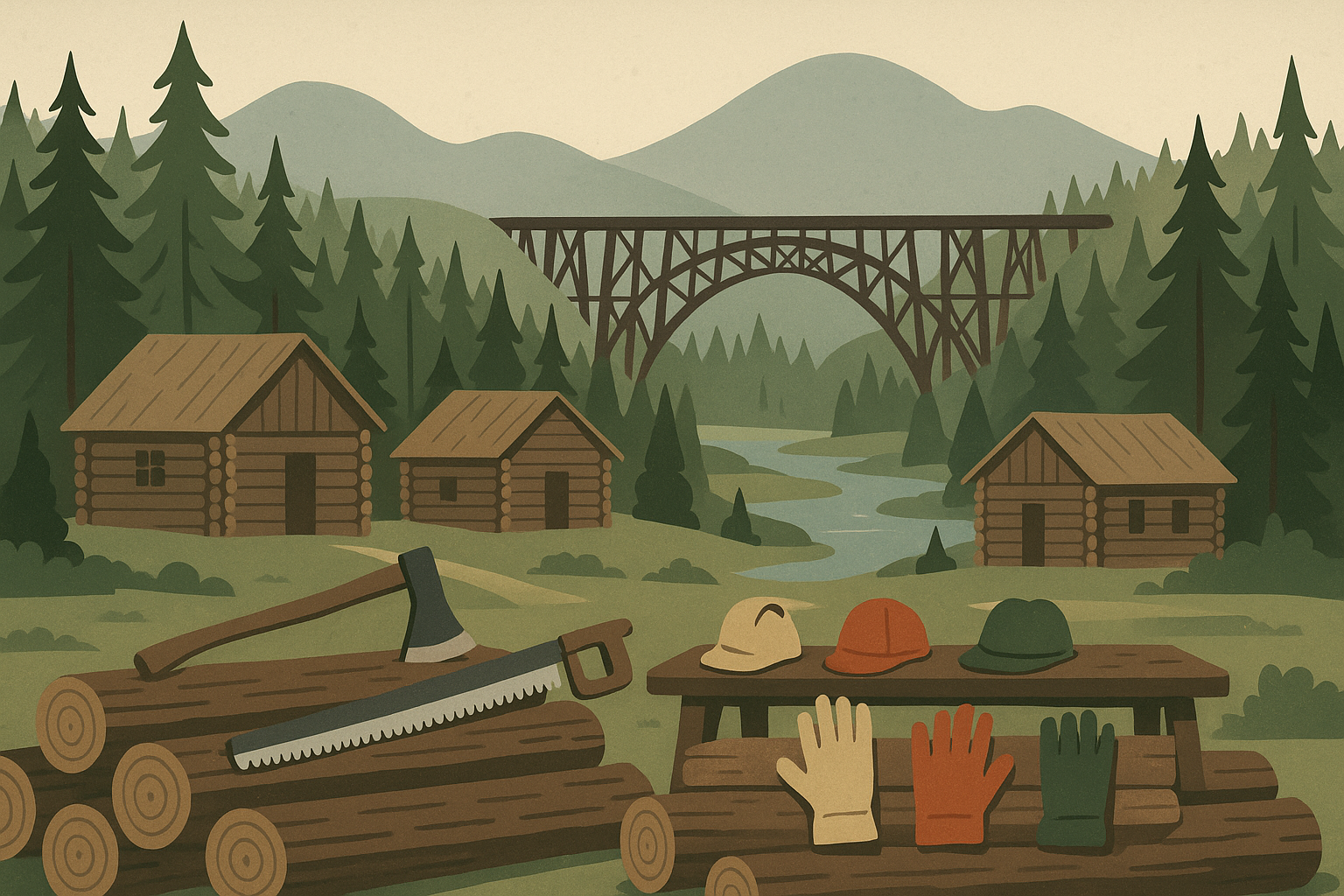

A nearly vanished logging settlement in northeastern Oregon is drawing renewed attention from historians, cultural institutions and descendants of early timber workers. Maxville, founded in 1923 by the Missouri‑based Bowman‑Hicks Lumber Company, once hosted a multiracial workforce at a time when Oregon’s constitution explicitly barred Black residents. Though only one building and a collapsing trestle remain, the town’s story is resurfacing through renewed scholarship and a growing number of public exhibitions.
The heritage work began gaining visibility after Gwen Trice, whose father traveled from Arkansas to work in Maxville, began researching her family’s ties to the site. According to materials published by the Maxville Heritage Interpretive Center, the company recruited experienced loggers from across the U.S. South alongside immigrants and Native American workers. Housing and schools in Maxville were segregated, but work crews reportedly operated together in the woods. When the town closed around 1933, some families—including Trice’s—remained in Oregon.
Oregon Public Broadcasting has chronicled portions of this history through its documentary coverage of Trice’s work, including the Oregon Experience film “The Logger’s Daughter,” available at OPB’s program archive. OPB has also reported on recent archaeological fieldwork at the former town site, which researchers hope will clarify daily life and labor conditions in Maxville.
Public interest is expanding beyond Wallowa County. Oregon State University’s Patricia Reser Center for the Arts is hosting a new multimedia exhibition, “Maxville & Vanport: Hidden Histories of Everyday Life,” scheduled to run Feb. 27 through April 11, 2026. According to the university’s project announcement, the exhibit examines everyday culture and community practices in two historically significant but long‑overlooked towns shaped by race, migration and the timber economy. Details are available through OSU’s Praxis initiative at the project page.
For communities along the I‑5 corridor in Southwest Washington, Maxville’s resurgence in public memory arrives at a time when logging heritage remains central to local identity. Many Cowlitz County families trace their roots to cross‑border labor networks that linked Oregon and Washington timber camps throughout the early twentieth century. The integrated workforce documented in Maxville adds historical nuance to a regional industry often remembered through narrower cultural narratives.
The original OPB feature that renewed attention to the town was published March 2, 2026, and can be read at OPB’s Evergreen podcast page, which also hosts interviews and contextual reporting about the state’s historical logging communities.
Why this matters
Maxville’s history challenges assumptions about early Northwest timber culture and expands the documented presence of Black, Native American and immigrant labor in rural resource economies. For residents of Southwest Washington—where timber remains both an economic force and a cultural touchstone—the story offers a broader lens for understanding the region’s past and the diverse workers who shaped it.
Sources
Oregon Public Broadcasting: ‘The Evergreen’: Ghost town offers a window into Oregon’s multiracial logging history
Maxville Heritage Interpretive Center: Official site
Oregon State University Praxis Initiative: Exhibit information




Leave a Comment