

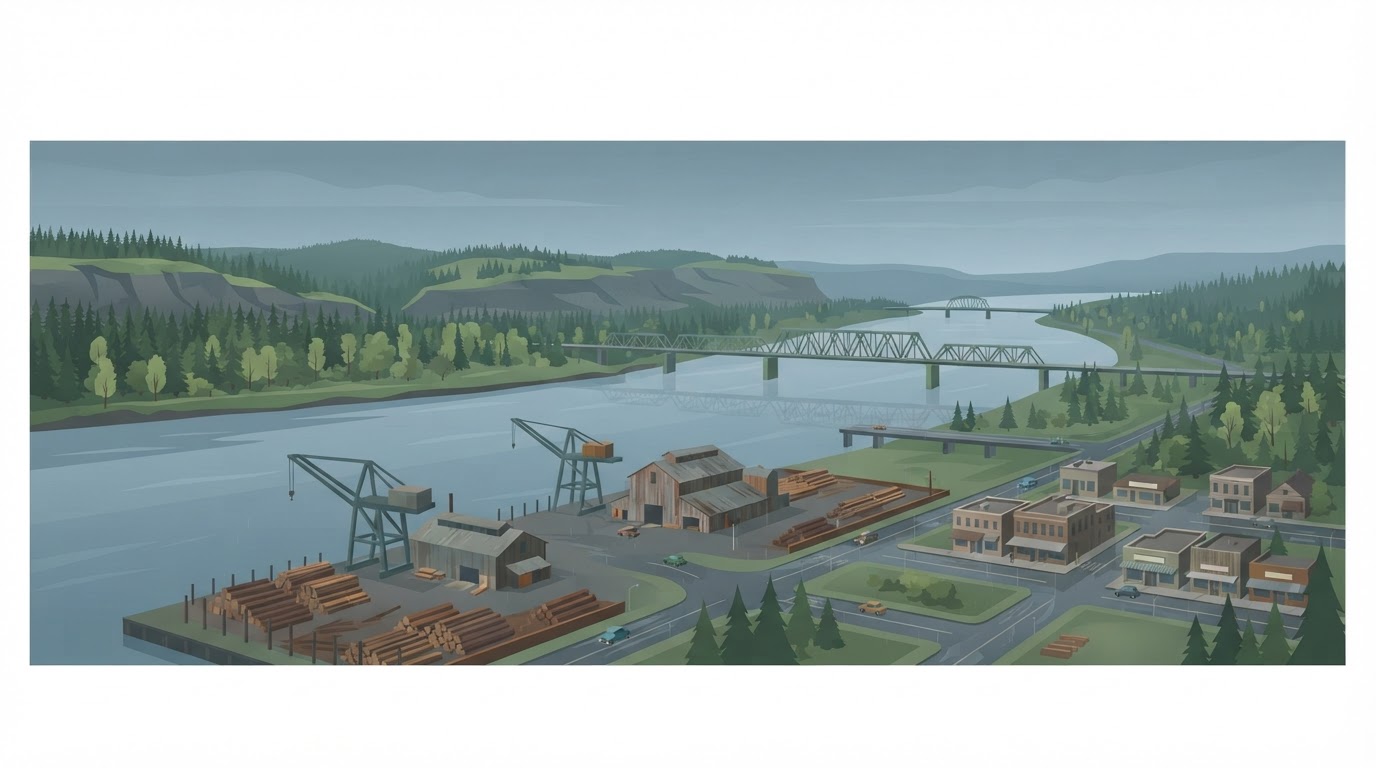

A thinning operation on Department of Natural Resources (DNR) land in Cowlitz County is highlighting the connection between state forest management and the regional timber economy. According to reporting by The Reflector, the July 14 operation provided timber for local mills while generating revenue for schools, fire districts, and hospitals. The account of the operation was provided by industry representatives; the source material did not include perspectives from environmental or conservation groups.
Revenue from state-managed timber sales is distributed to local taxing districts. Under DNR guidelines, the state retains 25 percent of the revenue, with the remainder supporting county services, school districts, and medical facilities. Industry representatives told The Reflector that active management also maintains road systems used for recreation and creates fuel breaks that assist firefighters during wildland fires.
Logs from the Cowlitz County site are transported to Hampton Lumber sawmills in Morton and Randle. These facilities operate as stud mills, producing 2-by-4 and 2-by-6 boards for major home centers including Lowe’s, Home Depot, and Menards. Combined, the two mills employ approximately 160 people and process roughly 80 loads of logs daily, resulting in an annual production of about 180 million feet of lumber.
Loggers involved in the project stated that thinning is used to reduce competition for sunlight and nutrients. Brandon Smith of Brandon J. Smith Logging stated the operation focused on thinning a stand approximately 60 years old to encourage future growth. By removing specific trees, the remaining stand is intended to grow more efficiently. Following the harvest, the land is replanted to maintain the forest cycle.
Nearly all material from the harvested trees is utilized. Industry representatives noted that bark and chips are used as fuel for kilns, while sawdust and other residuals are sent to pulp mills. Maintaining a stable timber supply is described by the American Forest Resource Council as critical for preserving the region’s forestry infrastructure and mill operations.




Leave a Comment