

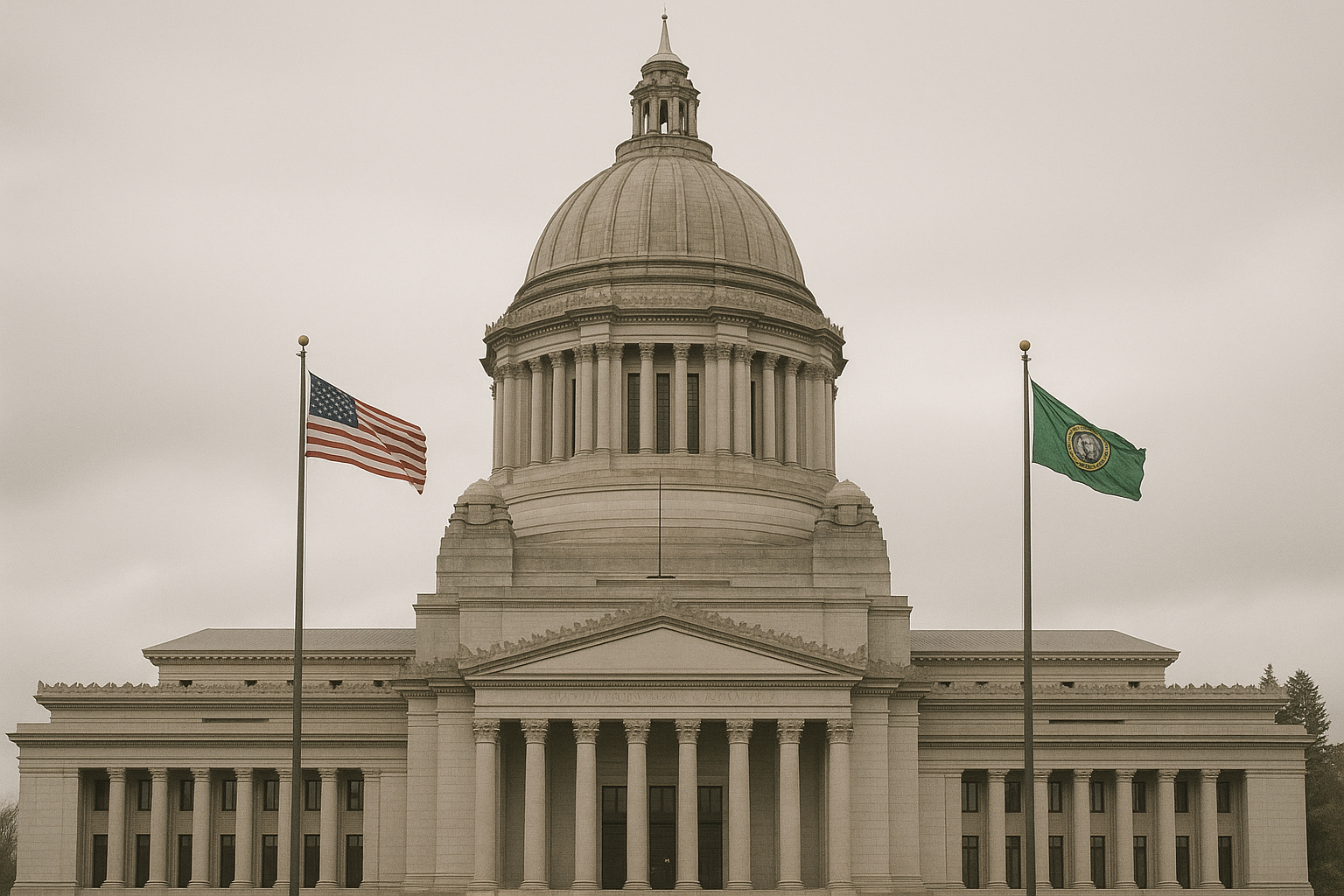

Washington state’s House Bill 1140, enacted in 2021 and effective January 1, 2022, mandates that juveniles under age 18 must consult an attorney before waiving any constitutional rights during custodial interrogations, detentions based on probable cause, or consent to searches. The requirement cannot be waived, and any statements made without consultation are inadmissible in court except in limited exceptions such as impeachment or spontaneous remarks. The law was passed to ensure that youths comprehend their rights and to guard against coercion during police questioning. According to legislative summaries, the consultation can take place in person, by telephone, or video, and was supported by sponsors such as Rep. Jesse Johnson and backed by advocacy groups including the ACLU of Washington. ([lawfilesext.leg.wa.gov](https://lawfilesext.leg.wa.gov/biennium/2021-22/Htm/Bills/House%20Bills/1140-S.htm?utm_source=openai))
In practice, however, the law has had unintended consequences in serious criminal investigations. Seattle Interim Police Chief Sue Rahr acknowledged having difficulty questioning juvenile witnesses in the June 2024 fatal shooting of 17‑year‑old Amarr Murphy‑Paine near Garfield High School. She publicly blamed the law for impeding investigative efforts, stating officers felt constrained from speaking with teens who might be considered witnesses—though not suspects. That led to confusion about how to proceed without jeopardizing the admissibility of testimony. ([opd.wa.gov](https://opd.wa.gov/news/2024/scoop-state-law-doesnt-block-police-questioning-teens-seattle-chief-says?utm_source=openai))
Rahr subsequently issued an internal directive clarifying that officers may question juvenile witnesses—defined as not suspects and not in custody—without a lawyer present. The directive emphasized that the law does not prohibit such questioning so long as there is no probable cause to detain the youth. She framed the move as necessary to correct widespread misunderstanding among officers over the law’s scope. ([opd.wa.gov](https://opd.wa.gov/news/2024/scoop-state-law-doesnt-block-police-questioning-teens-seattle-chief-says?utm_source=openai))
Meanwhile, multiple unsolved teen homicides since early 2024 highlight the real-world stakes. The January 2024 killing of 15‑year‑old Mobarak Adam at a teen rec center left investigators unable to interview the teens present—likely due to concerns under HB 1140 around questioning juvenile witnesses without counsel. Similarly, witnesses to the June 2024 Garfield High shooting have not provided statements. Additional cases, including two 16‑year‑olds found shot near I‑5 in March and recent killings in Rainier Beach, underscore a growing pattern of stalled investigations amid legal ambiguity. Families remain without answers. ([reddit.com](https://www.reddit.com/r/SeattleWA/comments/1b0u83q?utm_source=openai))
Why this matters to Cowlitz County
While these examples arise in Seattle, the legal confusion and enforcement hesitancy carry statewide implications. In smaller jurisdictions like Longview or Kelso, where resources are more constrained, even greater caution among officers could exacerbate delays or failures in securing juvenile witness testimony in violent or serious incidents. Cases involving teenage victims or witnesses may go cold—putting community safety and justice at risk.
What law enforcement and legislators are doing
Legislators appear to be responding. In 2025, Rep. Gloria Mendoza introduced House Bill 1920 aiming to allow law enforcement to question juvenile witnesses without an attorney when needed to clarify involvement or rule someone out, while maintaining that any statements made cannot be used in prosecution unless reviewed post-consultation. Mendoza cited difficulty in officers quickly clearing juveniles in rural areas due to limited immediate access to attorneys. ([gloriamendoza.houserepublicans.wa.gov](https://gloriamendoza.houserepublicans.wa.gov/2025/02/18/juvenile-questioning/?utm_source=openai))
Furthermore, the Legislature advanced Senate Bill 5052, which aims to amend RCW 13.40.740—the statute enacted by HB 1140—with language explicitly permitting questioning of juvenile victims and witnesses not suspected of criminal activity. The amendment seeks to remove ambiguity and affirm investigative flexibility while preserving attorney‑consultation protections for suspects. ([wa-law.org](https://wa-law.org/bill/2025-26/sb/5052/S/?utm_source=openai))
Reporting vs. analysis
Reporting: HB 1140 intends to protect constitutional rights of minors by requiring pre‑interrogation legal consultation. Its ambiguous wording has prompted law enforcement caution around juvenile witnesses, contributing to investigative delays in serious cases. Seattle Police Department leadership has issued guidance to clarify permissible questioning. Concurrently, new legislative efforts aim to clarify the law’s scope and remedy unintended consequences.
Analysis
Law designed with well‑intentioned protections can have perilous side effects when phrasing is unclear. In Cowlitz County, where law enforcement often operates with limited legal support, the ripple effects of HB 1140’s ambiguity could be particularly pronounced—hindering timely investigations into youth‑centered crimes. Clarity in legislation is vital to both protect youth rights and enable effective law enforcement to serve justice.
What comes next
The fate of HB 1920 and SB 5052 will determine whether the Legislature resolves this tension. Expected amendments during the 2026 session may either reinforce juvenile legal protections or recalibrate them to safeguard investigative effectiveness. Columbia Countercurrent will continue reporting on how these bills progress and what they mean for public safety and juvenile justice across southwest Washington.
Sources
Washington Senate Bill Report on ESHB 1140 – legislative summary
King County Department of Public Defense and ACLU: joint release on youth attorney access law
Axios Seattle: statement from Interim Police Chief Sue Rahr clarifying prosecutorial constraints
Legislative release: Rep. Gloria Mendoza on House Bill 1920
Washington bill tracker: SB 5052 summary for juvenile contact clarification