
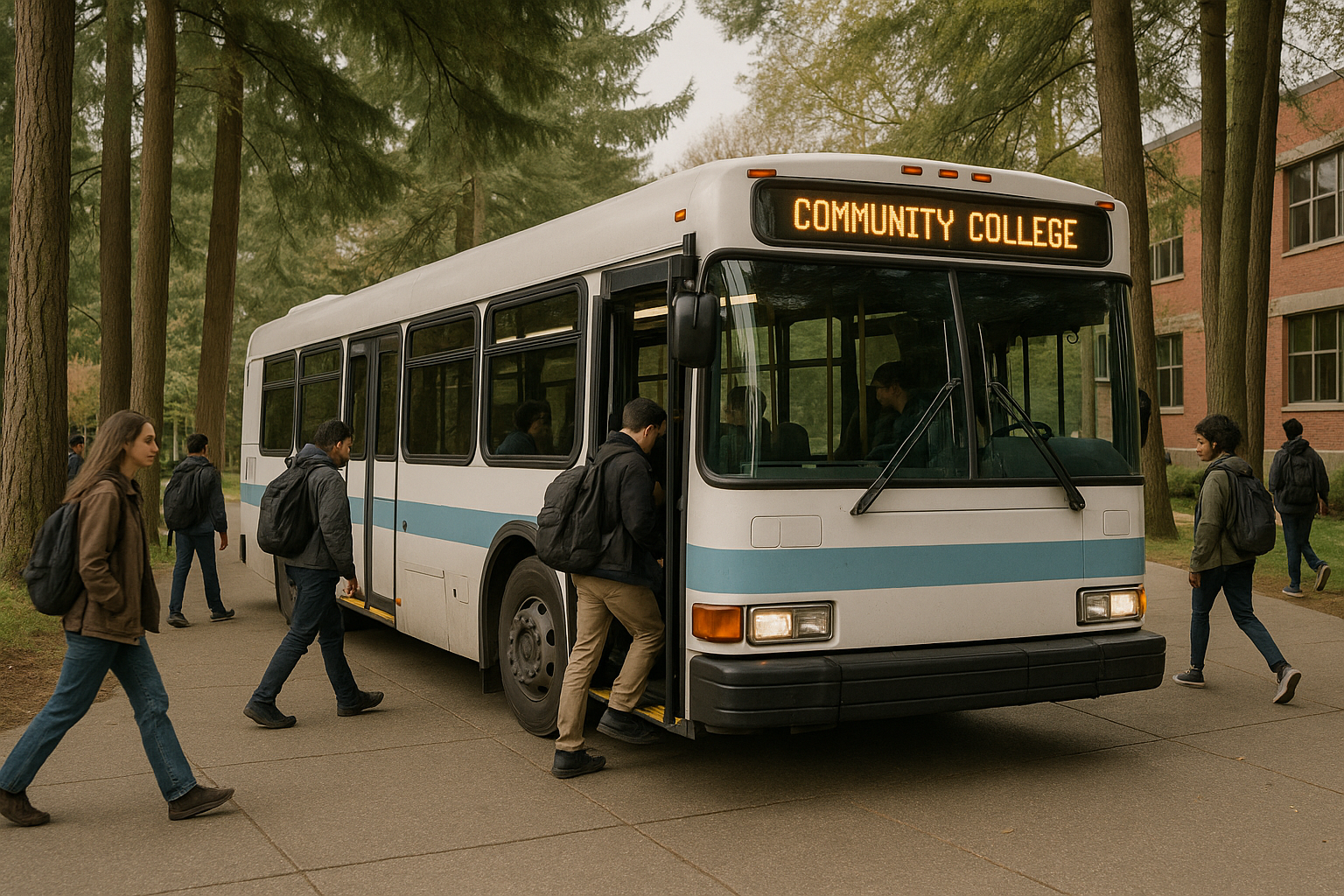

A new proposal in the Washington State Legislature could reduce financial burdens for community and technical college students by subsidizing public transit fares. Known as House Bill 2727, the legislation was advanced by the state House earlier this week.
The bill, sponsored by Rep. Jamila Taylor (D‑Federal Way), would create an Educational Transit Access Grant Program under the Washington State Department of Transportation. Through this program, transit agencies statewide could apply for state grant funding to offset the cost of offering free or reduced fares for enrolled community and technical college students. The annual cost to the state is estimated at $324,000. Students in Eastern Washington—specifically around Spokane—currently pay a $22 fee each quarter for a Spokane Transit Authority bus pass. The bill would eliminate or reduce such costs where funded.
The bill has drawn bipartisan attention but also concerns from some legislators about geographic and accessibility limitations—particularly for students in rural and transit-poor areas. Rep. Mark Klicker (R‑Walla Walla) and others noted that many poverty‑impacted students live in communities with limited public transit, questioning whether benefits would extend equitably.
The proposal is part of an evolving effort; earlier legislation would have mandated that transit agencies provide free bus rides to community college students. HB 2727, which takes a grant‑based, pilot‑program approach, reflects lawmakers’ willingness to expand support while retaining flexibility for local implementation.
According to legislative analysis, the Washington State Department of Transportation would be required to issue a call for proposals within 60 days of the bill taking effect—currently set for July 1, 2026. Pilot programs would need to define measurable goals, demonstrate how they would lower transit costs, include commitments from partner colleges, and outline sustainability plans. Transit agencies administering pilots must report outcomes to the Legislature’s Transportation Committees within six months of completion.
Why this matters
Transportation is a significant barrier for many students pursuing technical and vocational credentials. Community colleges enroll approximately 307,000 students across 34 institutions statewide. Among them, nearly 23,000 are served by colleges in Spokane alone. Reducing transit costs—even modestly—could improve access, attendance, and completion rates, particularly for low‑income and first‑generation students.
If HB 2727 becomes law, Spokane Transit Authority and other local agencies may soon have resources to offer fare relief to students. That could shift budgets and equity in important ways—especially in more rural areas across Cowlitz County, Longview, and Kelso where public transit options are already limited.
This story will be monitored closely as the bill moves to the Senate. Its implications for accessibility, equity, and educational attainment warrant ongoing coverage—especially if formal pilots are launched regionally.
Sources: Reporting by The Spokesman‑Review, legislative analysis from the Washington House Transportation Committee bill analysis.