

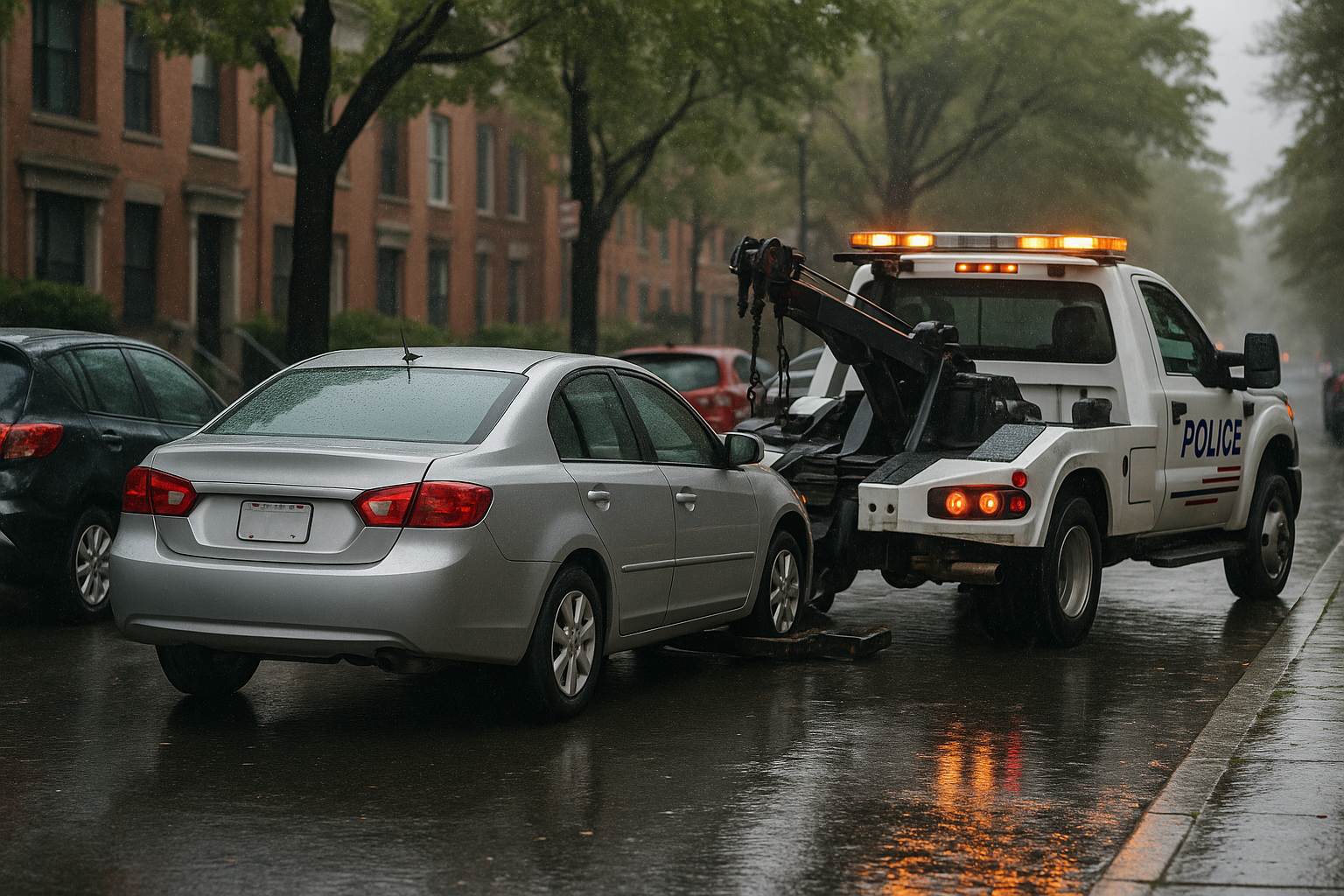

Washington’s Senate Bill 6176, currently under consideration in the state legislature, would sharply increase penalties for drivers with expired vehicle registrations. The measure, sponsored by Senator Curtis King (R-Yakima) and Senator Marko Liias (D-Edmonds), proposes allowing law enforcement to ticket and even impound vehicles parked on public streets with expired tabs for more than 45 days. It also elevates certain registration violations to criminal offenses.
The bill’s summary on the Washington State Legislature’s website describes it as addressing “the enforcement of failure to renew an expired vehicle registration.” It has bipartisan sponsorship, signaling probable movement through the legislative process.
Under current law, expired tabs are typically enforced during traffic stops. SB 6176 would expand enforcement to include parked vehicles on public or permitted private property if adequate signage is in place. A parked vehicle with registration expired for more than 45 days could be impounded, even if it is not being driven at the time.
Another portion of the bill targets people who register vehicles in other states to avoid Washington’s registration fees or taxes. Registering a vehicle out of state while residing in Washington could be classified as a gross misdemeanor. First offenses could result in mandatory fines of at least $1,529 and up to 364 days in jail; repeat offenses could draw higher penalties, including additional fines up to $5,000 and all owed back taxes.
The legislation appears aimed at combating both chronic non-renewal and avoidance schemes such as registering through Montana-based LLCs or under relatives’ addresses in Oregon and Idaho—tactics that have been common in border regions and among owners of high-value vehicles. Enforcement mechanisms would be strengthened through both citation authority and cooperation between parking operators and law enforcement.
For Cowlitz County, the proposal holds particular relevance. Drivers in Longview and Kelso often park downtown or near public facilities, and an expansion of impound authority could create unexpected consequences for residents relying on street or shared-lot parking. The bill does not clearly define what constitutes “sufficient notice” on private parking lots, leaving implementation details to local authorities or property owners.
Supporters argue that unpaid registrations reduce transportation funding and impose unfair costs on residents who comply with the law. Critics counter that the policy risks disproportionately harming lower-income or financially struggling drivers who may already face high vehicle costs and complex renewal processes. The state’s Department of Licensing acknowledges it currently does not track reasons for lapsed registrations.
Washington’s long-running debate over car tab fees — highlighted by multiple voter-approved initiatives seeking to cap fees at $30 that were later struck down by courts — underscores the political tension surrounding SB 6176. If enacted, the bill would significantly change how the state enforces vehicle registration law, transitioning from leniency to active, visible enforcement across public and some private spaces.
The measure remains pending in the Senate as of this week. Interested residents can track its progress through the legislature’s official bill page.




Leave a Comment