

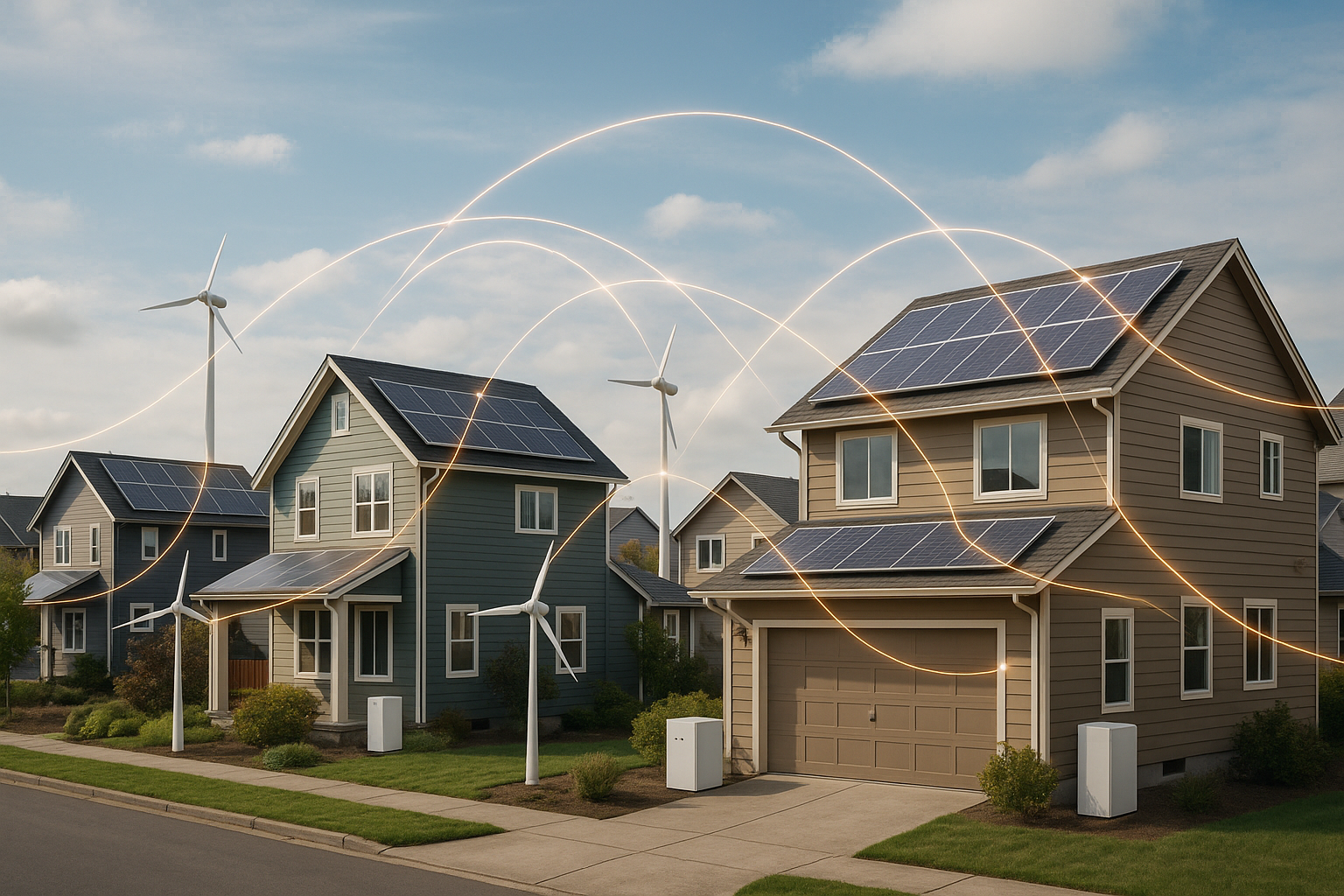

As Oregon debates new energy strategies, state lawmakers are weighing Senate Bill 1582, a proposal to formalize and expand the use of “virtual power plants.” The concept focuses on turning homes and small businesses equipped with smart technologies, such as thermostats, solar panels, and battery storage, into coordinated energy contributors that can supply power back to the grid during high demand periods.
The bill, sponsored by Democratic state Sen. Courtney Neron Misslin, would direct the Oregon Public Utility Commission to establish annual goals for integrating distributed power systems statewide. It also calls for clearer rules governing cooperation between traditional utilities and third-party “aggregators,” private entities that manage distributed energy from individual sources. Proponents argue that coordinated management of decentralized energy could reduce peak demand, minimize blackouts, and maintain affordability.
“This bill is what Oregon needs to get us up and running in this century,” Misslin said during a public hearing. “Community-based virtual power plants improve reliability and help prevent rolling blackouts, but they also keep costs down.”
Opponents, including Portland General Electric (PGE), say the state may be attempting to regulate a system that is already up and running. According to PGE’s director of regional integration, Franco Albi, the company’s existing programs already connect hundreds of thousands of customers in ways that resemble virtual power plant networks. Albi said PGE began developing the model as far back as 1999, with some 230,000 customers currently participating—equivalent to roughly a quarter of its service base.
“We definitely agree with the intent of this bill to accelerate distributed energy resources and virtual power plants,” Albi said. “However, this bill creates duplication. It disrupts real progress and increases costs for all customers.”
Under current operations, PGE estimates the total output of its enrolled participants contributes the equivalent of 600 megawatts—roughly matching the power once produced by the now‑closed Boardman coal plant. The company hopes to increase that share from 13% to 25% of its peak load by 2030.
Supporters counter that statewide coordination could expand opportunities for local communities and small energy producers while helping Oregon meet its clean‑energy goals. The state’s first Energy Strategy report identified virtual power plants as a key tool to bolster grid resilience and bridge the gap between renewable generation and demand surges during extreme temperatures.
For frontier utilities in Southwest Washington and the Columbia River corridor, Oregon’s debate could have regional implications. Many of the same transmission challenges, market conditions, and renewable integration issues affect the Bonneville Power Administration service area that includes Cowlitz County. Expanded virtual power plant adoption across the Columbia could lead to shared balancing strategies on hot summer afternoons or during winter heating peaks—conditions that increasingly stress regional grids.
Whether SB 1582 gains traction may hinge on balancing state‑level oversight with utility innovation already underway. The bill’s upcoming committee amendments are expected to address those concerns before a potential vote later this session.
Full details are available from Oregon Public Broadcasting.



Leave a Comment