

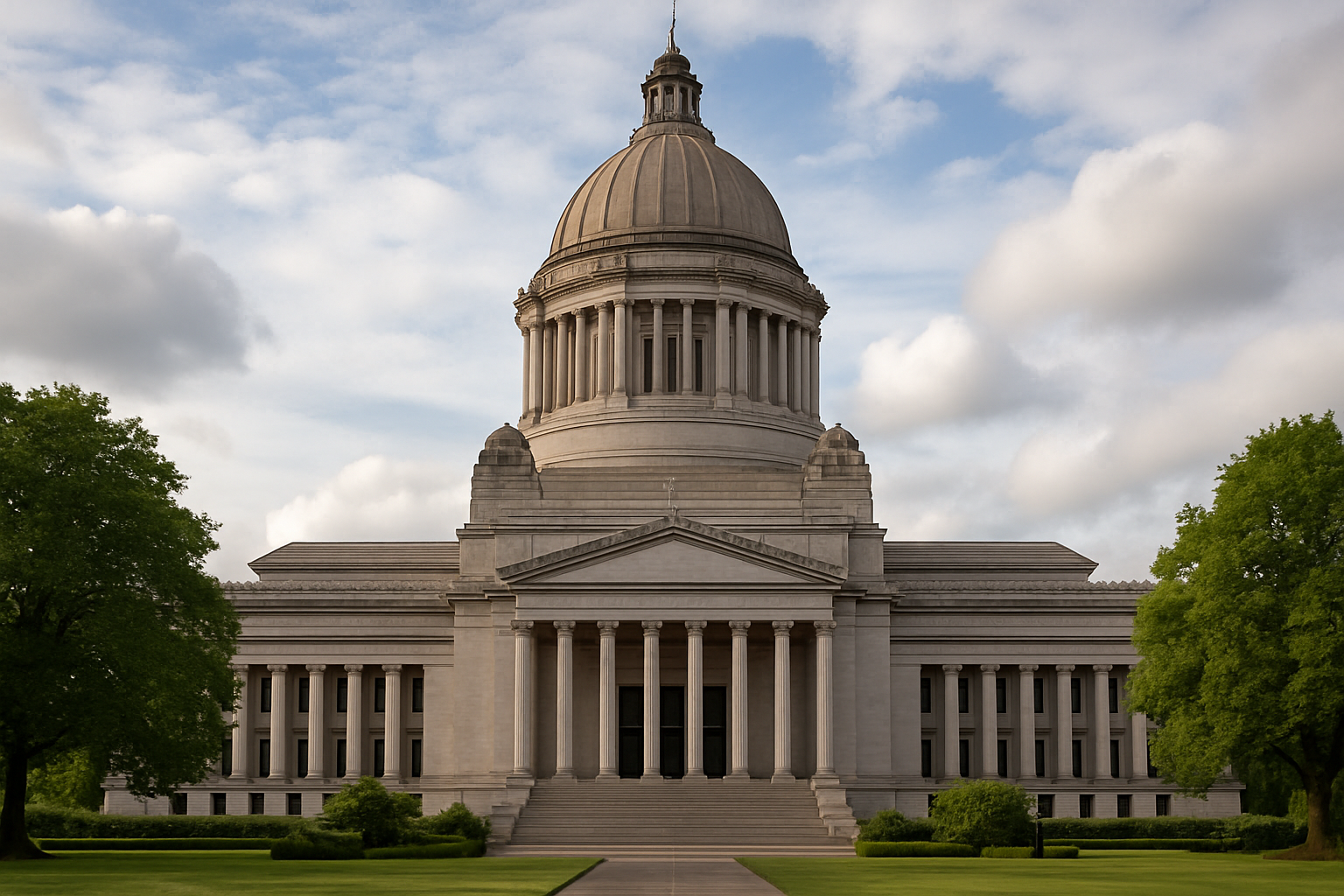

Washington state budget writers received welcome news this week as the latest revenue forecast shows a significant upward revision to expected collections for the current 2025–27 biennium. According to updated estimates released on Feb. 16 by the Washington State Economic and Revenue Forecast Council, projected Near General Fund revenues for the biennium have risen by $827 million since the November 2025 forecast. The updated forecast, published by the Office of Financial Management, notes that revenue is now expected to reach roughly $75.28 billion between July 1, 2025, and June 30, 2027, reflecting stronger-than-anticipated economic conditions across the state. The Reflector first reported this development in its coverage of the budget outlook here. Additional detail from the state’s forecasting agency can be found in the OFM release summarizing the forecast.
Forecast officials attributed the upward revision to a modestly improved economic outlook, including higher personal income and stronger employment trends statewide. While some sectors—such as housing construction—showed slight declines, revenue generated from the real estate excise tax surpassed expectations, contributing to the overall increase. The long-term picture has also brightened, with the state now projected to collect an additional $1.8 billion through June 2029 compared to earlier estimates, according to the same forecast materials.
For Cowlitz County residents, the statewide forecast has local significance. Although county and municipal budgets operate independently from state general fund revenues, shifts in state-level fiscal capacity often influence legislative decisions on public education, transportation funding, behavioral health investments, and infrastructure grant programs relied upon by local jurisdictions. Clearer fiscal footing at the state level can signal greater stability in future state‑supported programs benefiting communities in Longview, Kelso, and the wider region.
As lawmakers finalize their budget proposals in Olympia, the improved revenue picture may expand the range of viable funding options. Still, spending decisions remain subject to political negotiation as legislators balance rising program costs, long-term fiscal planning obligations, and competing priorities.
Why this matters
Cowlitz County communities consistently feel the downstream effects of state budget decisions—whether through school district allocations, transportation infrastructure support, or public health funding. A less constrained state budget reduces the immediate pressure to cut or defer investments in these areas. At the same time, state leaders will need to weigh this temporary revenue uptick against continued economic uncertainty and long-term obligations, ensuring stability without overextending future budgets.



Leave a Comment