

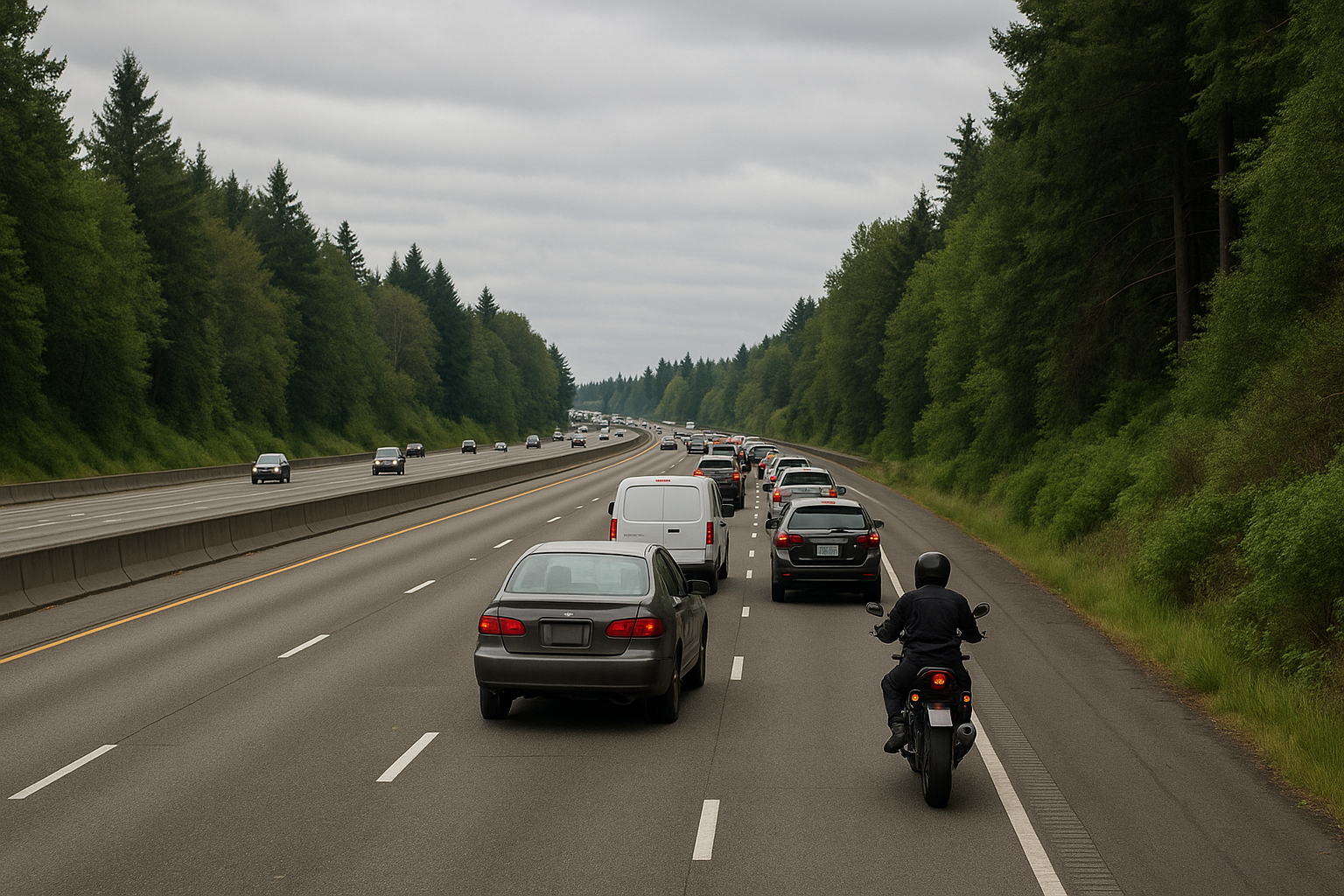

Washington State’s House Bill 1367, introduced by Representative Ed Orcutt and several cosponsors from both parties, would allow motorcyclists to ride on the right shoulder of freeways or major highways when average travel speeds fall to 25 mph or less. The proposal was scheduled for a public hearing on February 5, 2026, before the House Transportation Committee at 1:00 p.m., underlining renewed consideration of the measure this session.
Under current state law, riding on shoulders or between traffic lanes—known as lane-splitting—is prohibited. HB 1367 aims to provide a regulated alternative, permitting motorcycles to use the right shoulder at up to 10 mph over the adjacent traffic speed. Vehicles must adhere to additional safety restrictions: shoulders must be at least four feet wide, motorcycles must travel no more than one abreast, and riders must return to the main lanes when encountering parked or emergency vehicles, tow trucks, or other roadside obstructions. Riders must also exit at the next available ramp after passing a slowdown zone and are responsible for any damage or injury caused while using the shoulder.
Proponents, including motorcyclists from ABATE Washington, argue that allowing shoulder use may reduce the risk of rear-end collisions—currently accounting for 7 to 11 percent of motorcycle accidents—and help prevent engine overheating during stop-and-go traffic. They point to jurisdictions like Hawaii, where shoulder riding is permitted under certain conditions, as a model for improved safety.
Opponents, however, caution that shoulders often contain debris, present blind spots for drivers, and remain critical spaces for emergency response and disabled vehicles. Previous attempts to legalize lane-splitting—or even filtered riding—have failed, though enforcement remains inconsistent, leading some riders to bypass the law in practice.
Why this matters here
For riders in Longview, Kelso, and broader Cowlitz County, where traffic backups on I-5 and other regional highways are frequent, the bill could offer a legally sanctioned safety release—potentially reducing roadway risks and travel delays. If passed, the law would require updates to driver education materials and state manuals, possibly reshaping expectations for both motorists and motorcyclists on our highways.
Whether HB 1367 advances out of committee—and whether amendments alter liability provisions or safety standards—remains to be seen. Columbia Countercurrent will continue tracking the bill’s progress and reporting on its potential implications for southwest Washington communities.




Leave a Comment