

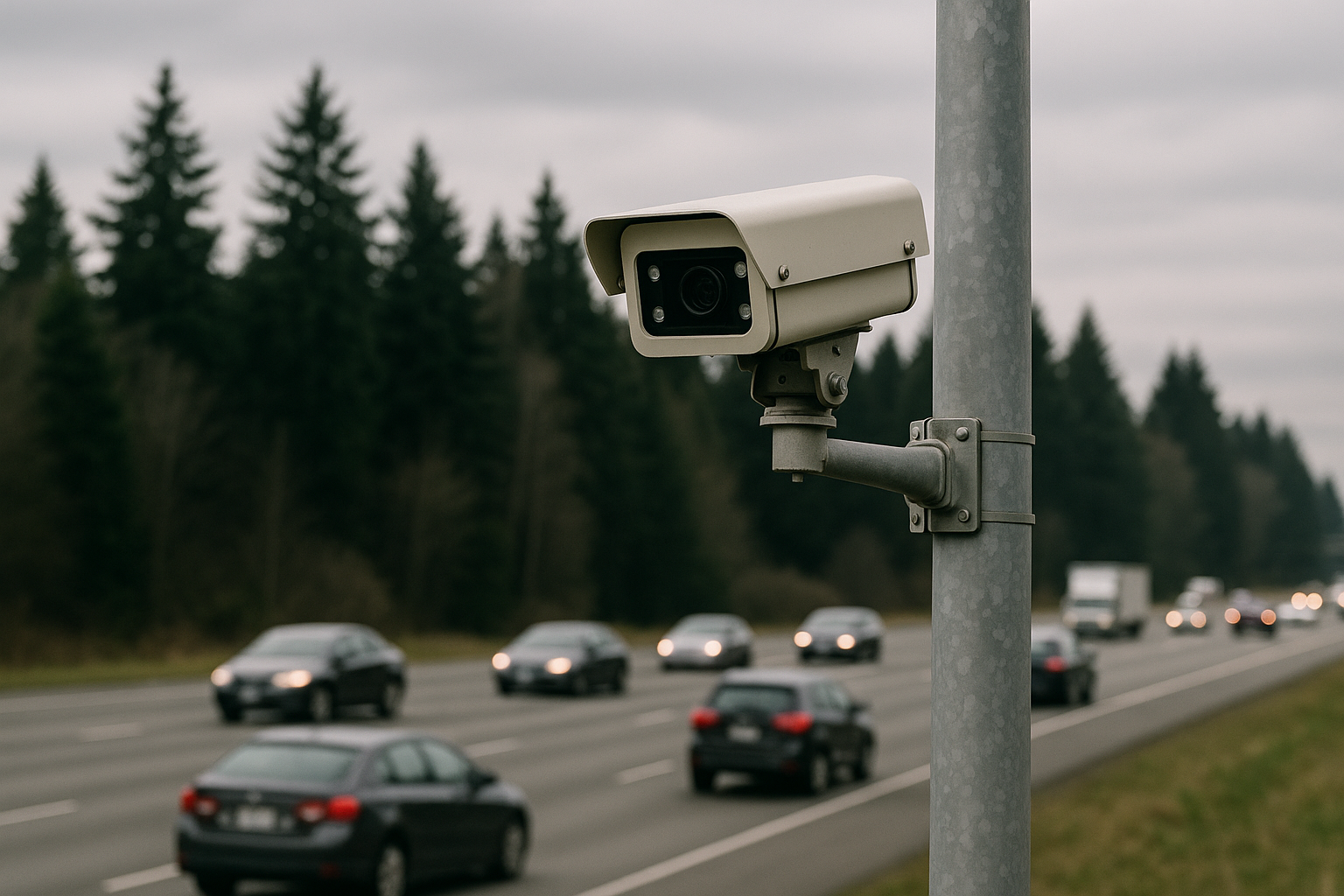

The Washington State Senate has passed a bill that would tighten regulations on the use of automated license plate reader (ALPR) cameras, including those marketed by the surveillance company Flock Safety. The measure, which cleared the Senate on a 40–9 vote, now advances to the House for consideration later this month.
The legislation, sponsored by Sen. Yasmin Trudeau (D–Tacoma), seeks to define permissible uses for ALPR systems—restricting access primarily to investigations of felonies and missing persons—and to limit data retention and sharing, particularly with federal agencies. The bill was drafted amid rising concerns about unchecked surveillance and third-party access to vehicle data collected by local agencies.
Research from the University of Washington last year showed that at least eight Washington law enforcement agencies had shared ALPR data with U.S. Border Patrol, often without formal agreements. Similar connections between local agencies and federal systems have been reported across the state, adding urgency to lawmakers’ calls for clearer oversight.
According to Trudeau, the proposal aims to create “reasonable rules around how the data is used and accessed” while maintaining tools that assist in public safety investigations. The bill would require agencies to delete raw image data after a set retention period and would prohibit federal access to Washington databases unless explicitly authorized.
Law enforcement organizations, including the Washington Association of Sheriffs and Police Chiefs, have opposed portions of the proposal, citing potential impacts on criminal investigations. Senate Republican Leader John Braun (R–Centralia) said recent amendments—such as extending data retention from 72 hours to 21 days—improved but did not resolve those concerns, leaving the caucus divided.
If enacted, the legislation would make Washington one of the few states with comprehensive statewide restrictions on license plate reader use. Local jurisdictions in Cowlitz County, including Longview and Kelso, currently operate or have considered similar Flock systems, meaning the bill could immediately affect local law enforcement practices if it becomes law.
The House is expected to take up the Senate’s version of the bill after February 17.
Source: KGW




Leave a Comment